

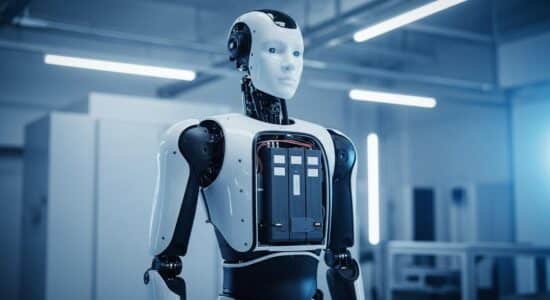
On January 28, 2025, the share price of LG Energy Solution soared by +11% in a single day on the Seoul Stock Exchange. Behind this spectacular rise, a bombshell revelation from the Korea Economic Daily: the Korean Batteries giant is reportedly in advanced negotiations with Tesla to power Optimus, its humanoid robot. But that’s not all.
LG is reportedly in talks with several Chinese robot manufacturers simultaneously, turning this technological battle into a true international race. While Chinese giants CATL and BYD dominate the global Batteries market, why is all attention suddenly turning to South Korea?
I’ll explain why this negotiation reveals much more than a simple commercial contract: it outlines the contours of a technological war where energy density becomes the decisive weapon.
A stock market bombshell that reveals a technological battle
When a stock jumps by 11% in a single session, it’s never insignificant. The spectacular rise of LG Energy Solution validates one thing: the market anticipates a major shift.
Besoin d'accessoires pour ta Tesla ?
Looking for accessories for your Tesla?
The information comes from the Korea Economic Daily, a reference publication for the South Korean economy, which gives it immediate credibility. According to their sources, LG Energy Solution is actively negotiating with Tesla to become Optimus’s Batteries supplier. But the story doesn’t end there.
The Korean group is also reportedly in talks with several Chinese humanoid robot manufacturers, confirming that this demand is not specific to Tesla. The entire robotics industry is knocking on LG’s door.
This market validation marks a strategic turning point. After dominating the electric car sector, LG Energy Solution is now positioning itself in what could become the next massive growth driver: Batteries for humanoid robots.
Why all eyes are turning to Korean ternary Batteries
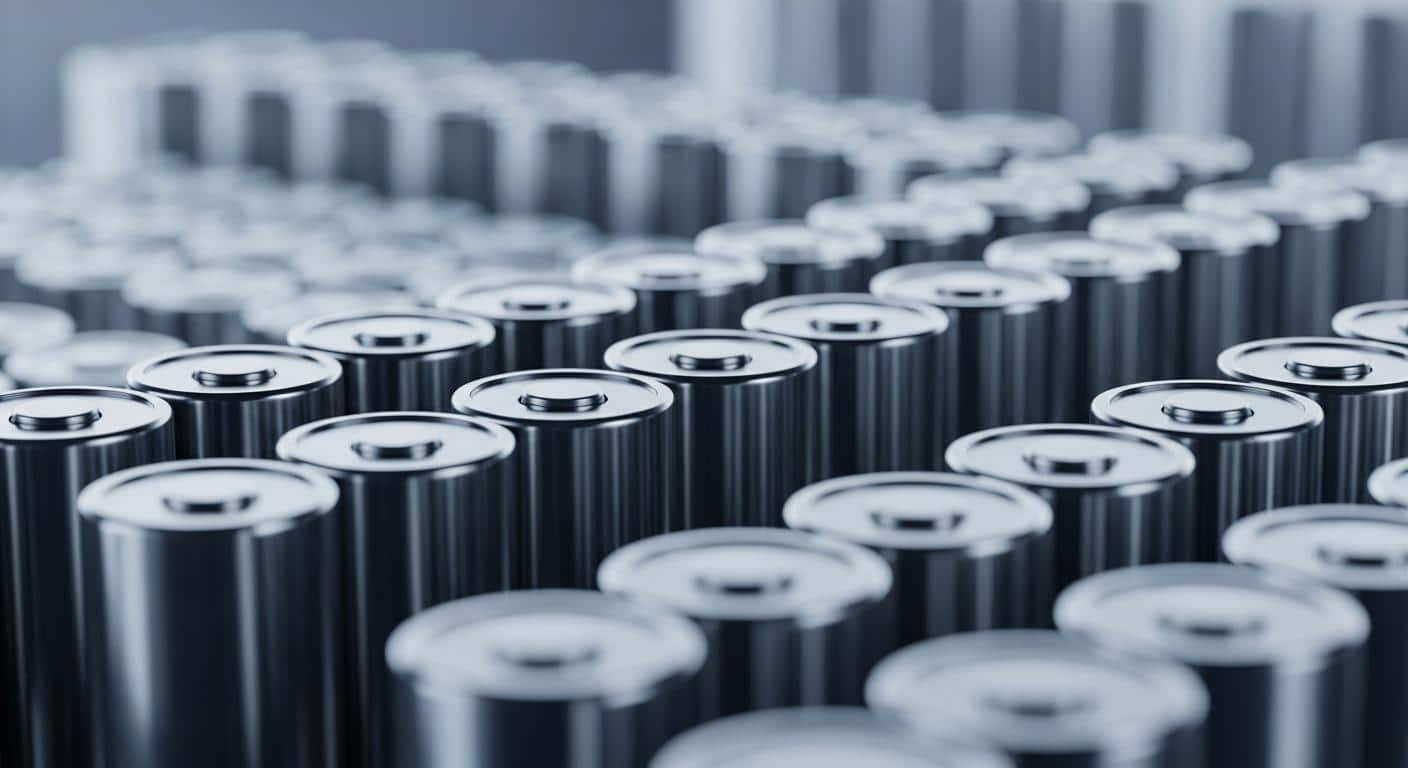
Ternary Batteries vs LFP: an energy density match
To understand the stakes, one must grasp the fundamental difference between two lithium Batteries technologies.
On one side, lithium ternary Batteries (NCM or NCA), a specialty of LG Energy Solution and the Koreans. On the other, LFP Batteries (lithium iron phosphate), the preferred domain of Chinese CATL and BYD.
- Ternary Batteries: higher energy density, but higher cost and increased thermal sensitivity
- LFP Batteries: cheaper, safer, longer lifespan, but 20% to 30% lower energy density
In an electric car, this difference can be compensated by simply installing a larger Battery pack. But in a humanoid robot, it’s a different story.
The decisive advantage of Korean Batteries lies in their superior energy density: more energy stored in the same volume. For Optimus and its competitors, it’s the difference between 2 hours and 6 hours of runtime in an identical chassis.
The specific constraints of a humanoid robot
A robot like Optimus faces a brutal double technical challenge: limited space in a human-proportioned chassis, and high power required for operation.
Unlike a car where the Battery can occupy the entire floor, a humanoid robot must concentrate its energy pack in a torso of a few tens of centimeters. Every cubic centimeter counts.
And the energy consumption is voracious. Articulated motors (several dozens per robot to reproduce human mobility) and embedded AI processors (which analyze the environment in real-time) are huge energy consumers.
You can’t compensate like with a Tesla Model 3 by simply adding more cells. The weight and bulk would become prohibitive. It’s the impossible compromise: featherweight, maximum runtime, high power.
Hence the vital interest in LG’s ternary Batteries.
Optimus, Tesla’s existential gamble according to Elon Musk
Elon Musk doesn’t mince words: Optimus could become “Tesla’s most important product”. A statement that might seem excessive coming from the founder of a company valued at several hundred billions thanks to its electric cars.
Besoin d'accessoires pour ta Tesla ?
Looking for accessories for your Tesla?
However, Musk’s vision extends far beyond automobiles. According to him, the potential market for humanoid robots could eclipse that of electric vehicles. Every home, every factory, every warehouse could need versatile robots.
But to achieve this vision, Optimus’s energy needs must be resolved. A robot performing complex tasks simultaneously requires its mobility (movements, manipulations) and its real-time AI computation (vision, decision-making).
The challenge of operational autonomy is decisive. A robot that spends half its time plugged into an outlet has no commercial utility. It must last a full workday, or even longer.
If Tesla does choose LG Energy Solution, it will send a strong signal to the entire industry: the battle for humanoid robotics will first be won on the Batteries front.
The Chinese paradox: global leaders but technologically limited
CATL and BYD, giants with feet of clay?
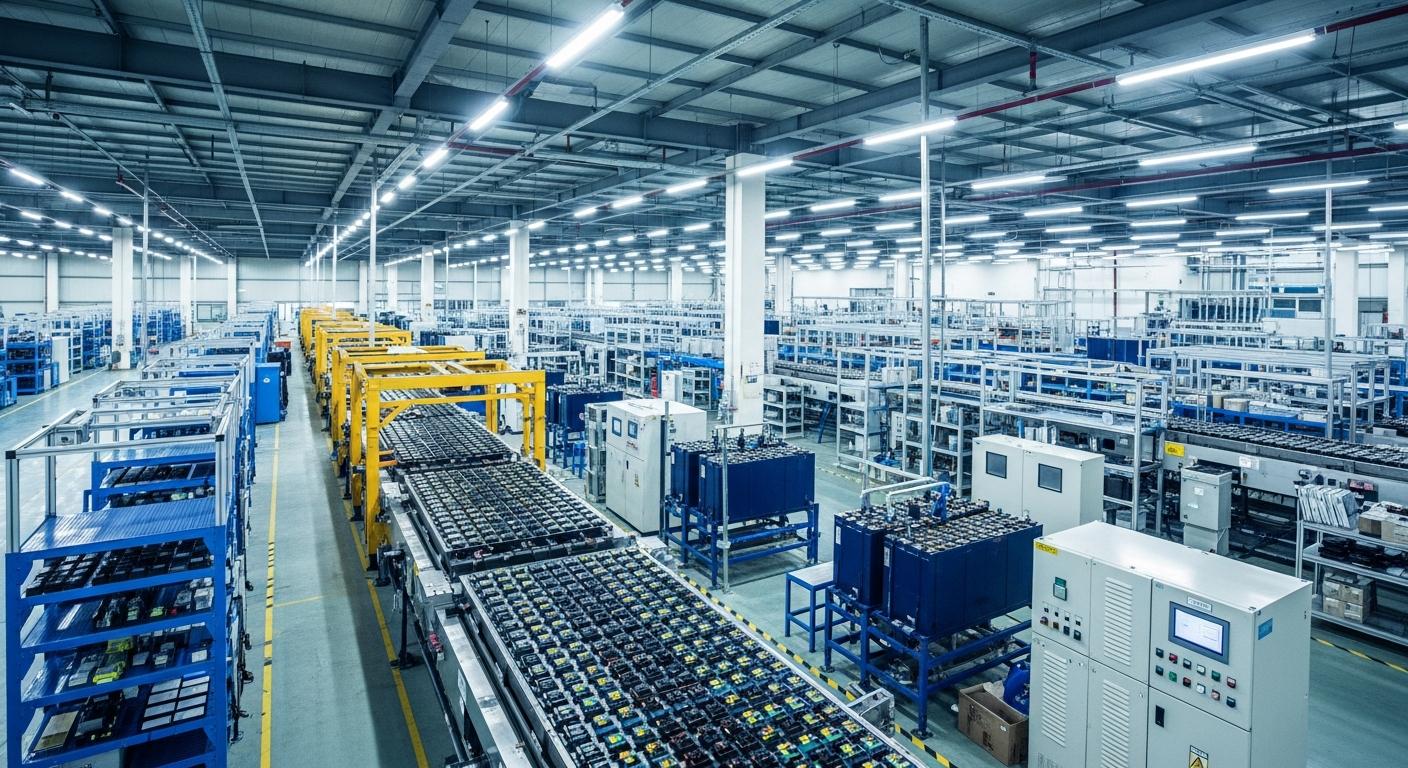
CATL and BYD are not small players. These two Chinese giants together control nearly half of the global Batteries market for electric vehicles. CATL notably supplies Tesla in China.
Their historical strength lies in their leadership in LFP Batteries. This technology offers undeniable advantages: lower production costs, increased safety (reduced thermal runaway risk), exceptional longevity.
But for humanoid robotics, their technical limitation becomes a major handicap. The lower energy density of LFP, acceptable for a car, becomes prohibitive for a robot with drastic space constraints.
This explains this fascinating paradox: Chinese robot manufacturers are turning to South Korea despite the geographical proximity and established commercial relations with CATL and BYD.
Geopolitical implications and supply chains
This situation creates an unusual technological dependence. China, an industrial superpower and world leader in Batteries, finds itself in a position of dependence in an emerging strategic segment.
For a country that has made technological autonomy a national priority, particularly in industrial and domestic robotics, this is a delicate position. The sovereignty stakes in this sector are considerable.
The Chinese response will probably not be long in coming. A race against time has begun to catch up on high-density ternary Batteries. But the development of these technologies requires years of R&D.
For Tesla, the situation is just as complex. The company must navigate between different Asian suppliers, each with its strengths and weaknesses, in a tense geopolitical context.
Meanwhile, Tesla accelerates on other fronts
While this battle for robotic Batteries is unfolding, Tesla continues its deployment in another area of autonomy: autonomous driving.
The Swedish Transport Agency has just approved FSD tests in Sweden, with the support of the Nacka municipality. A symbolic step in the European conquest, even if the full European deployment is only planned for early 2026.
Currently, FSD Supervised is available in six markets: Australia, Canada, China, Mexico, New Zealand, and the United States. Each new authorization expands the training database and accelerates system improvement.
The link with Optimus is not direct, but strategic. Tesla is methodically building an autonomy ecosystem: autonomous vehicles on one side, humanoid robots on the other. Both share common technological building blocks (AI, computer vision, real-time decision-making).
The contrast is striking: while Europe struggles with regulations and proceeds cautiously with FSD, Tesla is already negotiating the energy supply for the next robotic revolution.
This negotiation between LG Energy Solution and Tesla is not a simple commercial contract. It is a leading indicator that reveals where the next major industrial battle will be fought. Energy density, long a secondary criterion behind cost or safety, is becoming the decisive competitive advantage.
For Tesla, securing the supply of what Elon Musk considers the company’s “most important product” becomes a strategic priority. For LG Energy Solution, it’s an opportunity to transform its technological leadership into a dominant position in a nascent market.
According to sector analyses, the Batteries battle has only just begun. And in this race, energy density could well become the new battlefield that will separate tomorrow’s leaders from yesterday’s outsiders.
Profitez d'avantages exclusifs en achetant votre Tesla
Vous envisagez d'acquérir une Tesla ? En utilisant mon code de parrainage lors de votre achat, vous pouvez bénéficier d'avantages exceptionnels !
Des kilomètres gratuits de recharge ou d'autres récompenses exclusives, mon code de parrainage est votre passeport pour des avantages supplémentaires : https://ts.la/antoine49352 🤩
Pas de pression, juste une opportunité à saisir pour enrichir votre expérience Tesla.
Découvrez ici le système du parrainage et comment utiliser le code.
Get exclusive perks when buying your Tesla
Thinking about getting a Tesla? If you use my referral code when you purchase, you may be eligible for extra perks.
Free Supercharging miles or other exclusive rewards - my referral code can unlock additional benefits: https://ts.la/antoine49352 🤩
No pressure - just a simple option if you want to enhance your Tesla experience.
Learn how the Tesla referral program works and how to use the code.