


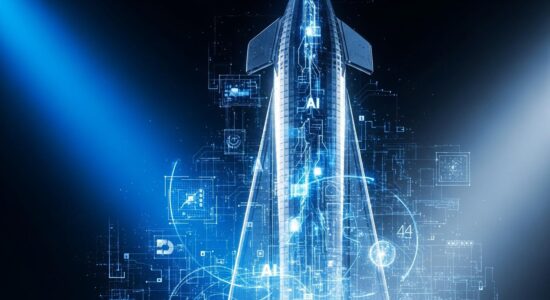
On February 2, 2026, Elon Musk makes a major move that resonates far beyond Silicon Valley. In a sober but shattering official statement, SpaceX announces the complete acquisition of xAI, its artificial intelligence company founded just three years ago. This merger creates a tech-spatial giant whose combined valuation easily exceeds $1 trillion. As a Tesla owner and passionate observer of the Musk ecosystem, I always wondered what he was really aiming for. This time, the answer is clear: he’s looking squarely at space. Let’s decipher together the financial, technical, and visionary stakes of this historic operation that could well redefine the future of humanity.
The announcement shaking Silicon Valley and the space industry
The news officially breaks on February 2, 2026, via a laconic statement published on the SpaceX blog. SpaceX acquires xAI in a transaction that confirms Bloomberg rumors circulating since late 2025 about advanced discussions between the two entities. Except that these two “entities” already belong to the same man.
Reactions are immediate. Wall Street is abuzz, tech analysts publish numerous op-eds, and the space community oscillates between fascination and skepticism. For my part, I have followed xAI since its early days in 2023, and even if this consolidation seemed logical in the long run, I absolutely did not expect such rapid timing.
We are talking here about the largest tech-spatial operation ever carried out, far surpassing the acquisitions of Microsoft, Google, or Amazon in cloud computing. But unlike these giants, Musk is not acquiring a competitor: he is unifying his own empire for a vision that extends far beyond Earth.
Besoin d'accessoires pour ta Tesla ?
Looking for accessories for your Tesla?
The staggering figures behind this mega-merger
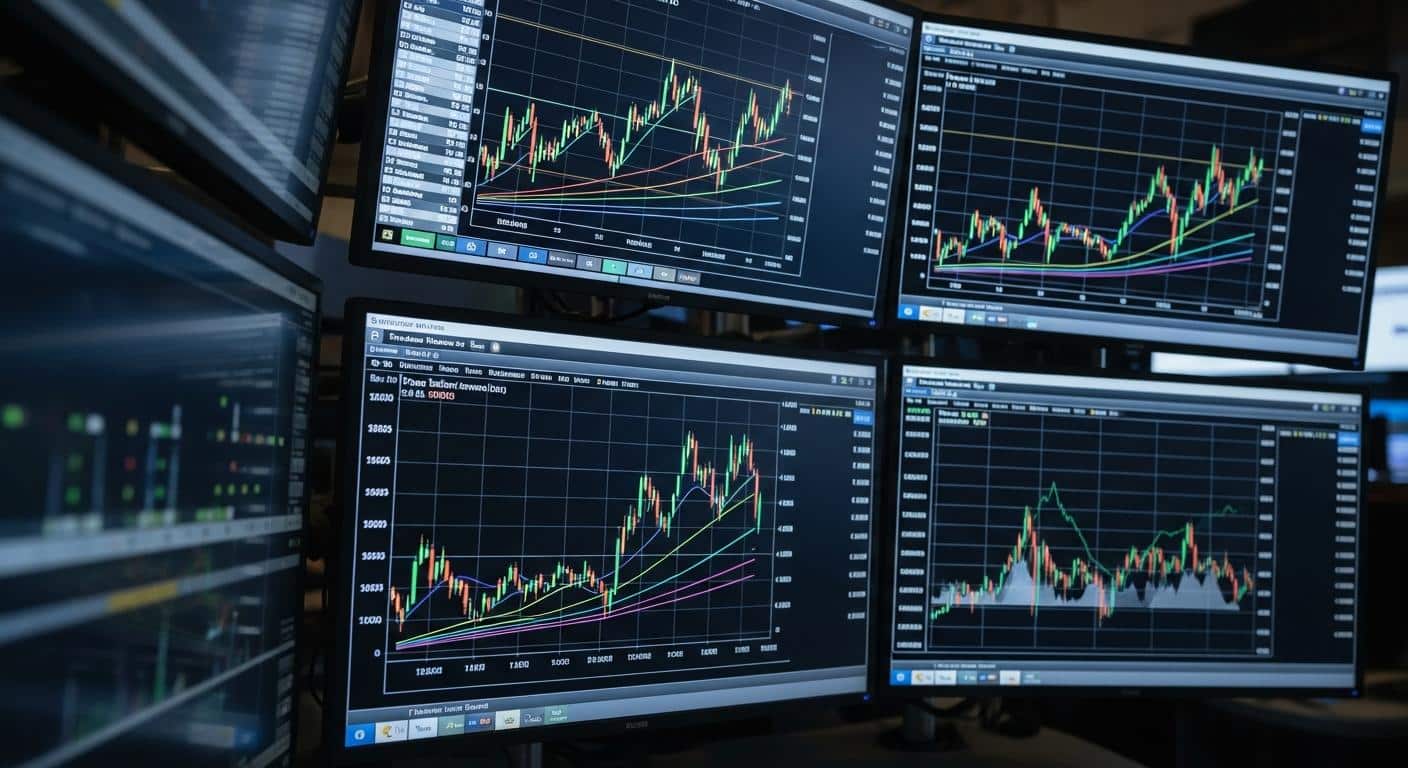
Let’s get down to specifics with figures that are frankly dizzying. By the end of 2025, xAI had a valuation of approximately $230 billion, boosted by a spectacular $200 billion fundraising round in September. For its part, SpaceX peaked at nearly $800 billion, driven by the dazzling success of Starlink and government contracts for Starship.
Do the math: the combined valuation easily crosses the symbolic $1 trillion mark. But that’s not all. Speculation is rife about the details of this historic merger before the planned IPO, which could value the combined entity at $1.5 trillion during an IPO within 18 to 24 months.
To put it in perspective, that would place SpaceX+xAI on par with Apple or Microsoft, but with a radically different economic model: one foot in space, the other in AI, and a vision that extends to Mars. These figures primarily reveal the scale of an ambition that many still consider crazy, but which Musk has already proven achievable with Tesla and Starlink.
Data centers in space: Musk’s crazy (but calculated) vision
Why put AI in orbit?
That’s THE question everyone is asking. The concept is based on a simple but revolutionary idea: deploy orbital data centers dedicated to AI computation. And the advantages are numerous.
- Constant solar energy: in space, there’s no night, no clouds, no seasons. The solar flux is permanent and much more intense than on the ground.
- Natural cooling: the vacuum of space offers a free thermal dissipation system, whereas terrestrial data centers consume millions in air conditioning.
- Reduced energy costs: on Earth, electricity is paid per kilowatt-hour. In space, the sun is free, eternal, and unlimited.
For someone like me who has followed Tesla’s energy evolution for years, this logic resonates perfectly. Musk is simply applying to spatial AI what he did with electric vehicles: finding the cleanest and cheapest energy source possible.
The million solar satellite project
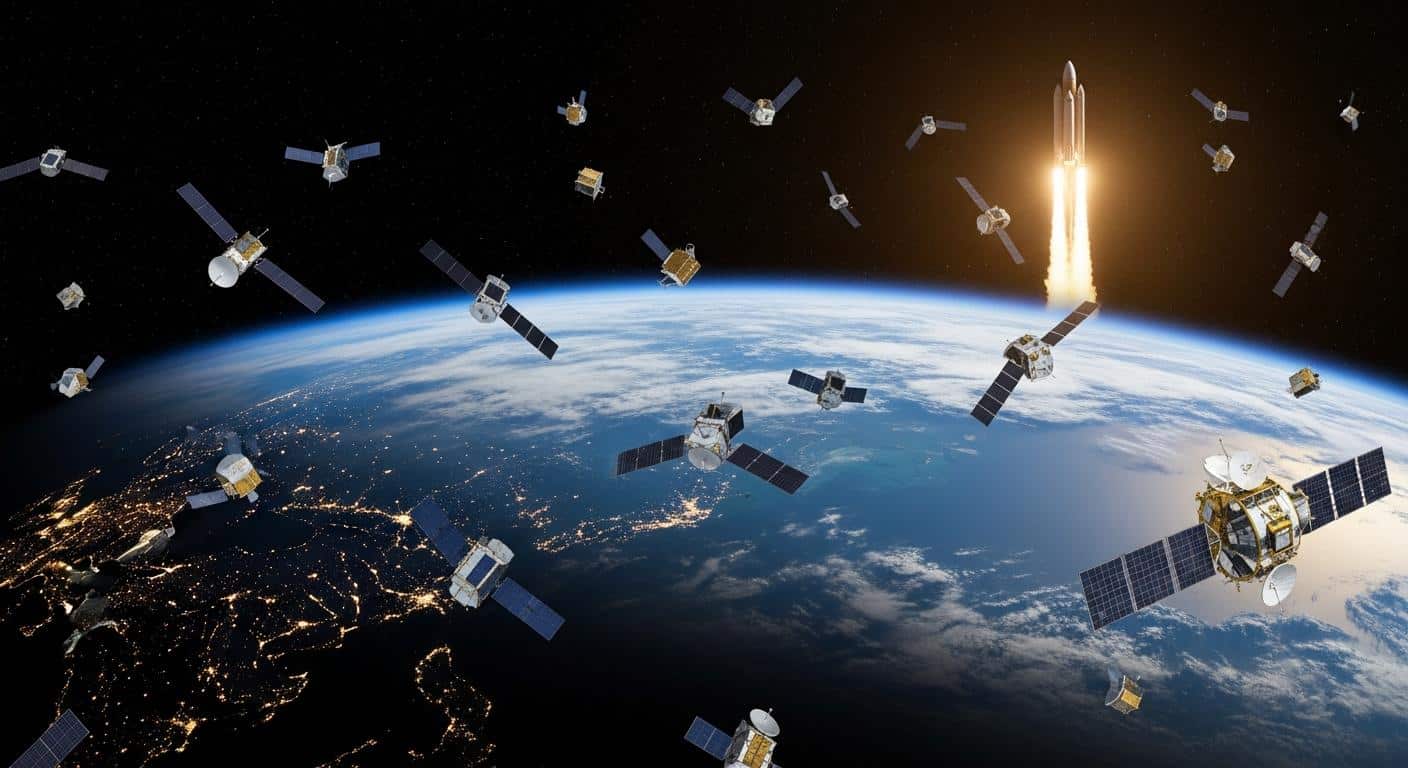
The stated ambition is dizzying: deploy up to 1 million satellites equipped with AI computing capabilities and powered by solar energy. The Starlink infrastructure, which already has several thousand operational satellites, would serve as the foundation for this giant constellation.
According to Musk’s statements, the timeline would be 2 to 3 years to achieve profitability. A timeframe that many experts consider optimistic, even unrealistic. But Starlink has already proven that SpaceX knows how to deploy massive constellations at an industrial pace. Here, we are simply moving to a higher scale, with technical challenges that are otherwise much more complex: extreme miniaturization, resistance to cosmic radiation, remote maintenance, and the lifespan of components in a hostile environment.
Technological Synergies: When Rockets Boost Artificial Intelligence
This merger is not just a financial move. The technological synergies between SpaceX and xAI are real and impressive. Starlink already provides the largest communication infrastructure ever deployed in low Earth orbit. Thousands of satellites ensure global connectivity, even in the most remote areas.
Now, imagine Grok, the AI chatbot developed by xAI and a direct competitor to ChatGPT, integrated directly into this constellation. We are talking about real-time data processing on a planetary scale, without relying on vulnerable or costly terrestrial infrastructures.
But it goes even further. Technologies developed at Tesla, notably high-density batteries and dry electrodes presented during the famous Battery Day 2020, are directly transferable to space. These innovations allow for storing more energy in less volume, an absolutely critical criterion for autonomous satellites.
The competitive advantage becomes obvious: SpaceX now controls launchers, satellites, AI, and energy technology. While OpenAI, Google, or Meta depend on energy-intensive terrestrial data centers and third-party cloud providers, Musk is building a vertically integrated infrastructure that frees itself from planetary constraints.
Funding Mars and the Moon: The Ultimate Goal Behind the Merger
But why all this, ultimately? The answer lies in a vision Musk has repeated for years: making humanity multi-planetary. Permanent lunar bases, a colonization of Mars, a civilization that no longer depends on a single vulnerable planet.
The problem? These projects cost hundreds of billions, even trillions of dollars. No government can or wants to finance this alone. Hence the brilliant idea: generating massive revenues via orbital AI and Starlink to self-finance space exploration.
Besoin d'accessoires pour ta Tesla ?
Looking for accessories for your Tesla?
The economic model becomes clear: Starlink ensures global connectivity (already profitable or close to it), orbital AI generates colossal cash flow via on-demand compute services, and these revenues finance the development of Starship, lunar bases, and then Martian infrastructure.
As a Teslien, I see a fascinating global coherence: Tesla finances the terrestrial energy transition with electric vehicles and solar power. SpaceX+xAI finances space expansion with AI and telecommunications. Two sides of the same coin: ensuring the survival and prosperity of humanity, here and elsewhere.
Major Obstacles on the Launchpad
Space Debris and International Regulation
Obviously, nothing is simple. The first obstacle concerns orbital pollution. Deploying an additional 1 million satellites raises legitimate environmental and security questions. The risk of chain collisions, known as Kessler Syndrome, rightly worries the scientific community.
SpaceX will have to obtain approval from the US FCC (Federal Communications Commission) for such a massive deployment, not to mention international regulators and space agencies worldwide. Each satellite, each orbit, each radio frequency must be validated, coordinated, and monitored.
Technical Feasibility and Geopolitical Risks
Many experts remain skeptical about the 2-3 year profitability announced by Musk. The technical challenges are immense: maintenance of satellites hundreds of kilometers in altitude, management of cosmic radiation that degrades electronics, and the lifespan of components in a hostile environment.
And then there’s the geopolitical dimension. Who controls AI infrastructure becomes a major strategic question. Will the United States allow a private company to hold a monopoly on spatial computing? Will China, Europe, Russia accept this American dominance?
The regulatory risks are numerous: FCC, UN, international space treaties, national AI legislations… Musk has already proven skeptics wrong with Tesla, SpaceX, and Starlink. But let’s admit it: here, the scale is completely unprecedented.
And Tesla in all this? The connections that matter to us
Let’s return to what directly interests us as Tesla owners and enthusiasts. SpaceX’s statement explicitly mentions ongoing discussions with Tesla for technology transfers. And xAI’s impact on Elon Musk’s record fortune inevitably affects the investment capacities of all his companies.
Concretely, what does this change for us? First, the technologies developed for space — ultra-high-performance batteries, optimized energy management, embedded AI systems — could directly improve the Autopilot and Full Self-Driving of our Teslas.
Next, let’s remember that Tesla’s $2 billion investment in xAI creates a direct financial and technological link. With this merger, Grok embedded in our Teslas becomes a completely credible hypothesis in the medium term. Imagine an AI assistant as powerful as ChatGPT, but natively integrated into your dashboard, functioning even offline thanks to embedded computing.
Finally, this convergence fits perfectly into the Tesla energy ecosystem: Powerwall, Solar Roof, Superchargers. If SpaceX succeeds in its gamble on spatial solar energy, technological spin-offs will inevitably benefit Tesla’s terrestrial solutions. For us, owners, this merger could accelerate AI innovation in our vehicles while strengthening the brand’s position as a technological leader. It remains to be seen the future developments of this strategy with international regulators who will validate — or not — this extraordinary spatial vision.
Profitez d'avantages exclusifs en achetant votre Tesla
Vous envisagez d'acquérir une Tesla ? En utilisant mon code de parrainage lors de votre achat, vous pouvez bénéficier d'avantages exceptionnels !
Des kilomètres gratuits de recharge ou d'autres récompenses exclusives, mon code de parrainage est votre passeport pour des avantages supplémentaires : https://ts.la/antoine49352 🤩
Pas de pression, juste une opportunité à saisir pour enrichir votre expérience Tesla.
Découvrez ici le système du parrainage et comment utiliser le code.
Get exclusive perks when buying your Tesla
Thinking about getting a Tesla? If you use my referral code when you purchase, you may be eligible for extra perks.
Free Supercharging miles or other exclusive rewards - my referral code can unlock additional benefits: https://ts.la/antoine49352 🤩
No pressure - just a simple option if you want to enhance your Tesla experience.
Learn how the Tesla referral program works and how to use the code.