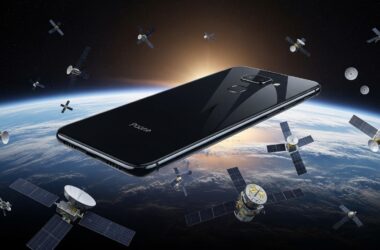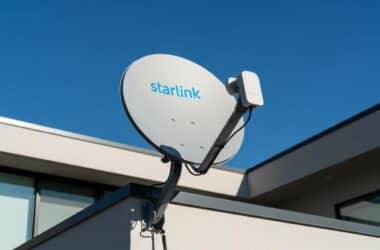



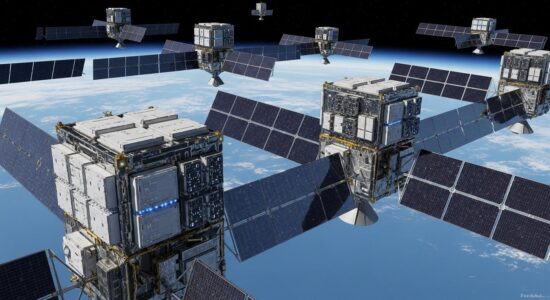
We thought that the 9,500 Starlink satellites currently in orbit were already colossal. SpaceX just filed a project with the FCC that makes that look like a prototype: 1 million satellites to create orbital data centers.
In early February 2026, the US federal agency agreed to review this extraordinary request. The context? The merger with xAI, the exponential need for computing power for artificial intelligence, and a vision that extends far beyond our decade.
Between futuristic vision and technical reality, I’m breaking down this project that could redefine our relationship with digital infrastructure.
The FCC opens review of an unprecedented space project
On February 4-5, 2026, the FCC officially agreed to review SpaceX’s request. The agency’s chairman, Brendan Carr, is personally overseeing the study of this unprecedented case.
Besoin d'accessoires pour ta Tesla ?
Looking for accessories for your Tesla?
A public consultation period is open until early March 2026. Anyone can express their opinion: scientific organizations, competing operators, environmental associations.
Critical point to understand: this is NOT an extension of Starlink Gen1 or Gen2. This is a distinct pilot system in non-geostationary orbit (NGSO), with planned interconnections to the existing Starlink network.
As a fan of SpaceX projects, I must admit that this number — 1 million — initially seemed unrealistic to me. But understanding the regulatory process helps put things in perspective: it’s simply a regulatory filing, not an approval or a commitment to immediate deployment.
One million satellites: technical anatomy of the project
Orbital architecture and connectivity
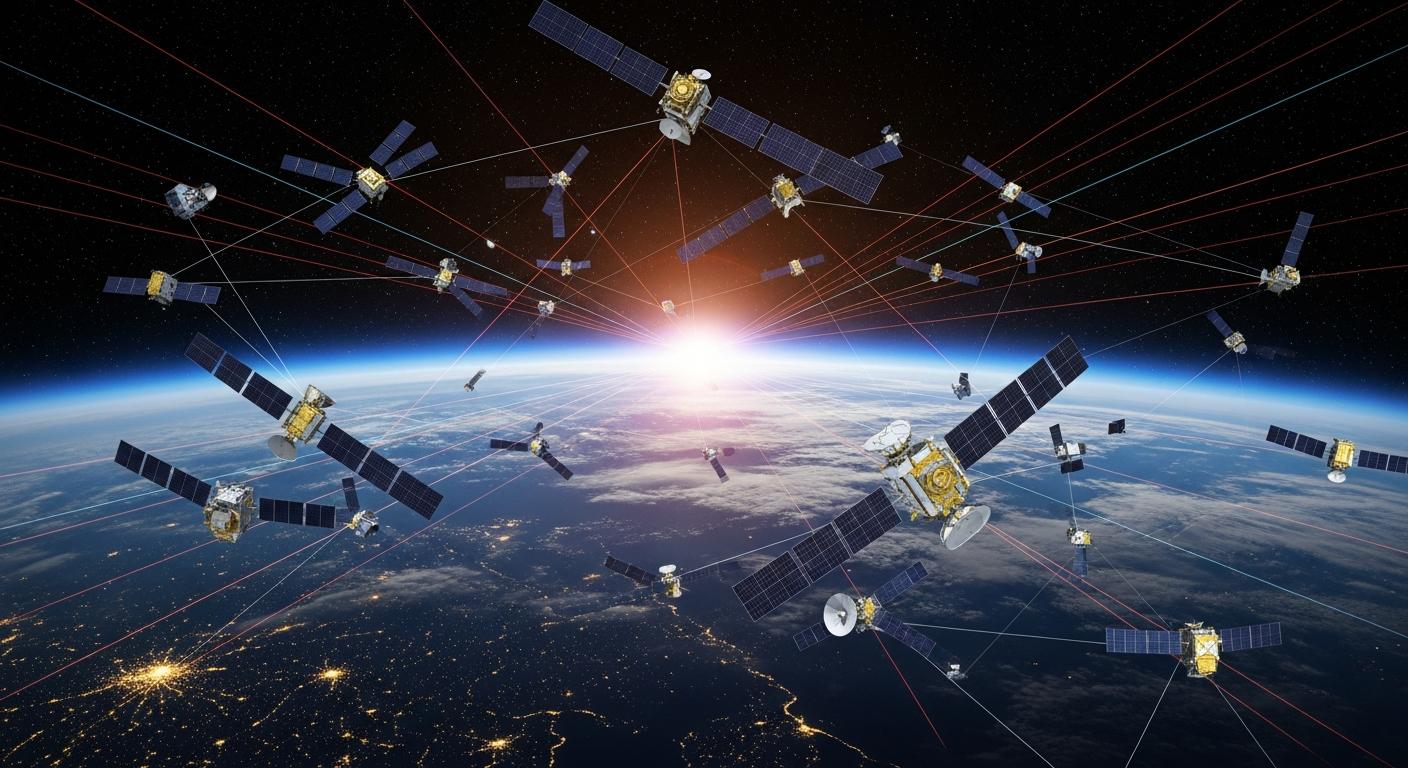
The project plans for an operational altitude between 500 and 2,000 kilometers. For comparison, current Starlink satellites operate around 550 km.
The real innovation lies in optical inter-satellite links: laser communication between satellites, without passing through the ground. This eliminates terrestrial latency and allows data routing directly in space.
The interconnection with existing Starlink Gen1 and Gen2 would ensure uplink and downlink to ground stations, transforming this constellation into a true distributed computing infrastructure.
Waivers requested from the FCC
SpaceX isn’t playing by the usual rules. The company is requesting several major regulatory waivers:
- Exemption from NGSO milestones: no classic deployment constraints
- Bond obligations: exemption from financial guarantee (normally mandatory)
- Non-disclosure of detailed orbital plans: confidentiality clause for strategic reasons
Why these requests? The scale is unprecedented, the financial risks colossal, and the current regulatory framework simply wasn’t designed for a project of this magnitude.
These waivers make me pause: they show that even SpaceX considers this project experimental, almost impossible to frame within current rules.
Why data centers in space? The logic behind the madness
The space energy equation
Space offers theoretical advantages impossible to replicate on Earth:
- 24/7 solar energy: no night, no weather, constant maximum photovoltaic efficiency
- Passive cooling: space is naturally cold, massive savings on air conditioning (which represents 40% of a terrestrial data center’s energy consumption)
- Delocalized intensive computing: AI, simulations, workloads that consume TWh annually
To contextualize: an average terrestrial data center consumes as much electricity as a city of 50,000 inhabitants. Multiplying that by the future needs of AI quickly becomes unsustainable.
The timing is no coincidence
This project is part of the SpaceX-xAI merger announced in early 2025. The massive need for computing power to train Grok and future artificial intelligence models largely explains this announcement.
Another decisive factor: Starship. This project would be strictly impossible without a reusable launcher capable of placing 100 tons into low Earth orbit at low cost. The integration of xAI into the SpaceX ecosystem creates vertical synergy: launcher + satellites + AI infrastructure.
Besoin d'accessoires pour ta Tesla ?
Looking for accessories for your Tesla?
The geopolitical context also plays a role: the AI race with China, digital space sovereignty, control of tomorrow’s critical infrastructure.
I remember when we laughed at Falcon 9’s reusability ambitions. Today, Starship makes this project technically plausible, even if economically it’s another story.
From Kardashev II to reality: vision or science fiction?
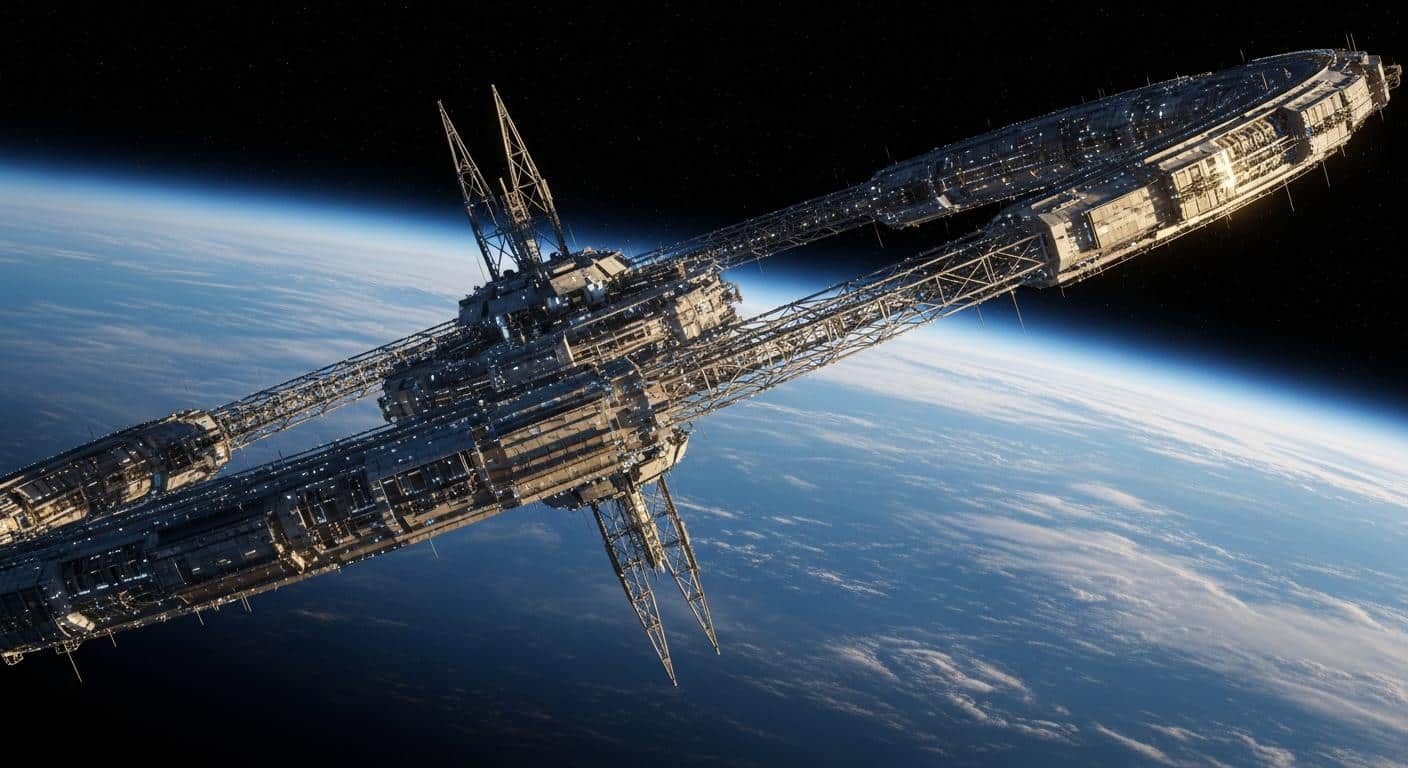
SpaceX presents this project as “the first step towards Kardashev II.” Let’s break down this reference.
The Kardashev scale classifies civilizations according to their energy consumption:
- Type I: Civilization using all available energy from its planet
- Type II: Civilization harnessing all the energy from its star (Dyson Sphere concept)
- Type III: Civilization controlling the energy of an entire galaxy
Currently, humanity is around 0.7 on this scale. We are far, very far, from Type I, and even further from Type II.
So yes, the stated ambition is inspiring. But let’s put things in perspective: current Starlink has 9,500 satellites for about 9 million users. Multiplying the number of satellites by 100+ to create a space megastructure for computing… for what exactly? What business model?
It must be acknowledged that Musk’s vision of robotic and energy integration spans several decades. This announcement is part of a long-term strategic coherence: Tesla for terrestrial energy, SpaceX for space infrastructure, xAI for intelligence.
Yes, it’s inspiring. But between a sentence in an FCC filing and the actual construction of a Kardashev infrastructure, there’s the equivalent of several Earth GDPs. Let’s remain fascinated, but clear-headed.
Next steps and regulatory hurdles
The immediate timeline includes a period for public comments until early March 2026. Scientific organizations, competing satellite operators, environmental NGOs: all can state their position.
The foreseeable obstacles are numerous:
- Space debris: 1 million satellites represents an exponential risk of collisions and the infamous Kessler syndrome (a chain reaction rendering orbit unusable)
- Light pollution: already a problematic impact with current Starlink on astronomy, multiplied by 100
- Radio interference: frequency coordination with other international operators
- Sovereignty: other countries could block access to their orbital segments
What is crucially missing from this file: no public deployment plan, no concrete timeline, no confirmed prototype, and especially no detailed deorbitation plan.
My analysis? This is probably a regulatory “place-holding” filing, as SpaceX has done in the past. Secure orbital and spectral rights before competitors, even if the entire system is never deployed.
As a space advocate, I’m torn: innovation is exciting, but orbital responsibility is crucial. One million satellites without a clear deorbitation plan is problematic for me. According to space industry experts, taking the step towards a Type I civilization first requires mastering our own orbital environment.
This project forces us to ask the right questions: how far can private space ambition go? Who regulates space when projects exceed national scale? How do we balance innovation and the preservation of the orbital environment?
The coming months will tell us if this FCC filing was a communication stunt, a strategic reservation, or the first real step towards a space infrastructure that even science fiction hadn’t dared to imagine on this scale.
Profitez d'avantages exclusifs en achetant votre Tesla
Vous envisagez d'acquérir une Tesla ? En utilisant mon code de parrainage lors de votre achat, vous pouvez bénéficier d'avantages exceptionnels !
Des kilomètres gratuits de recharge ou d'autres récompenses exclusives, mon code de parrainage est votre passeport pour des avantages supplémentaires : https://ts.la/antoine49352 🤩
Pas de pression, juste une opportunité à saisir pour enrichir votre expérience Tesla.
Découvrez ici le système du parrainage et comment utiliser le code.
Get exclusive perks when buying your Tesla
Thinking about getting a Tesla? If you use my referral code when you purchase, you may be eligible for extra perks.
Free Supercharging miles or other exclusive rewards - my referral code can unlock additional benefits: https://ts.la/antoine49352 🤩
No pressure - just a simple option if you want to enhance your Tesla experience.
Learn how the Tesla referral program works and how to use the code.