

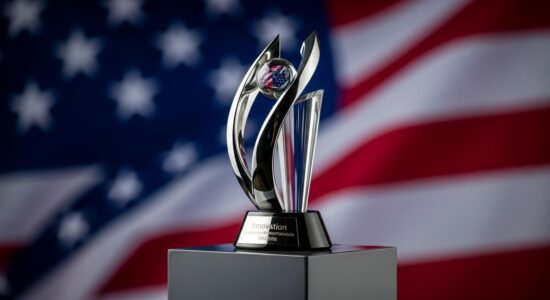
Forbes has just made a major splash by publishing its very first ranking of America’s “250 Greatest Innovators”, and guess who takes gold? Elon Musk, of course. The founder of Tesla and SpaceX ranks ahead of Jeff Bezos (#2) and Bill Gates (#3) in this historic list published to celebrate the United States’ 250th anniversary.
What really sets Musk apart, according to Forbes? He’s the only person in the world to have created five multi-billion-dollar companies in radically different sectors: electric cars, aerospace, neurotechnology, artificial intelligence, and urban infrastructure.
This crowning comes at a paradoxical moment for Tesla: sales are showing signs of weakness, Musk’s personal controversies fuel debate, but the company is making a major strategic pivot toward robotics and autonomy. Let’s break down this ranking, its methodology, and above all what it reveals about the current trajectory of the Musk empire.
Forbes hails Elon Musk as “America’s greatest innovator”
This inaugural ranking isn’t just a list of names thrown together at random. Forbes wanted to mark the occasion of America’s 250th anniversary by identifying the minds that have truly transformed the country.
Besoin d'accessoires pour ta Tesla ?
Looking for accessories for your Tesla?
The magazine’s direct quote is unambiguous: “The only person to have founded five companies valued at several billion dollars in completely different sectors”. That’s what puts Musk ahead of giants like Bezos or Gates.
The full podium:
- #1 Elon Musk (54, born in Pretoria) – Tesla, SpaceX, Neuralink, xAI, The Boring Company
- #2 Jeff Bezos (61) – Amazon, AWS, Blue Origin
- #3 Bill Gates (70) – Microsoft, philanthropy
The key differentiator matters: Bezos focused on e-commerce and cloud, Gates on software. Musk, meanwhile, is simultaneously involved in cars, space, the human brain, AI, and even urban tunnels. That sector diversity is unique.
Interesting detail: out of the 1,000 initial nominees, more than a third of the final ranking is made up of women and people of color, showing an effort toward representation in this innovation pantheon.
The 5 pillars of the Musk empire, decoded
Tesla: far more than a carmaker
I’ll start with Tesla, since that’s our territory here. The company has undergone a fascinating evolution: from a pure electric car company to an artificial intelligence and robotics company.
The current lineup includes the Model 3, Y, S, X and the famous Cybertruck. But the real tech stars are elsewhere: the Full Self-Driving (FSD) system, the Optimus humanoid robot, and the Cybercab (a robotaxi with no steering wheel or pedals).
Jim Cramer, a well-respected financial analyst, summed it up perfectly: “It’s no longer a car company, it’s a robotics company”. That line captures the entire transformation underway.
In fact, Tesla has announced the planned phase-out of the Tesla Model S and X for Q2 2026. These “legacy” models represent the old world, the one Musk wants to leave behind.
The 4 other companies in the ecosystem
Here are the other pillars of the empire, quickly:
- SpaceX: reusable Falcon and Starship rockets, the Starlink constellation for satellite internet, long-term Mars goal
- Neuralink: brain–computer interfaces, with first human trials already underway
- xAI: a direct competitor to ChatGPT in the race toward artificial general intelligence
- The Boring Company: urban tunnels to revolutionize city transport
What’s remarkable is the synergies between companies. The AI developed for Tesla feeds xAI’s projects. Battery expertise benefits SpaceX. Software engineering moves from one entity to another. It’s a smart diversification strategy, not scattered effort.
A controversial but rigorous Forbes methodology
How did Forbes put this ranking together? The selection process is worth a closer look to understand the legitimacy of this crowning.
The magazine assembled a panel of recognized judges: Jim Breyer (venture capital), Kara Swisher (influential tech journalist), Rita McGrath (strategy expert). They evaluated around 1,000 nominees based on 5 specific criteria:
- Creativity: originality of the approach and vision
- Scope: the scale of impact on society
- Commitment: ability to rally teams, communities, investors
- Disruption: challenging established models
- Commercial impact: measurable creation of economic value
A delightful irony: Forbes used ChatGPT and Gemini to analyze the data. Artificial intelligence is therefore judging the innovators… of artificial intelligence. As meta as it gets.
Besoin d'accessoires pour ta Tesla ?
Looking for accessories for your Tesla?
Of course, any methodology remains subjective. But this one combines human expertise and data analysis in a fairly convincing way.
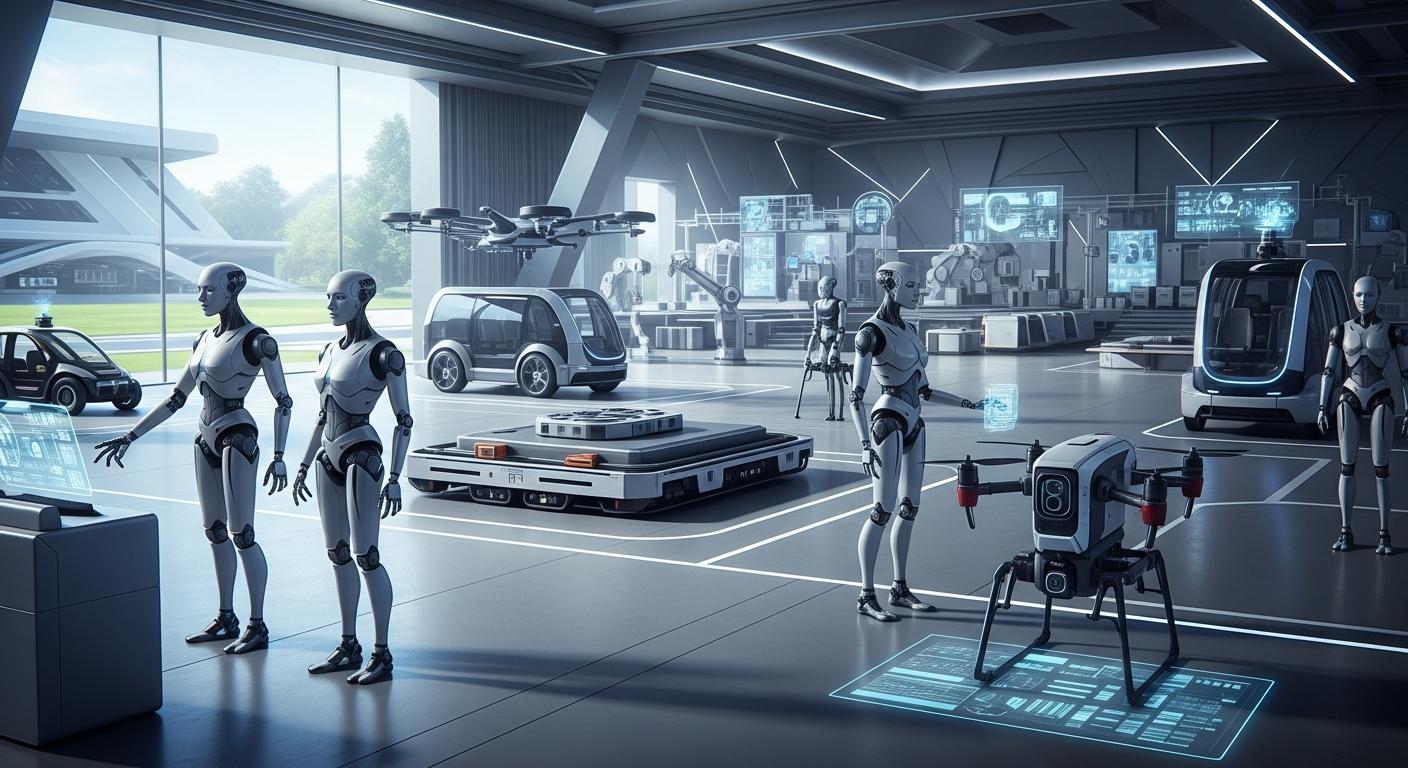
Tesla’s strategic shift toward robotics and autonomy
Now let’s talk about what matters most to us as Tesla fans: the company’s radical transformation.
The official pivot is now confirmed: Tesla now positions itself as a robotics and AI company that also happens to make cars. This isn’t just a marketing line—it’s a strategic reality.
The flagship projects that embody this transformation:
- Cybercab: the Robotaxi project Musk has been developing for several years, an autonomous vehicle with no steering wheel or pedals
- Optimus: a humanoid robot designed for repetitive tasks in factories and at home
- Full FSD: recent advances in the autonomous driving system are targeting Level 4–5 autonomy
The phase-out of the Tesla Model S and X planned for Q2 2026 symbolizes this break. These premium sedans and SUVs represent the “traditional electric vehicle” era that Tesla wants to move beyond.
After the Q4 2025 results, Tesla stock also reacted positively to the autonomy and robotics announcements. Investors are clearly betting on that future, not on current car sales.
The question that remains open: does this transformation justify today’s market valuation? The market says yes, but the next few quarters will have to prove it in concrete terms.
Commercial success and controversies: the Musk paradox
Numbers that speak despite the decline
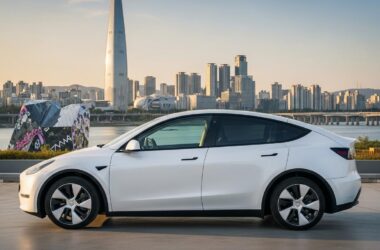
Let’s focus on hard data. In California, the Model Y, which continues to be the world’s best-selling electric vehicle, remains #1 for the fourth consecutive year.
The numbers: 110,120 units sold in 2025, even ahead of the Toyota RAV4, the state’s most popular gas-powered vehicle. Yes, there’s a decline compared with the previous year, but the dominance remains intact.
The context partly explains that decline:
- End of the $7,500 federal tax credit that made Teslas more affordable
- Increased competition from traditional automakers (Ford, GM, Hyundai) in electric cars
- Political and personal controversies surrounding Elon Musk
Tensions around the brand
It’s impossible to ignore the elephant in the room: anti-Musk protests are multiplying. Demonstrations, calls for boycotts, graffiti on Cybertrucks… The man is polarizing, to say the least.
And yet the measured impact remains limited. Tesla retains its status as the electric market leader. A loyal customer base largely offsets customers lost for political or personal reasons.
That raises a fascinating philosophical question: can innovation genius be separated from a public persona? Forbes clearly answers yes with this ranking based solely on achievements. But the market is still unsure.
This distinction between technical innovation and public perception also echoes analyses by recognized experts on the great American industrialists who shaped the country’s history—often with controversial personalities but undeniable impact.
Forbes recognizes Musk as a truly unique multi-sector innovator in modern industrial history. Five multi-billion-dollar companies in seemingly unrelated fields is unprecedented.
Will Tesla’s bet on a robotics transformation be the next stroke of genius that validates this honor… or the first major failure of an empire stretched too thin? The next twelve months will be decisive. The Cybercab must become reality, Optimus must prove its commercial usefulness, and FSD must reach true autonomy.
One thing is certain: no one can accuse Elon Musk of playing it safe. And that’s probably what Forbes wanted to reward above all.
Profitez d'avantages exclusifs en achetant votre Tesla
Vous envisagez d'acquérir une Tesla ? En utilisant mon code de parrainage lors de votre achat, vous pouvez bénéficier d'avantages exceptionnels !
Des kilomètres gratuits de recharge ou d'autres récompenses exclusives, mon code de parrainage est votre passeport pour des avantages supplémentaires : https://ts.la/antoine49352 🤩
Pas de pression, juste une opportunité à saisir pour enrichir votre expérience Tesla.
Découvrez ici le système du parrainage et comment utiliser le code.
Get exclusive perks when buying your Tesla
Thinking about getting a Tesla? If you use my referral code when you purchase, you may be eligible for extra perks.
Free Supercharging miles or other exclusive rewards - my referral code can unlock additional benefits: https://ts.la/antoine49352 🤩
No pressure - just a simple option if you want to enhance your Tesla experience.
Learn how the Tesla referral program works and how to use the code.