

The Tesla Supercharger remains the best choice for regular long journeys thanks to its reliability, speed, and perfect vehicle integration. For daily urban use, third-party charging stations are more than sufficient and can cost less with a suitable subscription. The real solution? Mix and match according to your actual needs.
After thousands of kilometers driven with my Tesla and dozens of charges on different networks, I’ve often asked myself this question: should I systematically prioritize Superchargers or explore third-party charging stations?
Today, we are spoiled for choice. The Supercharger network continues to expand, but in parallel, third-party charging stations are multiplying with players like Ionity, Total Energies, Electra, or Allego. Tesla is even gradually opening its Superchargers to other brands, which is a game-changer.
The question of Supercharger vs. third-party Tesla charging stations has no universal answer. It all depends on your use, your usual journeys, and your priorities. I will help you see things more clearly based on your real situation, with my concrete feedback on both options.
Besoin d'accessoires pour ta Tesla ?
Looking for accessories for your Tesla?
Charging speed: the Supercharger maintains the advantage
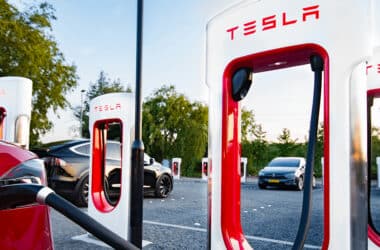
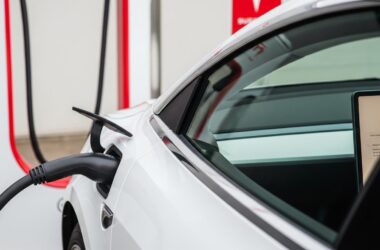
This is probably where the difference is most visible. V3 Superchargers deliver up to 250 kW of charging power, and the new V4s can go up to 350 kW. In optimal conditions, you go from 10% to 80% in 20-25 minutes.
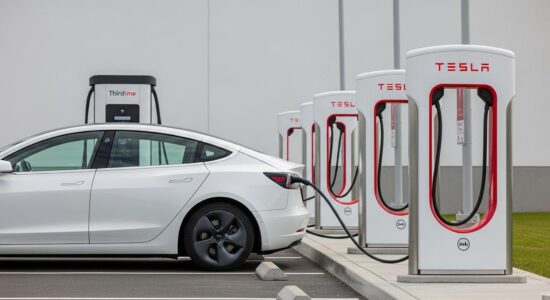
Third-party charging stations, however, vary enormously: from 50 kW for the oldest to 350 kW for recent installations from Ionity or Electra. But even with equal power on paper, I’ve noticed a real difference in practice.
Why? Because Tesla optimizes the entire process. When you activate battery preconditioning by heading to a Supercharger, the car heats the battery to the ideal temperature. This preconditioning optimization is exclusive to the Tesla network.
The result? At a 150 kW third-party charging station, I sometimes spend 30 to 45 minutes for the same charge. The charging curve is better managed on the Tesla network, with an optimized charging time that truly makes a difference on a long journey.
To understand the full operation of Tesla Superchargers, it is this native integration that explains their superiority in pure speed.
Price per kWh: the battle rages
Tesla Supercharger rates
Regarding the rate per kWh, Tesla applies variable pricing depending on the time and location. In France, expect between €0.45 and €0.67/kWh depending on the sites and times of day. The advantage? Transparent billing, directly linked to your Tesla account, with no subscription required.
Be careful, however: after 80% charge, you pay by the minute to encourage rotation. And if you remain plugged in when the station is in demand, idle fees may apply.
Third-party network rates
This is where it gets complicated. Third-party charging networks offer highly variable pricing. Ionity, for example, is expensive without a subscription (€0.79/kWh) but drops to €0.49/kWh with their monthly plan at €17.99.
Total Energies, Electra, Allego… each has its own pricing structure. Monthly subscriptions can be interesting if you charge often outside of Superchargers. Multi-network cards like Chargemap Pass or Freshmile simplify payment but add a commission.
| Network | Price without subscription | Price with subscription |
| Tesla Supercharger | €0.45-0.67/kWh | — |
| Ionity | €0.79/kWh | €0.49/kWh (€17.99/month) |
| Total Energies | €0.50-0.65/kWh | Variable depending on plan |
| Electra | €0.49/kWh | — |
My advice: if you drive a lot, compare subscriptions. If you charge occasionally while traveling, Superchargers remain competitive with their simple pricing.
Reliability and user experience: Tesla leads
This is perhaps the most important point for me. The reliability of Superchargers is exceptional: the availability rate is around 99%. When I arrive at a site, I know it will work.
At third-party charging stations, it’s more hit-or-miss. I’ve experienced breakdowns, stations occupied by ICE vehicles, vandalized cables… Not systematically, but often enough for it to become stressful on a long journey.
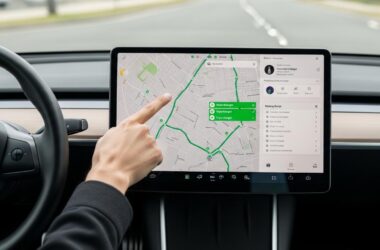
The GPS integration makes all the difference. With Tesla, you enter your destination and the car automatically plans your Supercharger stops. You arrive, you plug in, that’s it. Automatic payment happens without taking out a card or launching an app.
Besoin d'accessoires pour ta Tesla ?
Looking for accessories for your Tesla?
With third-party charging stations, you have to juggle multiple apps, create accounts, sometimes scan a QR code that doesn’t work… This mental friction comes at a cost, especially when you’re tired after 500 km of driving.
The quality of equipment and Tesla’s proactive maintenance also play a role. The sites are clean, well-lit, and the stations are regularly maintained. This peace of mind justifies, for me, a slight additional cost.
Geographical coverage: it all depends on your journeys
For major routes and highways
On long-distance journeys, the highway coverage of Superchargers is unbeatable. They are strategically placed every 150-200 km on major European routes. Paris-Nice, Paris-Bordeaux, holiday trips… you never have to worry.
Third-party charging stations are also present at highway rest areas, but less densely. To plan your Supercharger stops, the in-car tool remains the most reliable.
For rural and suburban areas
However, in urban areas and city centers, third-party networks are sometimes better established. Superchargers require large sites with many stations, which are difficult to install in city centers.
Local public charging stations in commercial areas, supermarket parking lots, or gas stations then become valuable. Chargemap is essential for locating these alternatives and reading user reviews.
My recommendations based on your usage profile
There’s no magic solution; it all depends on your driver profile. Here’s my charging strategy according to three typical profiles:
Profile 1 – Regular long journeys (holidays, business trips)
- Prioritize Superchargers 90% of the time
- Reliability, speed, and predictability are essential for long distances
- The slightly higher cost is largely justified by peace of mind
- Still keep a third-party card as backup for unforeseen circumstances
Profile 2 – Daily urban/suburban use
- Home charging should be your priority (80% of your charges)
- Third-party charging stations are largely sufficient for occasional top-ups
- A multi-network subscription can be beneficial if you charge regularly in the city
- Superchargers become secondary in this case
Profile 3 – Mix of both (my case)
- Superchargers for all long highway journeys
- Opportunism elsewhere: I use good third-party charging stations when they are well-located and cheaper
- I have Chargemap installed + cards for 2-3 third-party networks as backup
- I know the good spots on my usual routes (you learn over time)
Bonus tip: always have a backup plan. Before a trip, I locate the planned Supercharger AND a nearby third-party alternative. If the Supercharger is saturated (which happens during holidays), I switch without stress.
This mixed-use approach allows me to optimize costs and comfort depending on the situation.
Ultimately, there’s no universal answer to the Supercharger or third-party charging stations question. The Tesla network remains the benchmark for peace of mind and performance, that’s undeniable. But third-party charging stations are a valuable complement, constantly improving, and sometimes more practical depending on your use.
The gradual opening of Superchargers to other brands will likely increase traffic at some sites. As industry experts point out, this interoperability of networks is transforming the electric charging landscape. It’s a sign that the evolving charging network continues to mature.
My final advice? Test both to form your own opinion. Electric driving also means learning your local network, its good addresses, its secret spots. This freedom of choice is part of the experience. Don’t hesitate to share your own feedback and tips in the comments!
Profitez d'avantages exclusifs en achetant votre Tesla
Vous envisagez d'acquérir une Tesla ? En utilisant mon code de parrainage lors de votre achat, vous pouvez bénéficier d'avantages exceptionnels !
Des kilomètres gratuits de recharge ou d'autres récompenses exclusives, mon code de parrainage est votre passeport pour des avantages supplémentaires : https://ts.la/antoine49352 🤩
Pas de pression, juste une opportunité à saisir pour enrichir votre expérience Tesla.
Découvrez ici le système du parrainage et comment utiliser le code.
Get exclusive perks when buying your Tesla
Thinking about getting a Tesla? If you use my referral code when you purchase, you may be eligible for extra perks.
Free Supercharging miles or other exclusive rewards - my referral code can unlock additional benefits: https://ts.la/antoine49352 🤩
No pressure - just a simple option if you want to enhance your Tesla experience.
Learn how the Tesla referral program works and how to use the code.