




On February 5, 2026, Elon Musk set the record straight: no, SpaceX is not developing a Starlink smartphone. Two public statements on X (formerly Twitter) formally denied rumors that have been circulating for years about a hypothetical “Tesla Phone” or “Starlink Phone.” Yet, this confusion persists in the tech community, fueled by viral visual concepts and apparent logic: why wouldn’t a company with a satellite constellation create its own phone?
The reality is far more nuanced. Between long-term vision and product roadmap, between an “AI-optimized” device and a traditional smartphone, Musk’s statements deserve precise deciphering. I’ll help you separate fact from fiction in this news that’s stirring up the tech sphere, based on verifiable facts and SpaceX’s strategic context.
The categorical denial in the face of persistent rumors
On February 5, 2026, Elon Musk reacted to a Reuters article citing “internal sources” discussing SpaceX’s development of a smartphone. In two successive tweets, the billionaire called this information “completely false” and specified that no phone project was under development at SpaceX.
However, these speculations are not new. Since 2021-2022, visual concepts of a hypothetical “Tesla Phone” have regularly circulated on social media, accumulating millions of views. The logic seemed irrefutable: Musk owns a Starlink constellation capable of providing internet anywhere in the world, so why not create a smartphone to use it?
Besoin d'accessoires pour ta Tesla ?
Looking for accessories for your Tesla?
This confusion can be explained by several factors. First, the Musk ecosystem (Tesla, SpaceX, X, xAI) naturally creates expectations of synergy. Second, Tesla has already surprised with unexpected products like the flamethrower or Tesla tequila, making any scenario plausible. Finally, the universal connectivity promised by Starlink seemed to call for dedicated hardware.
But the categorical denial on February 5 must be taken seriously: it’s not a typical Muskian twist, but a clear clarification in the face of pervasive rumors.
What Musk actually said about a future device
A “very different” device optimized for AI
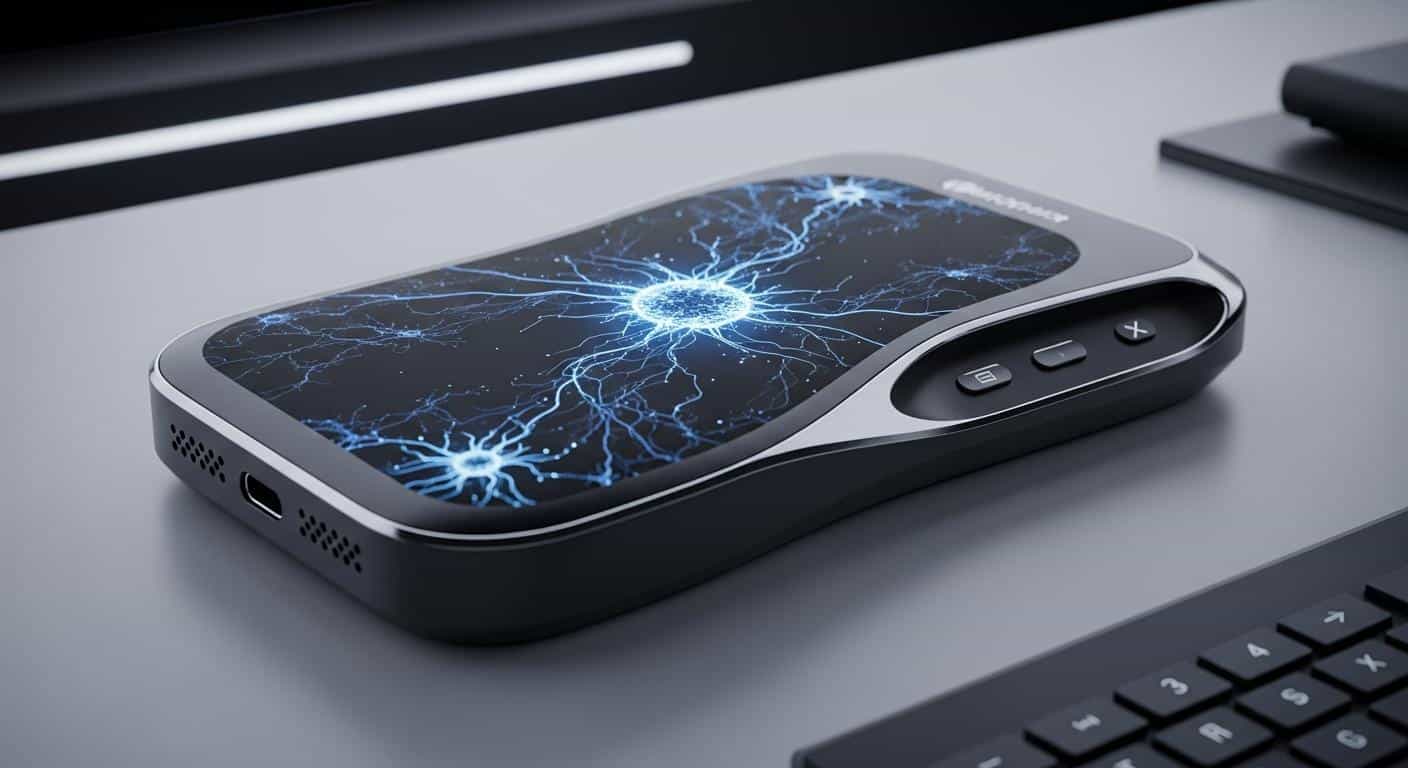
A few days earlier, on January 30, 2026, Musk had hinted at a possibility: “Not ruled out at some point,” he wrote, but immediately clarified that this potential device would be “very different” from current smartphones. The key criterion? A device optimized for “neural networks max performance per watt.”
What does this mean concretely? An AI-optimized device is not a traditional smartphone with apps and a closed ecosystem (iOS or Android). It would rather be a specialized terminal, designed to run artificial intelligence models with maximum energy efficiency.
This approach is reminiscent of Tesla’s FSD chip: rather than using generic processors, the company developed its own specialized hardware for autonomous driving. Musk envisions a similar device for conversational AI, possibly integrated with xAI (his artificial intelligence company).
It’s also important to distinguish between long-term vision and immediate product. Musk often talks about concepts 5-10 years away, like the Optimus robot announced in 2021 but still under development. For Musk confirmed this historic merger before a potential IPO, this distinction is crucial: a prospective statement does not constitute a product roadmap.
My personal analysis? I think Musk is talking about a category of device that doesn’t yet exist on the market. Closer to an AI terminal than an iPhone competitor, this hypothetical device would be part of a disruptive innovation strategy rather than direct competition with Apple or Samsung.
Starlink’s current capabilities in telephony
The T-Mobile partnership and “direct-to-device” technology
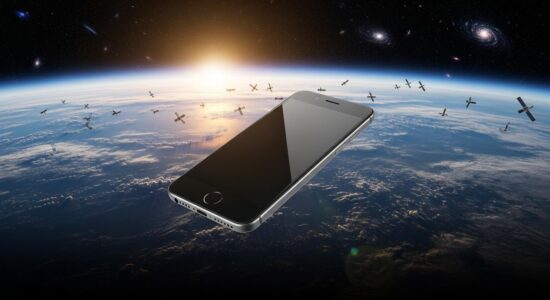
So what is Starlink actually doing in mobile? The answer is three words: direct-to-device. With 9,500 Starlink satellites operational and over 9 million users worldwide, SpaceX has deployed 650 satellites dedicated to direct mobile connectivity.
The principle is ingenious: these satellites communicate directly with EXISTING smartphones, without requiring specific Starlink hardware. Thanks to the T-Mobile partnership in the United States, this technology allows for maintaining a connection in dead zones or emergency situations, where terrestrial antennas cannot reach.
In 2025, SpaceX strengthened this strategy by acquiring EchoStar’s satellite spectrum for $19.6 billion. This massive acquisition complements mobile connectivity capabilities by integrating with existing operator networks rather than competing with them.
As a Tesla user, I perfectly see the coherence of this approach: offering connectivity everywhere without creating competing hardware. Starlink completes the Musk ecosystem by staying within its core business (space connectivity) rather than dispersing into consumer electronics.
Why SpaceX doesn’t need a smartphone now
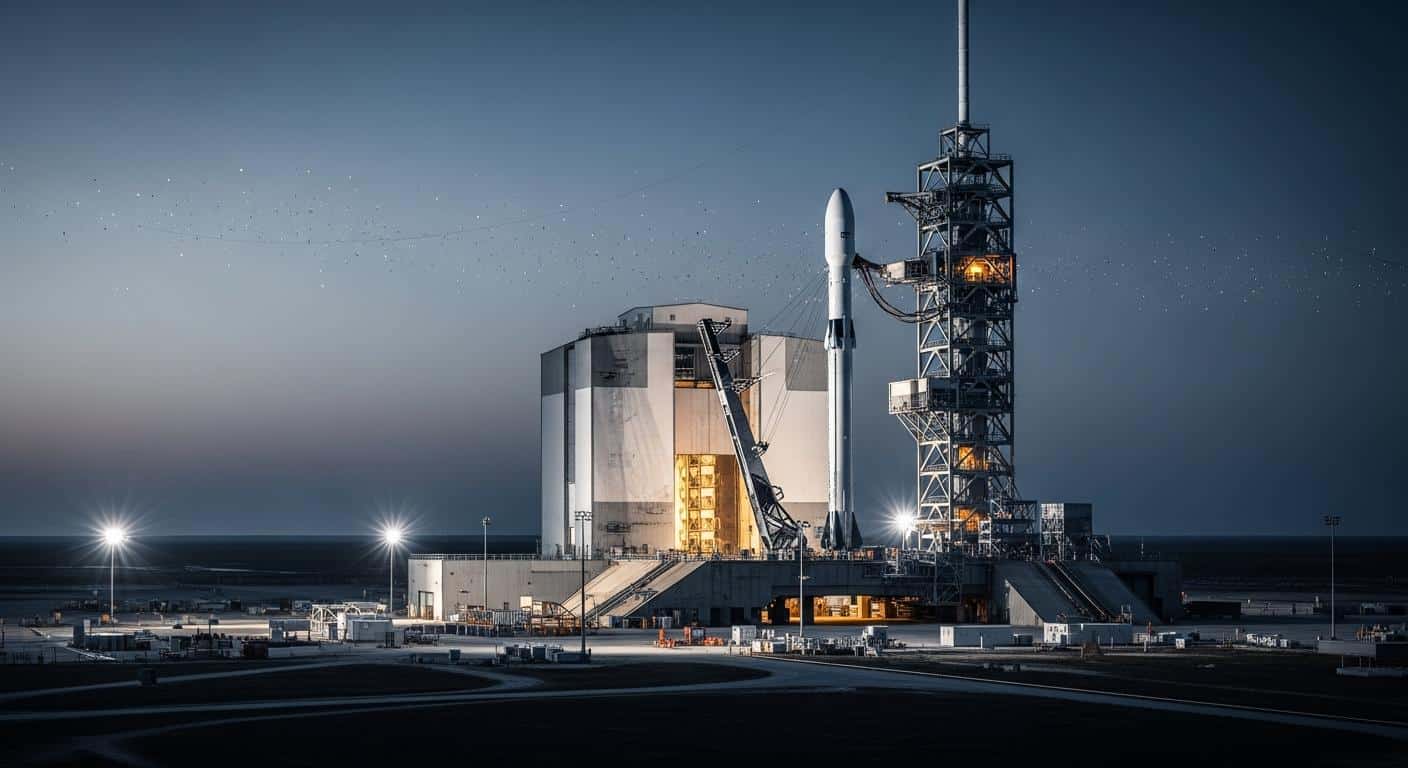
SpaceX’s current strategic priorities largely explain this choice. The recent merger between SpaceX and xAI focuses Musk’s attention on integrating these two giants. The development of Starship, the expansion of the Starlink constellation, and orbital data center projects are titanic undertakings that monopolize the company’s resources.
Economically, the business model via operator partnerships is much more profitable. Partnering with the T-Mobiles, Oranges, or Vodafones of the world allows Starlink to monetize without investing billions in smartphone R&D, while sharing revenue without taking market risk.
Besoin d'accessoires pour ta Tesla ?
Looking for accessories for your Tesla?
Because the complexity of the smartphone market is formidable. Apple/Samsung’s dominance seems unshakable, and history is full of resounding failures: Amazon Fire Phone, Microsoft Windows Phone, Andy Rubin’s Essential Phone… Even with colossal means, creating a software ecosystem constitutes a gigantic barrier to entry. Margins are low, competition is fierce, and the innovation cycle is rapid.
Frankly, creating a smartphone would be a distraction for SpaceX. Musk’s ambitions in robotics and energy demonstrate that he prefers to invest in areas where he can revolutionize an entire industry rather than fight for a few market share points in a saturated sector.
The French context: implications for European users
Starlink France has been operational since 2021, with full coverage of the territory. Many European users, especially Tesla owners, already use Starlink for their secondary residences, RVs, or rural areas.
Regarding mobile prospects in Europe, no equivalent of the T-Mobile partnership has been officially announced. European regulations on satellite constellations are stricter, but discussions are reportedly underway with several European operators according to unconfirmed rumors.
For us, French Tesla users, this means we shouldn’t expect a “Tesla Phone” in the short term. However, the improvement of Tesla connectivity via Starlink (fixed or mobile) remains a realistic prospect, especially for in-vehicle online features in poorly covered areas.
The denial of February 5, 2026, is clear, but Musk’s long-term vision for a “different” AI-optimized device does exist. The distinction between rumor and actual strategy is essential: SpaceX will not make a smartphone, but could one day create a new category of device. As always with Musk, patience is key: he operates on a 5-to-10-year horizon.
My personal advice? Keep your iPhone or Samsung, and focus on the real SpaceX innovations: Starship, Starlink direct-to-device, and integration with xAI. To better understand the technical context of space telecommunications, official SpaceX statements and analyses from organizations like CNES provide valuable insight into these cutting-edge technologies.
I will continue to closely follow Musk’s statements and keep you informed of any significant developments on Tesliens.com.
Profitez d'avantages exclusifs en achetant votre Tesla
Vous envisagez d'acquérir une Tesla ? En utilisant mon code de parrainage lors de votre achat, vous pouvez bénéficier d'avantages exceptionnels !
Des kilomètres gratuits de recharge ou d'autres récompenses exclusives, mon code de parrainage est votre passeport pour des avantages supplémentaires : https://ts.la/antoine49352 🤩
Pas de pression, juste une opportunité à saisir pour enrichir votre expérience Tesla.
Découvrez ici le système du parrainage et comment utiliser le code.
Get exclusive perks when buying your Tesla
Thinking about getting a Tesla? If you use my referral code when you purchase, you may be eligible for extra perks.
Free Supercharging miles or other exclusive rewards - my referral code can unlock additional benefits: https://ts.la/antoine49352 🤩
No pressure - just a simple option if you want to enhance your Tesla experience.
Learn how the Tesla referral program works and how to use the code.


