


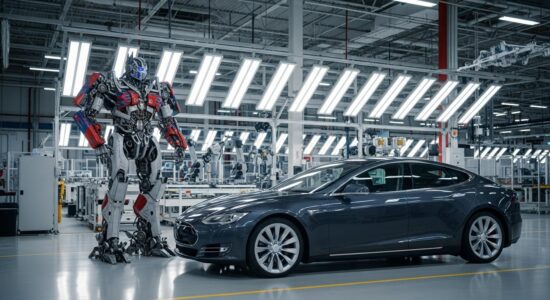
Sunday morning, early January 2026. A Tesla lab, usually quiet on weekends, is buzzing with activity. Jason Calacanis, a recognized angel investor and close to Elon Musk, walks through the doors of this place usually closed to the public. What he discovers that day prompts him to make a sensational statement on social media: “We will forget that Tesla made cars.” The reason? A private demonstration of the Tesla Optimus V3, the phantom version of the humanoid robot of which no one had yet seen a single image.
Elon Musk himself indirectly validates it by replying “Probably true” to Calacanis’s tweet. As a Tesla owner and a careful observer of the ecosystem, this revelation deeply resonates with me. I’m sharing my analysis of this exceptional testimony with you, balancing technological enthusiasm and necessary industrial realism.
Privileged access to the Tesla lab on a Sunday morning
To understand the importance of this testimony, one must first know who Jason Calacanis is. This prominent entrepreneur and investor is not just an external observer. Close to Elon Musk for years, he has built his reputation on rather accurate technological predictions and privileged access to the Silicon Valley startup ecosystem.
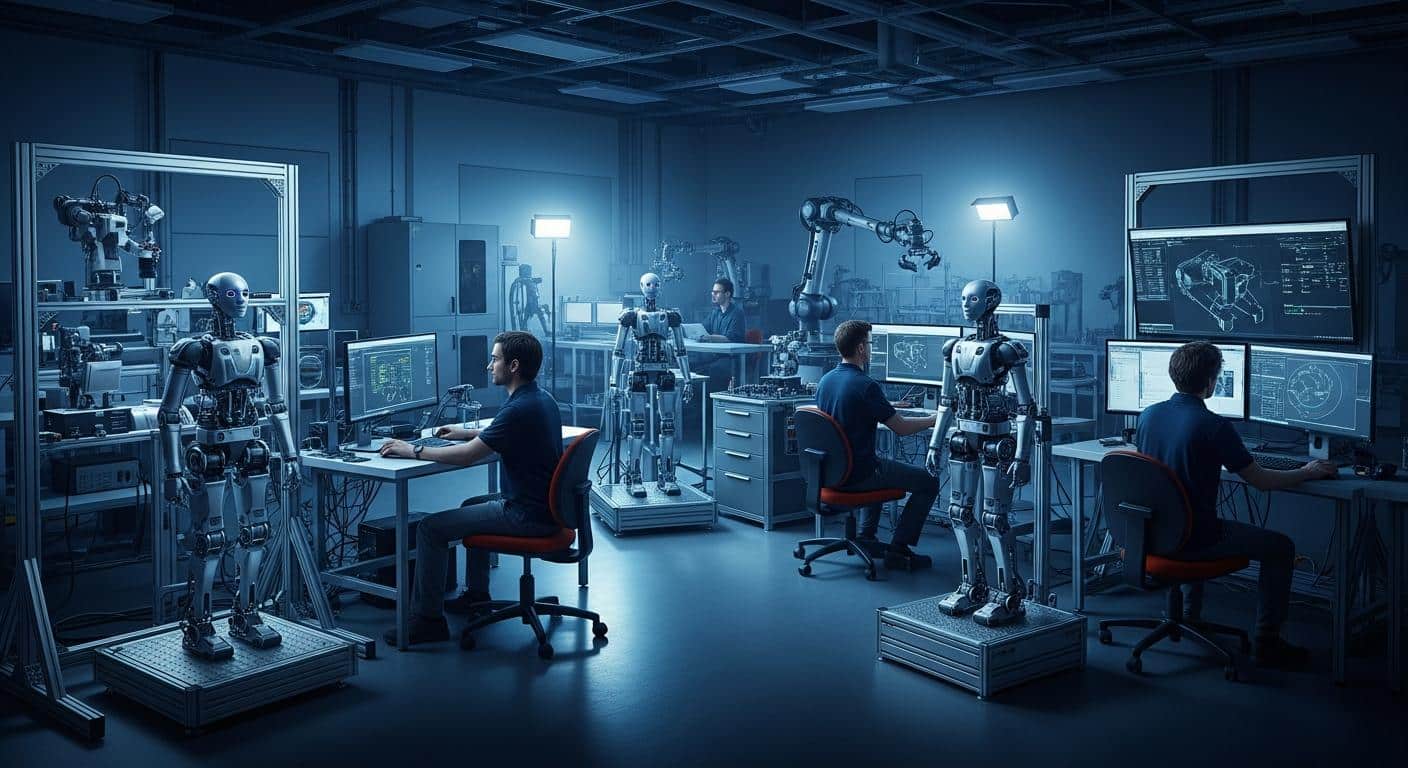
The context of this visit is anything but trivial. A Sunday morning in an active Optimus lab, with many employees present despite the weekend, clearly signals a project in a phase of accelerated development. Tesla is not showing this V3 to the general public, not even at CES 2026 where the V2.5 version had made some appearances.
Besoin d'accessoires pour ta Tesla ?
Looking for accessories for your Tesla?
This strategy of private demonstrations for hand-picked investors and partners reveals something important: Tesla is probably testing reactions before an official unveiling. They want to ensure that the product lives up to the colossal expectations they themselves have created.
“We will forget that Tesla made cars”: a thought-provoking statement
Calacanis’s full quote, published right after his visit, leaves no ambiguity about his enthusiasm. His tone is serious, almost solemn. But what does this radical prediction really mean?
Let’s recall the context: Tesla is currently the 5th largest global car manufacturer by volume. Automotive represents over 95% of the company’s revenue. To assert that Optimus will become THE primary revenue source is to predict an industrial transformation of a scale rarely seen in recent economic history.
This prediction reminds me of other major industrial pivots: IBM moving from typewriters to IT services, Nokia dominated then swept away in mobile telephony, or Apple transforming from a computer manufacturer into a mobile ecosystem creator. These examples show that industrial revolutions are possible, but also unpredictable.
As a Tesla owner, I admit I find it hard to imagine the brand without its cars. BUT – and it’s a big “but” – I also remember thinking that a €100,000 electric sedan would never work. The Tesla Model S proved me wrong. Musk’s vision is often 5 to 10 years ahead of the market.
A caveat is necessary, however: Calacanis is an investor, not a robotics engineer. His enthusiasm must be tempered by the technical reality and the immense challenges awaiting Tesla in this nascent market.
Optimus V3, the phantom version no one has seen yet
What Elon Musk confirms
Elon Musk’s “Probably true” response to Calacanis’s tweet constitutes an indirect but clear validation. This communication style, with measured caution, contrasts with Musk’s usually more direct and sometimes exuberant announcements. This suggests he takes this prediction seriously.
Musk also implicitly confirms that the Tesla Optimus V3 has indeed never been shown publicly. No official video, no presentation at major events like CES 2026 where version 2.5 was present. This ultra-controlled communication strategy is unusual for Tesla, which is generally quick to communicate its advancements.
Probable differences with V2 and V2.5
To contextualize, let’s recall the previous versions: the 2024 V2 had 19 degrees of freedom with 11 DoF hands. The V2.5 from late 2025 improved gait and fine object manipulation.
Regarding V3, I can only formulate hypotheses based on Calacanis’s testimony. The AI integration via LLMs seems significantly more advanced. Decision-making autonomy would be increased, allowing the robot to adapt to unforeseen situations. Manipulation capabilities have probably made a major qualitative leap.
My interpretation? If Tesla is keeping V3 a secret, it’s probably because it represents too significant a competitive advantage to be revealed prematurely. With Boston Dynamics, Figure, and other rapidly progressing players, confidentiality becomes a strategic weapon.
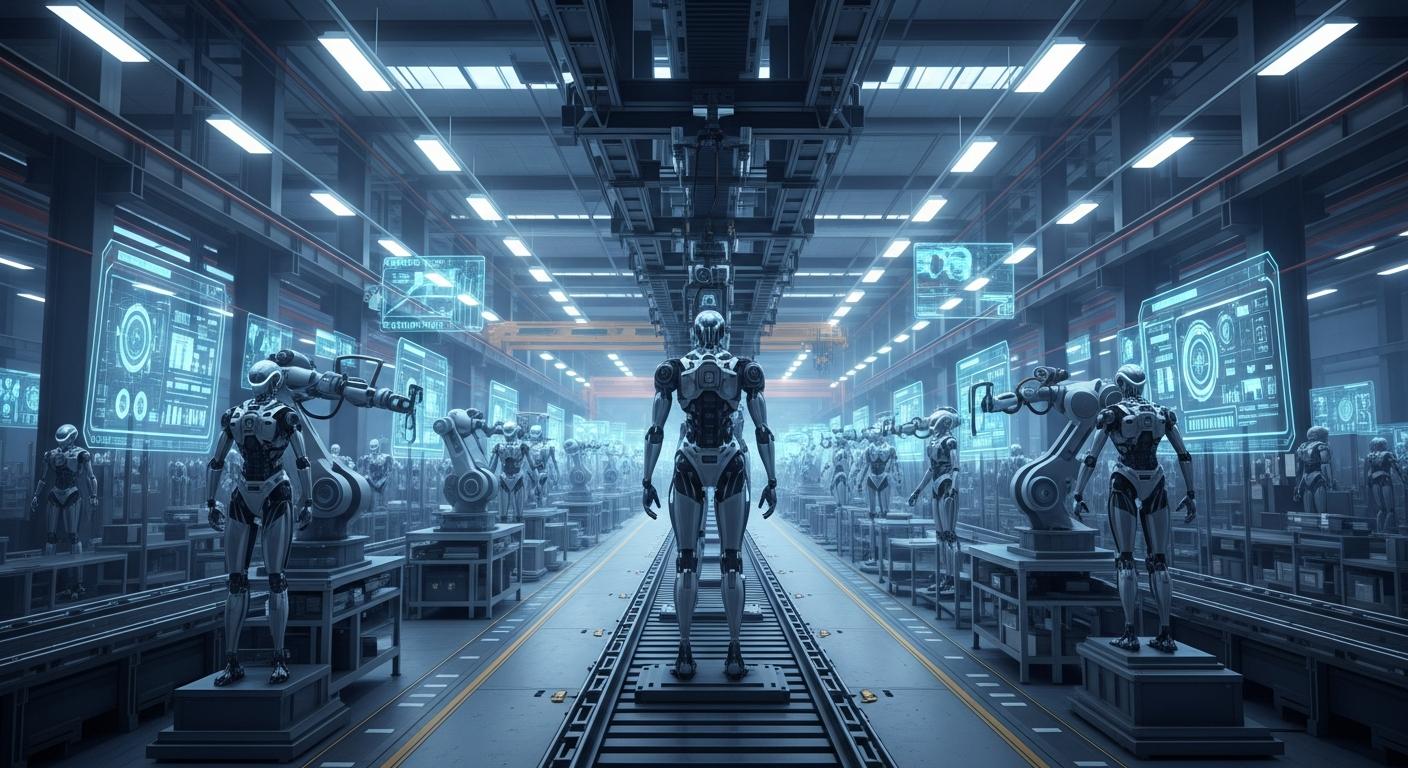
The colossal goal: 1 billion Optimus robots
Calacanis mentions a 1:1 ratio – one Optimus robot per human on Earth. With a global population of approximately 8 billion humans, the intermediate goal of 1 billion robots already represents a colossal first step.
To put this goal into perspective, let’s compare it with automotive mass production. Tesla currently produces approximately 2 million vehicles per year. Global automotive production is around 80 million units annually. Producing 1 billion robots would therefore be equivalent to 12.5 years of current global automotive production.
Besoin d'accessoires pour ta Tesla ?
Looking for accessories for your Tesla?
The industrial challenges are monumental: creating a supply chain from scratch, large-scale production of complex actuators, advanced sensors, and powerful AI processors. Not to mention staff training, process standardization, and maintaining a consistent level of quality.
But Tesla has already proven its ability to scale. From 0 to 2 million vehicles in 20 years, the reproducible Gigafactory model and vertical integration constitute major advantages. If anyone can meet this challenge, it’s Tesla. Their experience in mass manufacturing is unique in the technology sector.
Generative AI at the heart of the Optimus revolution
What truly distinguishes Optimus from its competitors is the artificial intelligence that powers it. Large Language Models (LLMs) serve as the robot’s brain, allowing it to understand natural language, adapt to complex instructions, and continuously learn new tasks.
Calacanis evokes this vision of task automation that “we don’t want to do” – arduous, repetitive, or dangerous work. Warehouse logistics, repetitive assembly, industrial cleaning, maintenance in hostile environments: these are all areas where Optimus could free up human time for more creative and fulfilling activities.
The Tesla advantage here is considerable. The millions of kilometers of data accumulated via FSD (Full Self-Driving) constitute a unique learning base. The transfer of learning to humanoid robotics relies on an already existing and field-proven AI infrastructure.
Having used FSD Beta, I understand the power of Tesla’s iterative approach. If Optimus benefits from the same continuous improvement methodology based on real-world data, the potential is truly immense.
Between technological enthusiasm and necessary realism
This testimony from Calacanis undeniably changes the game. It’s the first truly credible external impression of V3, and it confirms that Tesla is probably very advanced in its development. The intensity of this Sunday morning session proves that the project is a priority.
Let’s remain cautious about the timelines, however. Tesla’s history shows often ambitious promises with extended timelines. Humanoid robotics presents an even greater complexity than automotive. And according to industry sources, regulatory and social acceptance issues remain largely unpredictable at this stage.
What personally excites me is the possibility of witnessing this robotics revolution in my lifetime. The impact on our daily lives could be as profound as the arrival of the smartphone. The coherence of the Tesla ecosystem – from autonomous cars to humanoid robots – reveals an impressive long-term vision of strategic consistency.
Jason Calacanis might be right. In 10 or 15 years, when I talk about Tesla, I might first mention Optimus, then “oh yes, they also make excellent cars, I drove one for years”. Time will tell, but one thing is certain: this privileged testimony from a Sunday morning could mark the beginning of a new industrial era.
Profitez d'avantages exclusifs en achetant votre Tesla
Vous envisagez d'acquérir une Tesla ? En utilisant mon code de parrainage lors de votre achat, vous pouvez bénéficier d'avantages exceptionnels !
Des kilomètres gratuits de recharge ou d'autres récompenses exclusives, mon code de parrainage est votre passeport pour des avantages supplémentaires : https://ts.la/antoine49352 🤩
Pas de pression, juste une opportunité à saisir pour enrichir votre expérience Tesla.
Découvrez ici le système du parrainage et comment utiliser le code.
Get exclusive perks when buying your Tesla
Thinking about getting a Tesla? If you use my referral code when you purchase, you may be eligible for extra perks.
Free Supercharging miles or other exclusive rewards - my referral code can unlock additional benefits: https://ts.la/antoine49352 🤩
No pressure - just a simple option if you want to enhance your Tesla experience.
Learn how the Tesla referral program works and how to use the code.