




In January 2026, the Pentagon is launching an unprecedented competition with $100 million to develop voice-controlled autonomous drone systems. A technological race bringing together surprising players: SpaceX and xAI, recently merged, against American tech giants.
This strategic pivot raises questions, especially when recalling Elon Musk’s past stances on autonomous weapons. How is the entrepreneur who denounced “killer robots” in 2015 now participating in a major military competition?
I’ll explain the ins and outs of this competition and what it reveals about the evolution of the Musk ecosystem, balancing technological pragmatism and national sovereignty issues.
A $100 Million Military Competition
The Pentagon doesn’t do things by halves. In January 2026, the institution is launching a technological race with a tight deadline of 6 months and a reward of $100 million for the winner. A competitive format that marks a turning point in the American military approach.
Besoin d'accessoires pour ta Tesla ?
Looking for accessories for your Tesla?
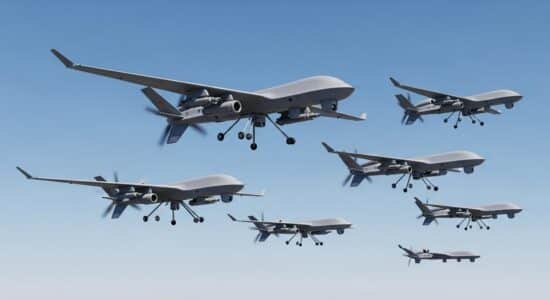
The technical objective is particularly ambitious: to develop a system capable of translating voice commands into real-time digital instructions to control fleets of autonomous drones. We’re talking about coordinated swarms capable of making instantaneous collective decisions.
The intended application? Neutralizing aerial threats, particularly in the counter-drone domain. Imagine swarms of autonomous drones working in synergy to intercept hostile threats, all orchestrated by a simple voice command from a human operator.
On the participant side, SpaceX and xAI are officially engaged. The other competitors remain undisclosed for obvious strategic reasons. This discretion contrasts with contracts already signed by other tech players with the Pentagon.

The SpaceX-xAI Alliance Against Tech Giants
A Strategic Merger Valued at $1.25 Trillion
The recent acquisition of xAI by SpaceX creates a technological behemoth with a combined valuation reaching $1.25 trillion. This merger is far from insignificant: it marries SpaceX’s space and hardware expertise with the advanced artificial intelligence developed by xAI.
The timing is strategic. SpaceX’s planned IPO in early 2026 transforms this military contract into a prominent technological showcase. Winning this competition before the IPO could significantly boost the company’s attractiveness to investors.
The synergy is evident: SpaceX brings its experience in space systems (Starlink, satellites), while xAI provides AI processing power with its language models like Grok.
Existing Competition at the Pentagon
The landscape is already crowded. In 2025, the Pentagon signed military AI contracts with OpenAI, Google, Anthropic, and xAI, each worth $200 million. But this new competition differs radically: it’s an open race, not a direct contract.
The advantage of the SpaceX-xAI alliance lies in its combined mastery of hardware and software. Where other companies excel in pure AI, SpaceX-xAI can develop an integrated end-to-end solution: from physical drones to coordination algorithms, including satellite communication systems.
This unique positioning in the American defense ecosystem could make all the difference in a competition where system integration will be crucial.
Elon Musk’s Military Pivot
In 2015, Elon Musk signed an open letter against offensive autonomous weapons. At the time, he warned about the dangers of “killer robots” and advocated for strict regulation of military AI. The context was marked by fears of an AI-based arms race.
Since then, his discourse has gradually evolved. On combat drones, Musk now draws a clear distinction between defensive and offensive systems, between supervised autonomy and total autonomy. He justifies this change by the growing geopolitical threat and the need to maintain an American technological advantage.
Is this a contradiction? My interpretation leans more towards strategic pragmatism in the face of 2026 realities. Technically, defensive anti-drone swarms are not offensive autonomous weapons. The nuance matters.
The fundamental ethical question remains: where exactly do we draw the line between legitimate defense and automated military escalation? Musk’s evolution reflects that of an entrepreneur confronted with the concrete challenges of technological sovereignty, balancing initial ideals and strategic imperatives.
Besoin d'accessoires pour ta Tesla ?
Looking for accessories for your Tesla?
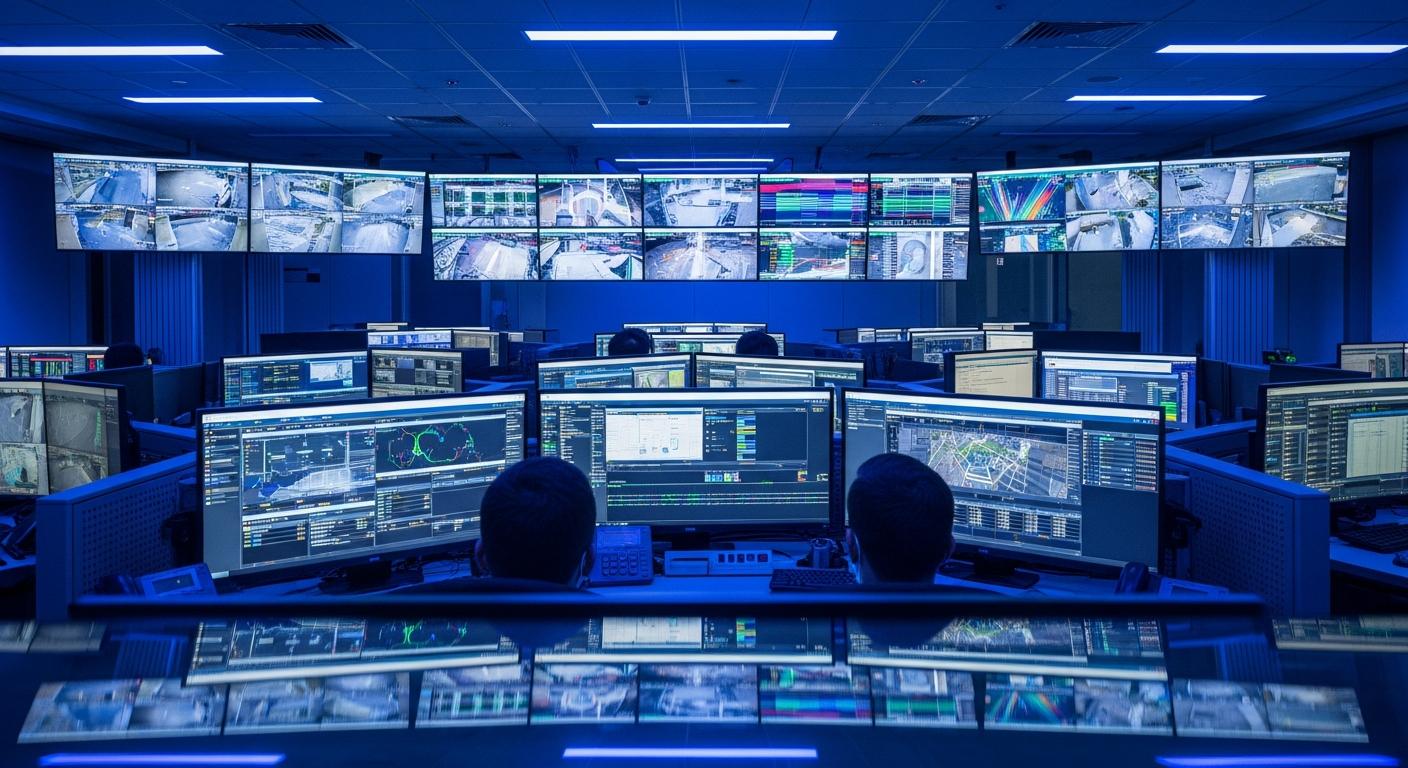
Urgent safety Challenges for 2026
The tight deadline for this competition is explained by a calendar packed with high-risk events. The 2026 FIFA World Cup, co-hosted by the United States, Canada, and Mexico, will be a major potential target. Added to this are the America250 celebrations marking 250 years of American independence.
These highly symbolic events present obvious vulnerabilities to drone threats. Hijacked commercial drones or coordinated hostile swarms could cause considerable damage, both material and psychological.
The technological urgency is real. Six months to develop and test rapidly deployable operational solutions represents an immense challenge. The current technological gap in countermeasures justifies this acceleration: it’s better to anticipate than to react to emerging aerial threats.
Beyond immediate safety, this competition is part of a technological sovereignty issue. The United States is accelerating its domestic production to reduce its dependence on foreign technologies. In the military AI race between the USA, China, and Europe, this strategic positioning will determine the balances of the coming decade.
This $100 million competition crystallizes multiple stakes: technological, ethical, and strategic. It extends far beyond Tesla, but perfectly illustrates the expansion of the Musk ecosystem into sectors once unthinkable for the entrepreneur. According to official Pentagon sources, this initiative marks a turning point in the American defense approach to asymmetric threats.
And you, what is your position on defensive military AI? Does this boundary between protection and escalation seem clear to you? Feel free to share your point of view in the comments.
Profitez d'avantages exclusifs en achetant votre Tesla
Vous envisagez d'acquérir une Tesla ? En utilisant mon code de parrainage lors de votre achat, vous pouvez bénéficier d'avantages exceptionnels !
Des kilomètres gratuits de recharge ou d'autres récompenses exclusives, mon code de parrainage est votre passeport pour des avantages supplémentaires : https://ts.la/antoine49352 🤩
Pas de pression, juste une opportunité à saisir pour enrichir votre expérience Tesla.
Découvrez ici le système du parrainage et comment utiliser le code.
Get exclusive perks when buying your Tesla
Thinking about getting a Tesla? If you use my referral code when you purchase, you may be eligible for extra perks.
Free Supercharging miles or other exclusive rewards - my referral code can unlock additional benefits: https://ts.la/antoine49352 🤩
No pressure - just a simple option if you want to enhance your Tesla experience.
Learn how the Tesla referral program works and how to use the code.