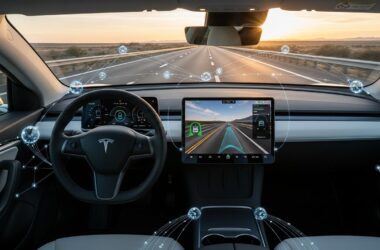




I still remember the moment I discovered my first Tesla. It was a few years ago, and even back then, the idea of an electric car with semi-autonomous driving fascinated me. Today, we’re crossing a completely unprecedented milestone: the first Cybercab officially rolled out of Gigafactory Texas on February 17, 2026.
This isn’t just a car. It’s a autonomous vehicle with no steering wheel and no pedals, designed to revolutionize how we think about transport. With a announced price under $30,000, Tesla is no longer targeting only early adopters, but the general public.
So, are we really on the verge of a paradigm shift in our relationship with car ownership? Here’s a balanced analysis, between technological promises and real-world social impacts.
The Cybercab enters production: what I take away from the key numbers
A vehicle that rewrites the rules
February 17, 2026 will remain a historic date. That day, the first official Cybercab left the Texas production lines. And when I say revolution, I don’t say it lightly.
Besoin d'accessoires pour ta Tesla ?
Looking for accessories for your Tesla?
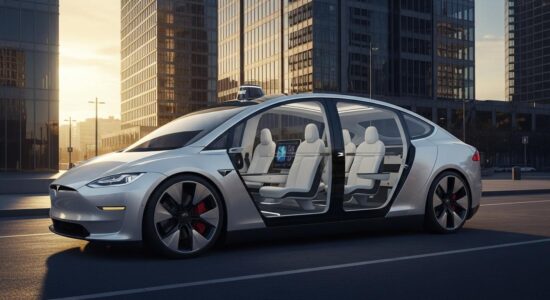
This autonomous vehicle features a radical design: just 2 seats, with no steering wheel or pedals. Tesla is betting everything on full autonomy. The announced driving range is around 300 miles (480 km), which is still very solid for intensive urban use.
But what impresses me most is inductive charging. No need to plug in a cable: the vehicle recharges simply by positioning itself on a dedicated platform. An innovation that changes everything for an autonomous fleet.
Another major technical point: the Cybercab has half as many parts as a Model 3. This extreme simplification reduces production and maintenance costs. My review? It’s bold, but Tesla has always known how to take calculated risks.
Price and rollout timeline
Let’s talk real numbers. The announced price is under $30,000, or about €27,000. At that price, it’s on par with a traditional compact sedan, but with technology on a whole different level.
Mass production is planned for April 2026. Tesla is clearly aiming for mainstream accessibility, not a niche market anymore. My personal take: at this price, we’re talking about a true game changer for the automotive market.
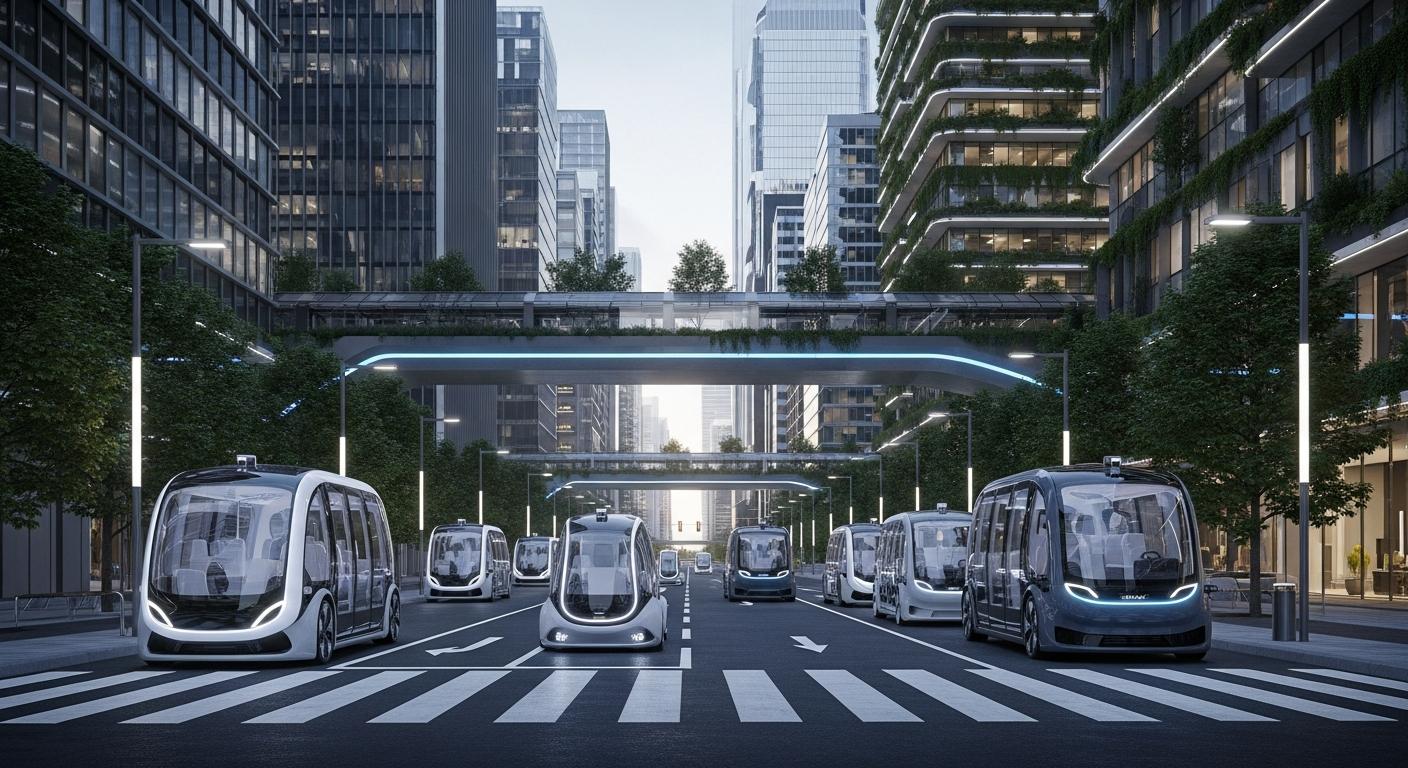
A transport economic revolution: promises and realities
The Cybercab’s business model is built on a simple but powerful idea: the shared fleet. Imagine your vehicle working for you while you sleep, generating passive income, and no longer sitting idle 95% of the time.
Tesla estimates the cost at $0.20/mile in shared-fleet use. Compare that to the $1 to $2 currently charged by Uber or Lyft, and you see the disruptive potential.
- No gas to pay for
- Minimal maintenance thanks to mechanical simplification
- Potentially lower insurance with autonomous driving
- Ability to generate income by renting out your vehicle
My analysis? On paper, it’s appealing. In reality, a lot of variables still need to be considered: local regulations, actual utilization rates, vehicle wear under intensive use.
I’ll ask you directly: would you be ready to stop owning your car and instead access unlimited mobility through a shared fleet?
FSD Supervised: 8 billion miles and data that speaks for itself
A meteoric rise
On February 18, 2026, Tesla hit a symbolic milestone: 8 billion miles driven in FSD Supervised. To give you a sense of the acceleration, 7 billion was reached on December 27, 2025. That’s 1 billion miles in under 2 months.
This collection of driving data is exponential. The more Tesla vehicles there are on the road, the faster the system learns. The stated goal? Reach 10 billion miles to validate fully unsupervised FSD.
My personal observation: I’ve been using FSD for 2 years now, and the improvement is real. Successive updates have transformed the experience.
Safety by the numbers
Let’s talk safety. According to Tesla’s official safety data, FSD Supervised records 1 major collision every 5,300,676 miles. Compare that to the U.S. national average: 1 collision every 660,164 miles.
Besoin d'accessoires pour ta Tesla ?
Looking for accessories for your Tesla?
So FSD is 8 times safer than the average driver. That’s impressive. But let’s be honest: these numbers need context. Driving conditions aren’t identical, and public perception remains a major challenge.
My personal review? The data is convincing for anyone willing to look at it objectively. But winning over the general public will still take time and education.
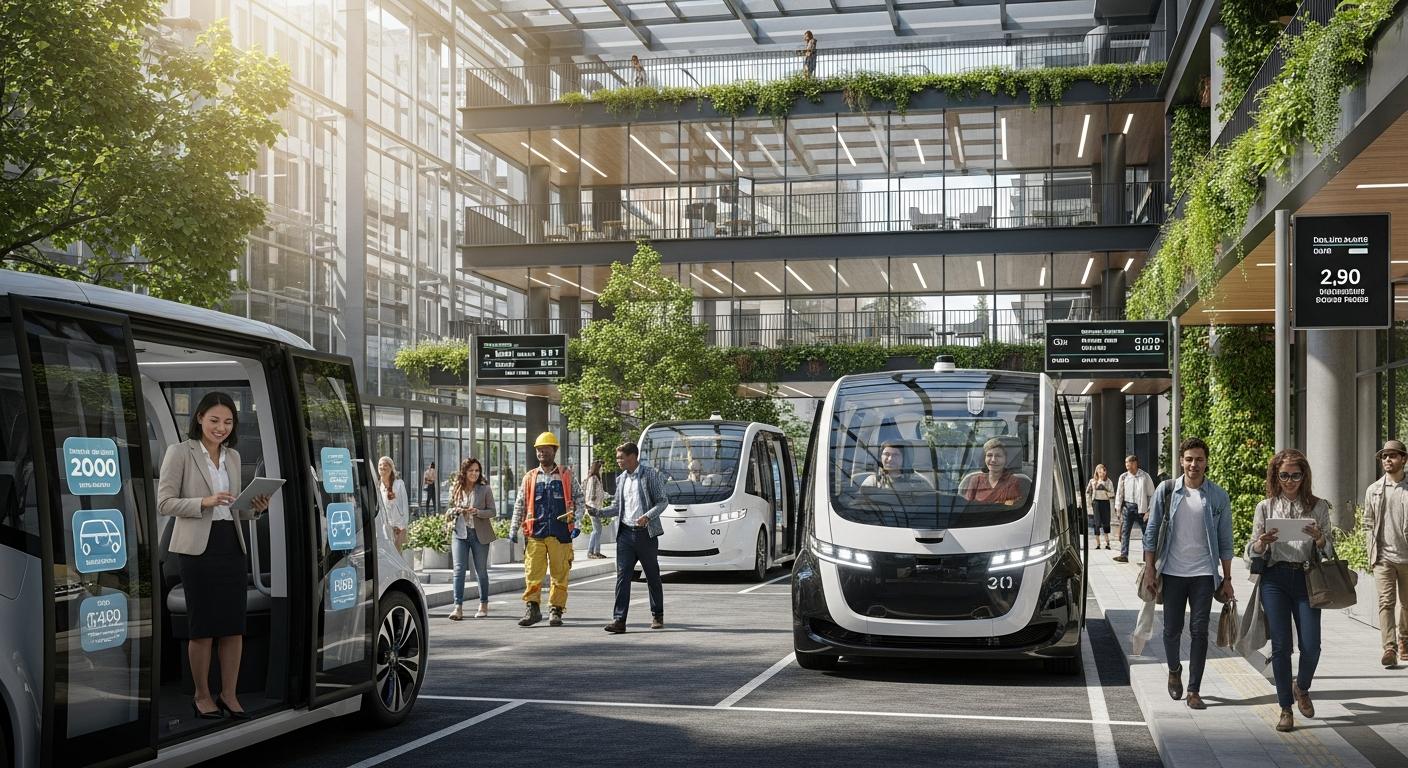
The winners of this transformation: beyond marketing
Let’s be clear: this revolution doesn’t benefit only Tesla. Consumers benefit from lower transport costs, freed-up time (no need to drive), and potentially improved safety.
Tesla investors see a massive market opening up. Analysts are talking about hundreds of billions of dollars in potential valuation in the robotaxi segment.
Cities win too: fewer parking lots needed, reduced urban congestion, optimized urban mobility. Imagine a city where 80% of individual cars disappear in favor of shared autonomous fleets.
The environment benefits from trip optimization and full electrification. Fewer vehicles overall, used more efficiently, 100% electric.
My personal take? As a Tesla owner, I clearly see the benefits. But I can’t ignore the other side of the coin…
The dark side: job losses and ethical questions
Sectors on the front line
Let’s talk frankly about what’s uncomfortable. Recent estimates mention between 50,000 and 300,000 layoffs linked to AI and automation in 2025. Uber, Lyft, and taxi drivers will be on the front line as robotaxis arrive.
But the social impact goes far beyond that. Think about the domino effect: mechanics specialized in internal-combustion vehicles, gas stations, traditional car insurance companies… Entire sectors will have to reinvent themselves.
My stance? I can’t ignore this human reality. Technological innovation is exciting, but it comes with a social cost that needs support.
Reskilling: easier said than done
People talk easily about career changes. But in practice, for a 50-year-old driver who’s spent 20 years in the job, switching sectors isn’t a simple formality.
The necessary training takes time. The economic urgency, meanwhile, is immediate. What is the social responsibility of tech companies in providing that support? My view: innovation must not come at the expense of people.
Open question: what support policies should be put in place? This is a debate that needs to happen now, not after.
Nashville kicks things off: the Music City Loop approved
Let’s get concrete. Nashville becomes the first city to officially welcome the Cybercab via the Music City Loop. The agreement with Nashville Airport has been approved, and the numbers are staggering.
The business model is based on license fees of $300,000 per year for 40 years. The city expects estimated revenue of more than $300 million over the full term of the contract. On top of that, there are $5 fees per pickup and drop-off.
It’s a win-win model: Tesla deploys its technology, the city generates substantial revenue and offers an innovative service to its citizens.
Of course, it’s not all rosy. Local taxi drivers are voicing their concerns. The controversies are legitimate. My review? Nashville is becoming a real-world laboratory. What happens there will directly influence rollout in other cities.
For municipalities watching, it’s a chance to study the model before taking a position. The first rollout will be closely watched by the entire industry.
After analyzing all these elements, I come back to the central question: are we really witnessing the beginning of the end for car ownership? My conviction: we’re at a historic turning point, no question. But the transition will be gradual, not abrupt.
I think we’ll see individual ownership and shared use coexist for years. The two models meet different needs. According to the available data on the topic, this coexistence also seems like the most likely path to manage the transition.
As the Tesla community and mobility enthusiasts, what role do we want to play in this transformation? I’ll keep following this evolution closely and share my real-world experience with these technologies. The future of mobility is being written now, and we’re privileged witnesses.
Profitez d'avantages exclusifs en achetant votre Tesla
Vous envisagez d'acquérir une Tesla ? En utilisant mon code de parrainage lors de votre achat, vous pouvez bénéficier d'avantages exceptionnels !
Des kilomètres gratuits de recharge ou d'autres récompenses exclusives, mon code de parrainage est votre passeport pour des avantages supplémentaires : https://ts.la/antoine49352 🤩
Pas de pression, juste une opportunité à saisir pour enrichir votre expérience Tesla.
Découvrez ici le système du parrainage et comment utiliser le code.
Get exclusive perks when buying your Tesla
Thinking about getting a Tesla? If you use my referral code when you purchase, you may be eligible for extra perks.
Free Supercharging miles or other exclusive rewards - my referral code can unlock additional benefits: https://ts.la/antoine49352 🤩
No pressure - just a simple option if you want to enhance your Tesla experience.
Learn how the Tesla referral program works and how to use the code.