




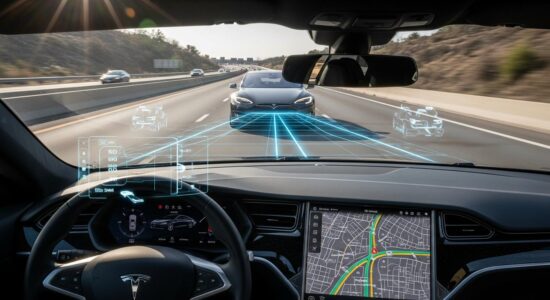
When I started using Tesla FSD a few years ago, I never would have imagined witnessing such an acceleration. Yet, in February 2026, Tesla just announced a symbolic milestone: 8 billion miles driven by its supervised autonomous driving system. A staggering figure that marks a turning point in the history of mobility.
What fascinates me most is the speed at which this milestone was reached: just 50 days after hitting 7 billion in December 2025. To fully understand what this represents, let’s remember that it’s a supervised system, not fully autonomous. The human remains in control, ready to intervene.
So, what do these figures reveal about the future of autonomous driving? Let’s analyze this spectacular progression together.
A Symbolic Milestone Reached at an Accelerated Pace
Tesla’s official announcement in February 2026 is impressive. Between December 2025 and February 2026, the FSD Supervised system covered an additional 1 billion miles in just 50 days. That’s simply colossal.
Besoin d'accessoires pour ta Tesla ?
Looking for accessories for your Tesla?
But why this sudden acceleration? After observing the system’s evolution since my first trials, I identify several key factors:
- The one-month free trials massively offered to Tesla owners
- A fleet that grows exponentially with each new delivery
- Continuous improvements in v12 and v13 versions that reassure users
- The Robotaxi announcement effect, generating enthusiasm
For us, daily Tesla users, this surge changes the game. The system learns faster, improves more quickly, and becomes a little more capable each day of handling the complex situations we encounter on our roads.

A Growth Curve That Defies Imagination
From 6 Million to 1 Billion: Year-by-Year Evolution
When I look at the progression timeline, I find it hard to grasp the magnitude of the evolution:
- 2021: 6 million miles (the timid beginnings)
- 2022: 80 million miles (13x increase)
- 2023: 670 million miles (8x increase)
- 2024: 2.25 billion miles (3.4x increase)
- 2025: 4.25 billion miles (1.9x increase)
- 2026 (50 days): already an additional 1 billion
If this trend continues, we could reach approximately 10 billion miles by the end of 2026. To put things in perspective, no competitor comes close to this volume. Waymo and Cruise, despite significant media attention, accumulate their data in limited geographic areas with much smaller fleets.
The Catalysts of This Explosion
This exponential growth doesn’t come out of nowhere. Several elements combine to create a virtuous cycle:
First, the massive free trials offered to owners allowed thousands of drivers to test the system without commitment. Many, like me initially, remained convinced after the trial.
Next, the constant improvement of v12 and v13 versions has significantly reduced the need for interventions. The system now handles situations that systematically required manual takeover just a year ago.
Finally, the snowball effect is in full swing: more users mean more training data, which improves the system, which attracts even more users. A perfect virtuous cycle.
Impressive Safety Statistics (But with Nuances)
Tesla regularly communicates on its system’s safety statistics. Over the past 12 months in North America, the figures are telling:
- FSD Supervised: 1 major collision every 5,300,676 miles (830 recorded collisions)
- Tesla in manual driving with active safety: 1 collision every 2,175,763 miles (16,131 collisions)
- Tesla in manual driving without active safety: 1 collision every 855,132 miles (250 collisions)
- U.S. average: 1 collision every 660,164 miles
According to Tesla, FSD is therefore 8 times safer than the U.S. average. Impressive on paper, but let’s remain critical.
As a regular user, I do observe increased caution from the system. But several methodological biases deserve to be highlighted:
- What exactly is a “major collision”? Does Tesla’s definition differ from standards?
- Are FSD users already more cautious drivers than average?
- Is the system used more on highways (safer) than in the city?
- The term supervised is crucial: humans regularly intervene to avoid dangerous situations
These nuances do not detract from the remarkable progress made. But they remind us that we are not yet facing full autonomous driving.
The 10 Billion Goal: Understanding the Crucial Nuance
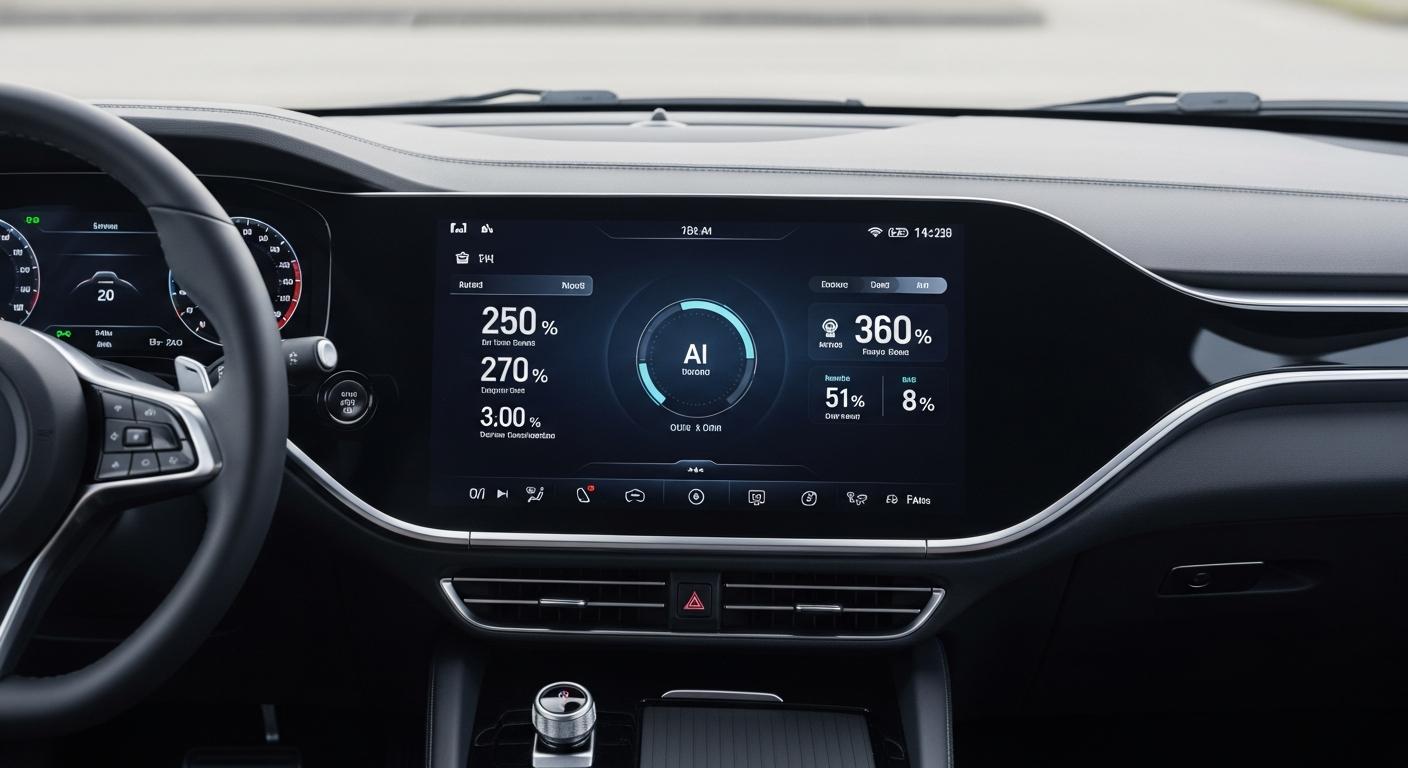
Elon Musk has often mentioned the goal of 10 billion miles of training data to achieve unsupervised full autonomy. Be careful of a common confusion: miles driven ≠ training data.
Besoin d'accessoires pour ta Tesla ?
Looking for accessories for your Tesla?
Not all miles driven generate useful data for learning. A straight line on the highway in clear weather? The system already masters it perfectly. It’s the rare, unpredictable situations that need to be captured and analyzed:
- Atypical construction zones with temporary signage
- Irrational human behavior (pedestrian crossing anywhere)
- Extreme weather conditions combined with complex situations
- Failing infrastructure or faded road markings
This is what’s called the “long tail of complexity.” The more miles the fleet covers, the more it captures these essential marginal cases. But how many actual miles truly correspond to usable training data? Tesla does not communicate precisely on this ratio.
My personal projection? We will likely achieve unsupervised full autonomy between 2027 and 2028, if current growth continues and the captured data remains of high quality.
And what about us, in Europe and France, in all of this?
This is the question you all ask, and that I ask myself daily as a French Tesla owner: when will we finally be able to fully enjoy FSD?
The European regulatory context explains our delay. Regulations are stricter, homologation is more complex, and our infrastructures differ significantly (signage, road markings, driving behaviors). Currently, in France, we have Autopilot Enhanced, but not yet the full version of FSD.
My realistic expectations? A gradual arrival between late 2026 and 2027, probably first as a beta limited to certain geographic areas. Tesla will have to adapt the system to our omnipresent roundabouts, our specific road signs, and our sometimes… creative driving habits.
On the European competition side, Mercedes has homologated its Drive Pilot at Level 3 autonomy, but on very limited highway segments and at reduced speeds. Two philosophies clash: Mercedes’ cautious and circumscribed approach versus Tesla’s large-scale continuous improvement strategy.
My personal opinion? Patience will be necessary, but the wait will be worth it. The system we receive in Europe will benefit from these billions of miles of experience accumulated across the Atlantic. The statistics published by Tesla show constant progress in terms of safety, even if according to official data from regulatory authorities, certain methodological nuances deserve further investigation for a complete and independent evaluation.
These 8 billion miles are just one step. The real revolution will begin when the system transitions from “supervised” to truly autonomous, and when we, in Europe, can finally fully enjoy it. Until then, I continue to observe this fascinating progression, mile after mile.
Profitez d'avantages exclusifs en achetant votre Tesla
Vous envisagez d'acquérir une Tesla ? En utilisant mon code de parrainage lors de votre achat, vous pouvez bénéficier d'avantages exceptionnels !
Des kilomètres gratuits de recharge ou d'autres récompenses exclusives, mon code de parrainage est votre passeport pour des avantages supplémentaires : https://ts.la/antoine49352 🤩
Pas de pression, juste une opportunité à saisir pour enrichir votre expérience Tesla.
Découvrez ici le système du parrainage et comment utiliser le code.
Get exclusive perks when buying your Tesla
Thinking about getting a Tesla? If you use my referral code when you purchase, you may be eligible for extra perks.
Free Supercharging miles or other exclusive rewards - my referral code can unlock additional benefits: https://ts.la/antoine49352 🤩
No pressure - just a simple option if you want to enhance your Tesla experience.
Learn how the Tesla referral program works and how to use the code.