




Tesla has just quietly crossed a discreet but crucial milestone for the future of its electric truck: Megachargers are now showing up on the official navigation map. This announcement, which went almost unnoticed, comes just days after Elon Musk confirmed the move to mass production of the Tesla Semi for 2026.
In practical terms, this means Tesla is no longer just developing a revolutionary vehicle: the company is simultaneously building the infrastructure needed to deploy it at scale. For us Tesla enthusiasts and observers of the Tesla ecosystem, it’s the sign that the Semi is no longer an auto-show prototype, but an industrial product ready to transform road freight.
Let’s break down this coordinated infrastructure + vehicle strategy that could redefine global logistics.
Megachargers land on Tesla’s map: what changes?
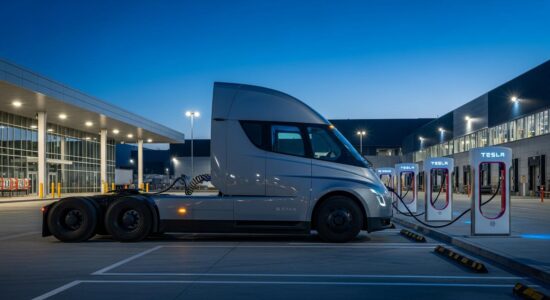
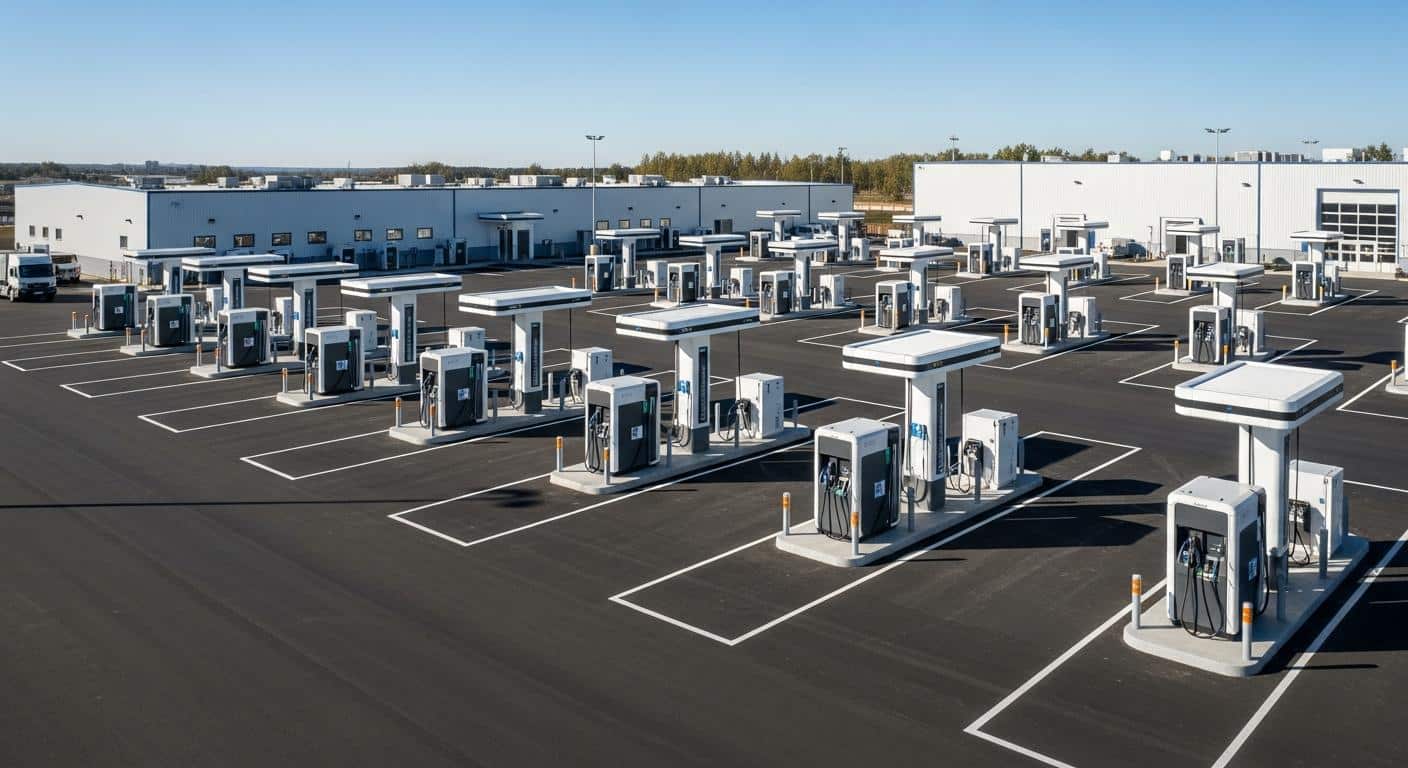
In February 2026, Tesla quietly added Megachargers to its navigation interface and to the public Supercharger map. This integration marks a turning point in the company’s communication, as it now makes visible an infrastructure that was previously reserved for business customers.
Besoin d'accessoires pour ta Tesla ?
Looking for accessories for your Tesla?
But what’s the fundamental difference from the Superchargers we all know? Mainly, power. Megachargers deliver up to 1.2 MW of power, versus a maximum of 250 kW for V3 Superchargers intended for passenger vehicles. That’s almost five times more power to recharge the massive batteries of the Tesla Semi.
The connector and infrastructure are also specific: these stations are designed exclusively for electric heavy trucks, with bays sized to accommodate vehicles tens of meters long. If you want to understand how to use standard Superchargers, the principle is similar, but the scale changes dramatically.
I find this public visibility particularly interesting: Tesla is sending a clear message to the road freight market. The Semi is no longer a futuristic concept—it’s an operational reality backed by tangible infrastructure.
Where can you find these Megachargers? Mapping an emerging network
Sites currently in operation
As of today, only 2 Megacharger stations are active in the United States:
- Lathrop, California: positioned at the heart of a major logistics hub, this station holds a central place on California’s commercial routes
- Sparks, Nevada: located right next to the Semifactory where Tesla Semis are assembled, this station clearly serves as a test base
These two pilot stations allow Tesla to test the infrastructure in real-world conditions with its first customers, notably PepsiCo, which has been operating a fleet of Semis since 2022.
Planned geographic expansion
Tesla’s ambition becomes clear when you look at the planned rollout numbers:
- California: 17 sites planned, concentrated along the I-5 corridor and the routes linking major West Coast ports
- Texas: 19 sites in the works, notably along the I-10 corridor and expansion toward the south of the country
- Other targeted states: Florida, Georgia, Illinois, Washington, New York, and of course Nevada
The rollout logic reveals a carefully thought-out strategy. Tesla isn’t aiming for immediate nationwide coverage, but is targeting strategic highway corridors where the largest volume of goods already moves. Sites are positioned near major logistics hubs (ports, Amazon distribution centers, Walmart warehouses) and follow high-intensity freight corridors.
Honestly, I find this approach consistent: rather than spreading investments thin, Tesla is focusing resources where demand is guaranteed and where customers can immediately make their transition to electric pay off.
The Tesla Semi finally accelerates toward mass production
Elon Musk’s confirmation changes everything: mass production is announced for 2026. After years of waiting, delays, and promises, Tesla finally has a concrete date for its electric heavy truck.
The pilot phase is coming to an end. Since 2022, the first customers have already been testing the vehicles in their day-to-day operations, building up valuable data on real-world performance, reliability, and operating costs. This field feedback has allowed Tesla to refine the design and manufacturing processes.
At the Semifactory in Sparks, Nevada, infrastructure is reaching maturity. This factory, dedicated exclusively to the Semi, is expected to eventually reach a production capacity of 50,000 units per year—enough volume to start making an impact on the U.S. road freight market.
In parallel, Tesla has begun to reveal information about available trim levels and to contact potential customers to discuss pricing. These disclosures confirm that the company is clearly moving from R to industrialization.
The appearance of Megachargers on the map is obviously no coincidence: it’s perfect synchronization between infrastructure and vehicle. Tesla is applying the same recipe that made its passenger cars successful, ensuring customers have a charging network even before they receive their first trucks.
Besoin d'accessoires pour ta Tesla ?
Looking for accessories for your Tesla?
A strategic shift: Tesla pivots toward robotics and autonomy
To really understand the Semi’s place in Tesla’s strategy, you have to look at the radical choices the company has just announced. The end of production for the Tesla Model S and Tesla Model X in Q2 2026 symbolically marks the end of an era.
Why drop these iconic models? Margins are low, volumes are modest, and above all, these technologies are aging in Elon Musk’s vision. Tesla is definitively turning its back on its “traditional premium” vehicles to focus on three pillars of the future:
- The Cybercab, a fully autonomous robotaxi with no steering wheel or pedals
- Optimus, the humanoid robot intended for industrial and domestic tasks
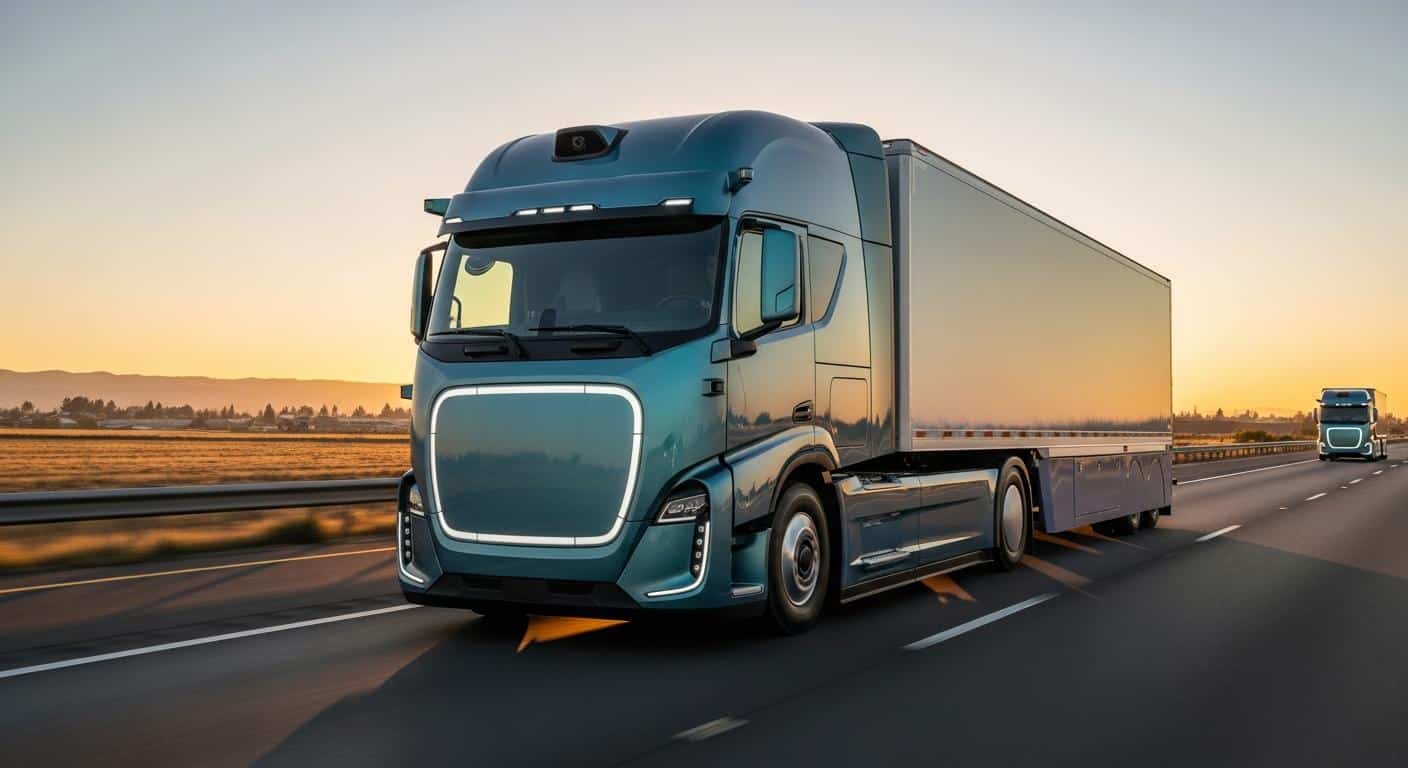
- The Semi, the future driver of autonomous freight transport
Analyst Jim Cramer sums up this transformation well: Tesla is no longer an automaker—it’s a robotics and autonomy company. I completely share that view. For Elon Musk, the future isn’t in “classic” electric cars that other manufacturers can replicate, but in AI and autonomy, where Tesla is several years ahead.
The Semi fits perfectly into this logic: eventually, these heavy trucks will drive autonomously on U.S. highways, automatically charging at Megachargers with no human intervention. That’s the vision that justifies massive investment in infrastructure.
And for us in Europe and France? Should we hope for Megachargers?
Let’s be honest: no Megacharger has been announced in Europe for the moment. This absence is due to several strategic and regulatory factors that I think are important to understand.
Tesla is logically prioritizing the U.S. market, which is more mature for electric heavy freight. Distances between cities are greater, road infrastructure is better suited to large trucks, and above all, the first test customers are already there.
In Europe, European regulations differ significantly on weights, dimensions, and infrastructure standards. A U.S. heavy truck can’t operate on our roads as-is. Tesla would need to adapt the Semi to European sizing—an expensive step that requires certainty about market size.
European electrical infrastructure, while modern, is not yet widely set up to support ultra-fast 1.2 MW charging. The investments needed in transformers and grid connections represent a considerable technical and financial challenge. Europe’s road-transport regulations, detailed by Tesla’s official sources, impose specific constraints that affect adoption timelines.
That said, the potential for arrival does exist. European highway corridors (the A1 in France, the Rhône’s A7, the E40 crossing Europe) are obvious candidates to host Megachargers. The Semi could be adapted for the European market, even if that will likely require a shortened version.
In my view, a realistic timeline would be 2027–2028 at the earliest to see the first European Megachargers. In the meantime, European heavy-truck makers are betting on other solutions: electric catenaries on highways, hydrogen for long distances, or lower-capacity batteries for regional routes.
With this coordinated rollout, Tesla proves it can industrialize complex projects by synchronizing vehicles and infrastructure. The Semi is much more than an electric truck: it’s a complete system that foreshadows the future of autonomous freight transport.
It remains to be seen whether the Semi will deliver on its promises in real-world conditions over the long term, particularly when it comes to battery durability and operating costs compared with diesel. I’ll be following the rollout closely and will keep you posted on progress, especially if any signals emerge about a possible European expansion.
Profitez d'avantages exclusifs en achetant votre Tesla
Vous envisagez d'acquérir une Tesla ? En utilisant mon code de parrainage lors de votre achat, vous pouvez bénéficier d'avantages exceptionnels !
Des kilomètres gratuits de recharge ou d'autres récompenses exclusives, mon code de parrainage est votre passeport pour des avantages supplémentaires : https://ts.la/antoine49352 🤩
Pas de pression, juste une opportunité à saisir pour enrichir votre expérience Tesla.
Découvrez ici le système du parrainage et comment utiliser le code.
Get exclusive perks when buying your Tesla
Thinking about getting a Tesla? If you use my referral code when you purchase, you may be eligible for extra perks.
Free Supercharging miles or other exclusive rewards - my referral code can unlock additional benefits: https://ts.la/antoine49352 🤩
No pressure - just a simple option if you want to enhance your Tesla experience.
Learn how the Tesla referral program works and how to use the code.