

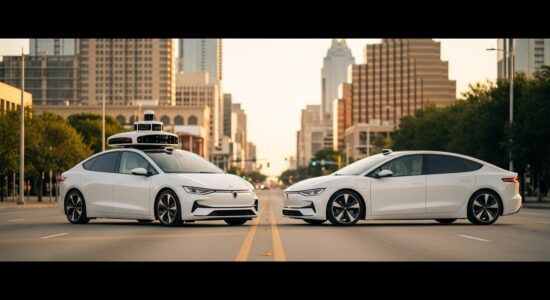
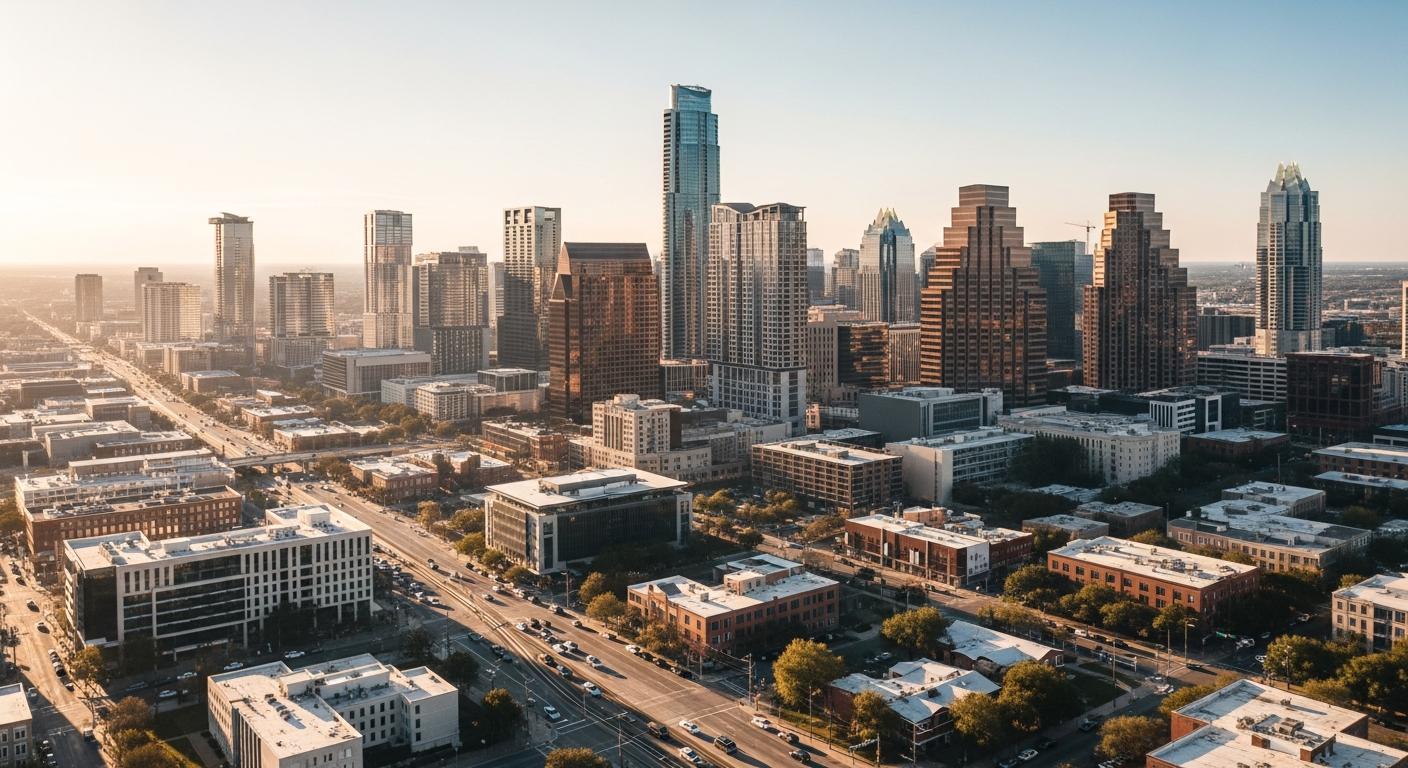
Waymo just made a big move in Austin by announcing a 50% expansion of its service area, increasing from 90 to 140 square miles. This offensive comes as Tesla is already operating in the Texan capital with a fleet of 200 Robotaxis, 42 of which are specifically based in Austin. What’s at stake here goes beyond a simple race for square miles: two radically different philosophies of autonomous driving are clashing on the ground. On one side, Waymo and its fully validated autonomy. On the other, Tesla with its larger fleet but still under human supervision.
I’ll break down this technological battle that is redefining the landscape of American urban transport.
Waymo Nearly Doubles Its Coverage in Austin
In early January 2026, Waymo formalized what represents a major strategic move: the expansion of its service area in the Texas capital from 90 to 140 square miles. This extension was not random.
Geographically, the expansion covers two main axes:
Besoin d'accessoires pour ta Tesla ?
Looking for accessories for your Tesla?
- Southward, to Manchaca, opening access to rapidly growing residential areas
- Northward, beyond US-183, reaching strategic commercial and technological zones
This move clearly shows Waymo’s ambitions in Texan territory, a state that has become the preferred battleground for Robotaxi services. The company is no longer content with a symbolic presence: it wants to assert itself against Tesla.
Which areas exactly?
For Austin residents, this expansion concretely changes the game. The newly covered neighborhoods include areas previously inaccessible via Waymo’s autonomous services, thus creating a more coherent territorial network.
The impact is direct: more residents can now order a Waymo Robotaxi for their daily commutes without relying on a traditional service.
Tesla Retains Territorial Advantage… Just Barely
On Tesla’s side, the coverage area in Austin currently reaches 171 square miles. The gap with Waymo? Only 31 square miles now. An advantage that is melting like snow in the sun against Waymo’s offensive.
But the territorial figure tells only part of the story. The distribution of the Tesla fleet reveals an interesting dynamic:
- Bay Area: 158 vehicles
- Austin: only 42 vehicles
This distribution partly explains the historical problem of limited availability of Tesla Robotaxis in Austin. Having more territory does not necessarily guarantee better service if vehicle density does not follow.
200 vehicles, but what density?
Let’s ask directly: are 42 vehicles for 171 square miles enough to offer a responsive service?
Theoretical coverage is impressive on paper, but actual coverage depends on operational density. Tesla is clearly banking on a strategy of geographical expansion first, with a fleet reinforcement planned afterward. Waymo, on the other hand, seems to favor a balance between territory and service density.
Two Totally Opposing Visions of Autonomy
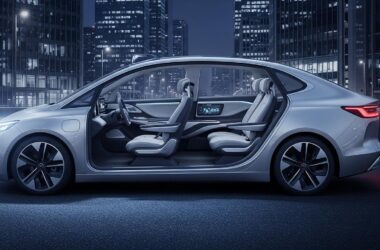
This is where the difference becomes truly fascinating. Waymo operates with 100% validated autonomy: no driver on board, no human intervention necessary. The passenger gets in, indicates their destination, and the vehicle handles everything.
Tesla, however, maintains Safety Monitors in its commercial autonomous vehicles. But beware, the configuration varies depending on the location:
- In Austin: Safety Monitor in the passenger seat on local roads, in the driver’s seat on highways
- In the Bay Area: Safety Monitor consistently in the driver’s seat
Tesla also conducts internal driverless tests, but these trials remain in an internal evaluation phase, not yet open to the paying public.
The Safety Monitor: Temporary or Necessary?
The role of the Safety Monitor is to supervise the autonomous system and intervene if necessary. Its presence indicates either regulatory caution or technological maturity still under development.
The difference in positioning between Austin and the Bay Area suggests that Tesla adapts its approach according to driving environments. Highways, being more predictable, perhaps allow for less direct supervision than in dense urban areas.
Besoin d'accessoires pour ta Tesla ?
Looking for accessories for your Tesla?
As for the timeline for full autonomy without a Safety Monitor at Tesla? No official date has been communicated for the general public commercial service.
The Race for American Cities Accelerates
The Austin confrontation is just one battle in a larger war. Waymo already has an established presence in 7+ American cities: Las Vegas, Los Angeles, Orlando, Phoenix, Atlanta, and more.
Tesla, for its part, has announced an expansion plan to 5 new cities in 2026:
- Miami
- Houston
- Phoenix
- Las Vegas
- Dallas
Moreover, Tesla’s expansion into Las Vegas is accelerating with Cybertruck tests in the region, showing a coherent deployment strategy.
Strategies clearly diverge: Waymo consolidates its established presence and optimizes its existing operations, while Tesla is banking on an announced aggressive expansion. Phoenix and Las Vegas will become direct battlegrounds where both players will operate simultaneously.
Who Will Win the Battle of Scale?
Waymo’s advantages are undeniable: mature and validated technology, operational full autonomy without human supervision, and a seamless user experience. Getting into a Waymo Robotaxi means experiencing the future of transport without compromise.
But Tesla is not to be outdone. Its territorial coverage remains more extensive, its fleet of 200 vehicles is already operationally deployed, and the potential of the Cybercab for rapid scaling could radically change the game. Not to mention the integrated Tesla ecosystem, which already retains millions of users.
Tesla’s global expansion strategy is not limited to the United States, with ambitious projects also in the Middle East.
The real debate ultimately boils down to: service density vs. geographical reach. Is it better to have a highly available service in a restricted area, or maximum coverage with variable availability?
My analysis? Both models are viable and address different needs. Waymo attracts with its immediate maturity, Tesla with its potential for massive expansion. The question remains open: which approach will convince the general public first?
This battle is just beginning. 2026 promises to be a decisive year for these two players, with direct confrontations in several American cities. According to industry analysts, the American regulatory framework is evolving rapidly to support this transformation. In Europe, we are still far from this level of commercial deployment.
I’m watching this race with passion, what about you? Which model seems most promising to you for sustainably transforming our urban travel?
Profitez d'avantages exclusifs en achetant votre Tesla
Vous envisagez d'acquérir une Tesla ? En utilisant mon code de parrainage lors de votre achat, vous pouvez bénéficier d'avantages exceptionnels !
Des kilomètres gratuits de recharge ou d'autres récompenses exclusives, mon code de parrainage est votre passeport pour des avantages supplémentaires : https://ts.la/antoine49352 🤩
Pas de pression, juste une opportunité à saisir pour enrichir votre expérience Tesla.
Découvrez ici le système du parrainage et comment utiliser le code.
Get exclusive perks when buying your Tesla
Thinking about getting a Tesla? If you use my referral code when you purchase, you may be eligible for extra perks.
Free Supercharging miles or other exclusive rewards - my referral code can unlock additional benefits: https://ts.la/antoine49352 🤩
No pressure - just a simple option if you want to enhance your Tesla experience.
Learn how the Tesla referral program works and how to use the code.