

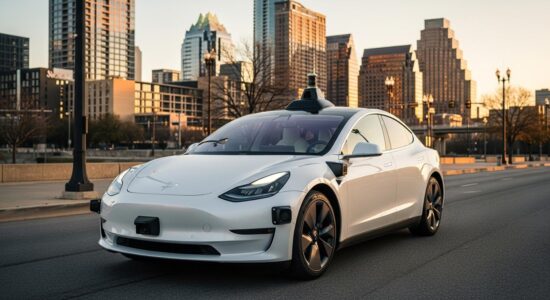
On January 22, 2026, Tesla reached a milestone many had been waiting for for years: the launch of its first fully autonomous robotaxis in Austin, Texas, without any human supervisor on board. After months of tests with ‘Safety Monitors’ behind the wheel, Elon Musk’s company finally removes the safety net and lets its vehicles transport passengers fully autonomously.
I have been following this development closely from the beginning, and I can tell you that we are witnessing a major turning point in the history of mobility. In this article, I explain what this concretely changes, how it works on the ground, and especially what it means for us in Europe.
Austin, world capital of autonomous driving
Austin was not chosen by chance. Texas offers a particularly favorable regulation for autonomous vehicles, and the city is an ideal test ground with its wide roads and predictable weather conditions. It was here that Tesla launched its Robotaxi program in June 2025, initially with human supervisors behind the wheel.
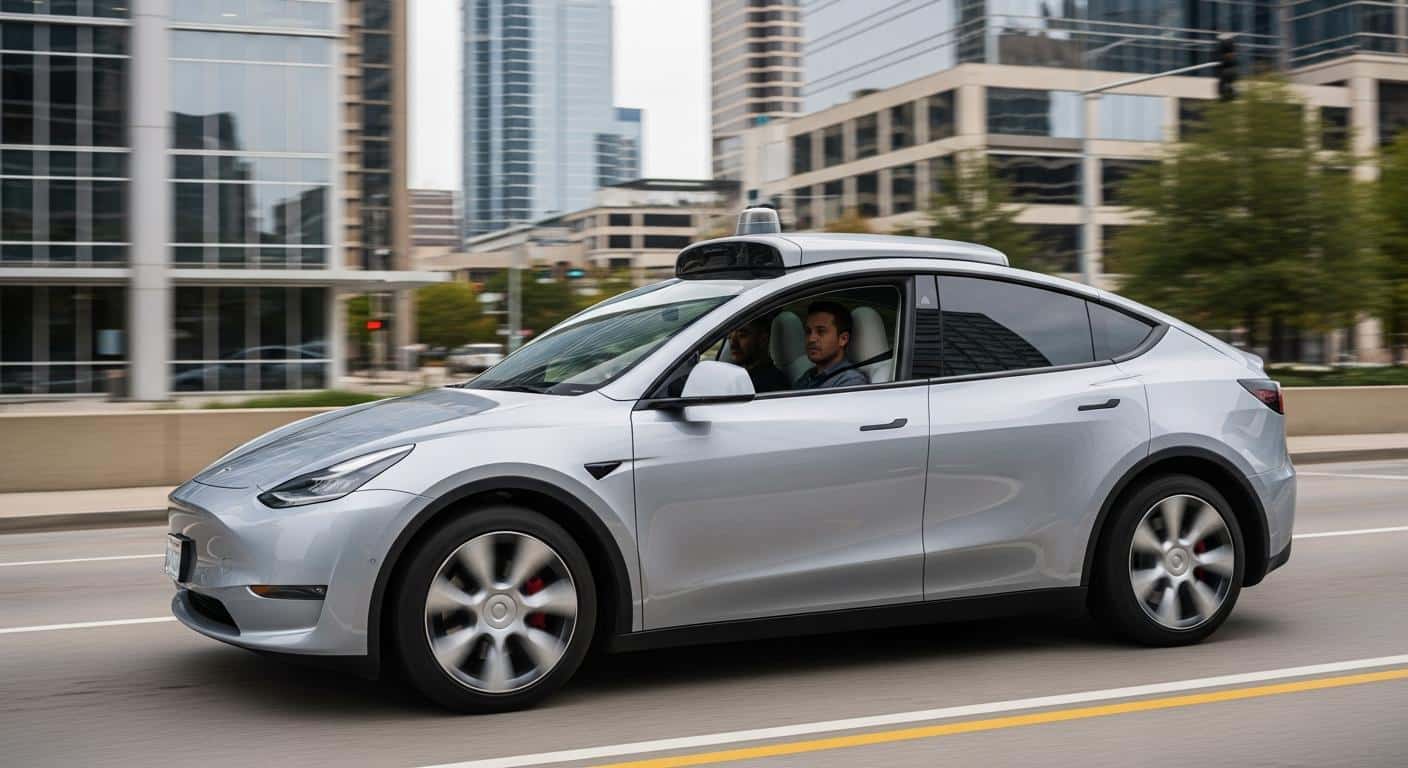
The evolution has been progressive: from permanent supervision in June to full autonomy in January, it took seven months of intensive learning. The vehicle used? None other than the Tesla Model Y used for these autonomous trips, without any special modifications. This is the strength of Tesla’s approach: to use standard vehicles already in production.
Besoin d'accessoires pour ta Tesla ?
Looking for accessories for your Tesla?
Ashok Elluswamy, Director of Autopilot Development and Full Self-Driving (FSD), confirmed the public launch at the end of January. Before that, internal tests had been conducted with Tesla employees as early as December 2025. The deployment remains measured: only a few unsupervised vehicles are circulating, mixed with the existing fleet with supervisors.
From June 2025 to January 2026: a controlled ramp-up
This transition did not happen overnight. Here are the key steps:
- June 2025: Official launch with mandatory ‘Safety Monitor’ behind the wheel
- Fall 2025: Intensive internal tests and massive data collection on Austin roads
- December 2025: Slight delay on the initial schedule which foresaw a launch at the end of 2025
- January 22, 2026: First public trips without human supervisor
How does it actually work on the ground?
Don’t expect a ‘big bang’ where the entire fleet would become autonomous overnight. Tesla opted for a progressive and intelligent deployment: supervised and unsupervised vehicles coexist in the same fleet.
In practice, you open the dedicated Tesla app, you order a ride like on Uber, and you don’t know in advance if you will have a vehicle with or without a supervisor. This approach allows for a gradual increase in the percentage of autonomous vehicles as the system proves itself.
The coverage area remains limited to certain districts of Austin, not the entire city. The onboard technology relies solely on Full Self-Driving with cameras, without LiDAR. This is a bold technological gamble that Tesla has maintained from the beginning: camera vision is sufficient, just like for humans.
The user experience of the first driverless ride
According to initial feedback on Twitter/X, the experience mixes fascination and apprehension. The app offers a safety briefing before the ride, and an emergency button remains accessible to passengers at all times. The interface is clear and reassuring, showing the route and vehicle decisions in real time.
Early users describe a smooth ride but sometimes hesitant in complex situations. Nothing alarming, but it’s clearly a technology still in its learning phase.
Tesla vs. Waymo and Uber: battle of approaches
Waymo remains the undisputed leader in the sector with over 100,000 rides per week and a presence in several American cities. The fundamental difference? Waymo uses expensive LiDAR sensors, while Tesla bets everything on camera vision.
This camera-based approach theoretically makes Tesla’s approach more scalable: no expensive sensors to install, standard vehicles transformable into robotaxis. Waymo, on the other hand, uses dedicated vehicles with a much heavier infrastructure.
Uber continues to rely on its human drivers while developing autonomous projects in parallel. Tesla’s big advantage? A potential fleet of millions of vehicles already in circulation which could, in theory, become robotaxis with a simple software update.
However, Waymo has a considerable lead in terms of coverage area and accumulated experience. Tesla adopts a more cautious approach in its deployment, and this is probably the right strategy at this stage. Moreover, Tesla’s long-term strategy could also rely on the future compact Tesla at $25,000, which could become an ideal platform to democratize robotaxis.
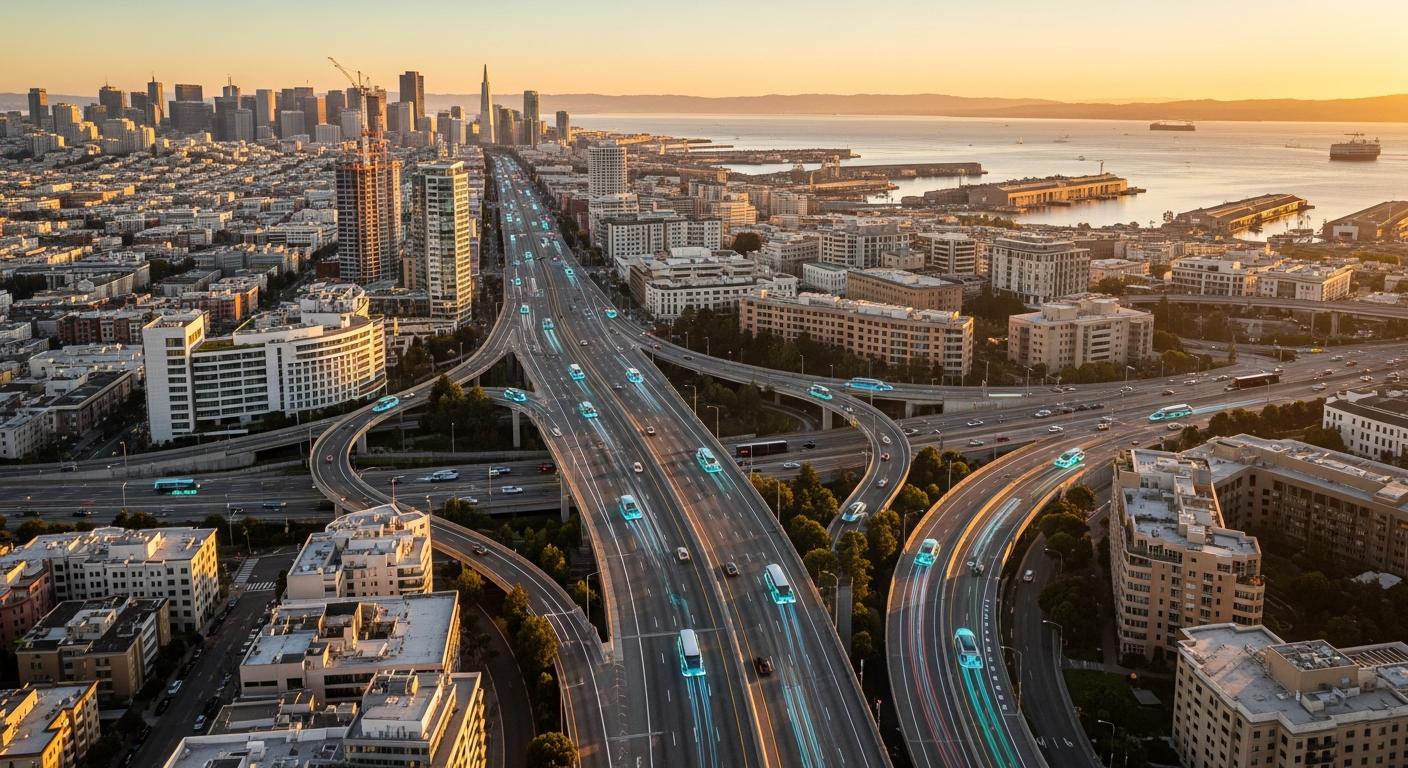
Bay Area and expansion: 5 new cities in sight
In parallel with Austin, Tesla also operates in the California Bay Area, but still with supervisors for now. The 2026 expansion plan foresees five new American cities, not yet publicly specified.
The selection criteria are strict: favorable local regulation, adapted infrastructure, and predictable weather conditions. Tesla favors a city-by-city deployment rather than a massive national launch, a strategy that minimizes risks.
Besoin d'accessoires pour ta Tesla ?
Looking for accessories for your Tesla?
Regulatory challenges vary considerably from state to state in the United States. The realistic timeline? A deployment spread throughout 2026, with the medium-term goal of becoming a credible alternative to Uber and Lyft.
What about us in Europe? Patience and regulation
Let’s be frank: European regulation is much stricter than in the United States. The legal framework of the European Union requires complex approvals, and the question of legal liability remains unclear in case of an accident.
In France specifically, experiments are strictly regulated, and the Vienna Convention on Road Traffic imposes additional constraints. Our European roads, older and with varying signage from one country to another, also represent a greater technical challenge.
My realistic prediction? Not before 2027-2028 at best for serious tests in Europe. Cultural obstacles also play a role: the social acceptance of autonomous driving progresses more slowly here than across the Atlantic.
The positive side? Europe will be able to learn from American mistakes and successes. I remain optimistic about the long-term potential, but realistic about the timelines.
Questions every French Tesla owner asks themselves
- “Will my Tesla be able to become a robotaxi?” → Not before full European regulatory validation
- “What’s the difference between the current FSD in Europe and the robotaxi version?” → Still an immense technological and especially legal gap
- Tax and insurance implications → Still very unclear, legal frameworks need to evolve
- Opportunity or constraint? → It will all depend on the business model proposed by Tesla
Austin marks the true beginning of the Tesla robotaxi era, but let’s keep things in perspective: the deployment remains limited, progressive, and the technology is still in its learning phase. I am closely following the feedback from American users, and I will keep you informed of major developments.
For us in Europe, we will need to arm ourselves with patience and carefully follow the future developments of this technology on the regulatory front. 2026 will be the year that tells if Tesla can truly compete with Waymo on its own turf. And you, would you be ready to get into a driverless robotaxi?
Profitez d'avantages exclusifs en achetant votre Tesla
Vous envisagez d'acquérir une Tesla ? En utilisant mon code de parrainage lors de votre achat, vous pouvez bénéficier d'avantages exceptionnels !
Des kilomètres gratuits de recharge ou d'autres récompenses exclusives, mon code de parrainage est votre passeport pour des avantages supplémentaires : https://ts.la/antoine49352 🤩
Pas de pression, juste une opportunité à saisir pour enrichir votre expérience Tesla.
Découvrez ici le système du parrainage et comment utiliser le code.
Get exclusive perks when buying your Tesla
Thinking about getting a Tesla? If you use my referral code when you purchase, you may be eligible for extra perks.
Free Supercharging miles or other exclusive rewards - my referral code can unlock additional benefits: https://ts.la/antoine49352 🤩
No pressure - just a simple option if you want to enhance your Tesla experience.
Learn how the Tesla referral program works and how to use the code.