



On February 3, 2026, Tesla just launched a new version of the Model Y AWD at $41,990. So far, nothing extraordinary, you might think. But looking closer, we discover an intriguing detail: the “Standard” designation that characterized the entry-level versions has simply disappeared from the catalog. Yet, Tesla had introduced it just a few months ago!
This rapid reversal naturally raises questions. Why abandon a freshly deployed Tesla nomenclature so quickly? Simple marketing adjustment or a true strategic repositioning? I suggest we analyze together the reasons behind this decision, which says a lot about the Californian manufacturer’s current marketing strategy in an increasingly competitive electric vehicle market.
A New Model Y AWD at $41,990 Without the “Standard” Label
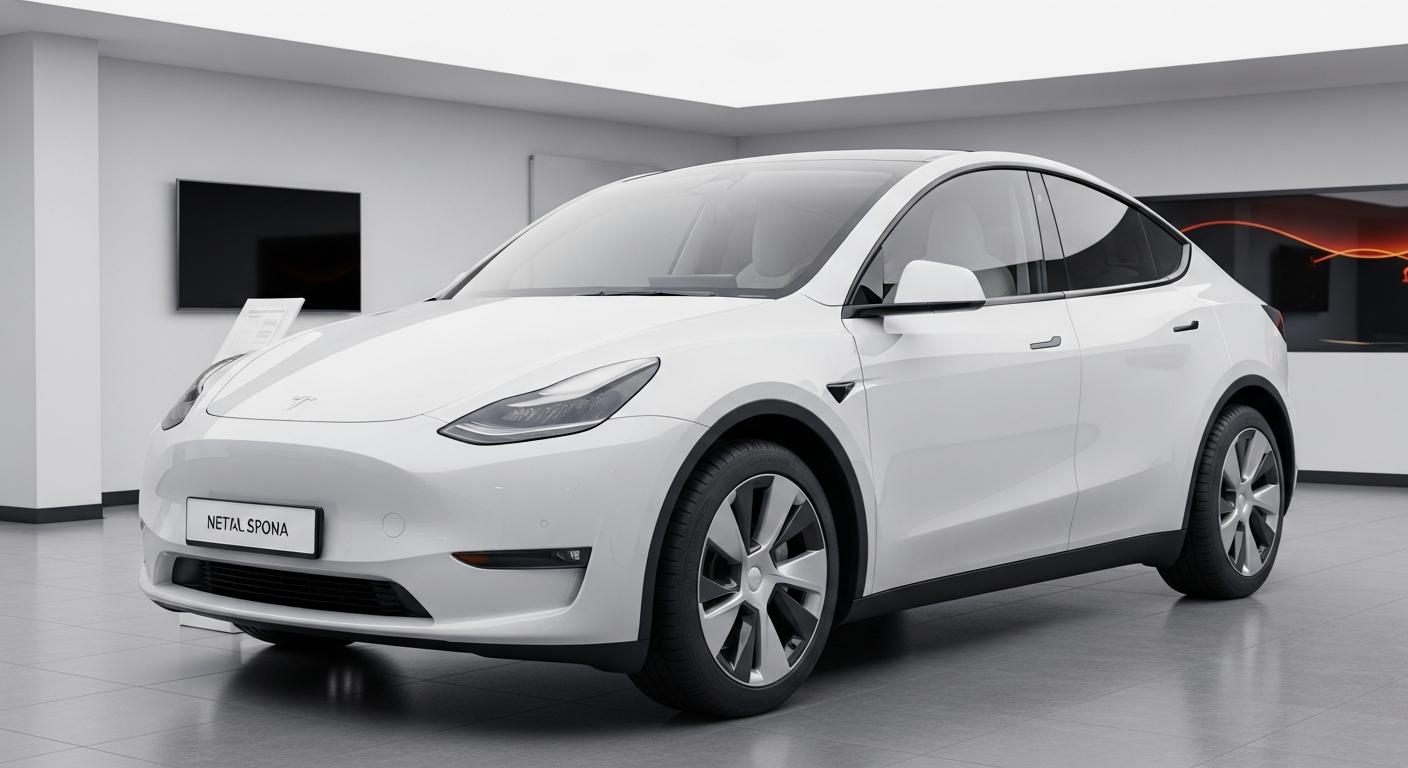
The newly launched Model Y All-Wheel Drive has a price of $41,990 and is positioned as an intermediate version in the lineup. It sits between the entry-level Model Y RWD (rear-wheel drive, cheaper) and the Premium AWD and Performance versions, which significantly increase in price.
What’s fascinating is that this new model offers the same technical specifications as the old “Standard AWD” sold at the end of 2025. Same driving range, same power, same all-wheel drive. The only notable difference? The absence of the word “Standard” in its official designation.
Besoin d'accessoires pour ta Tesla ?
Looking for accessories for your Tesla?
This version with all-wheel drive clearly targets buyers looking for the safety and performance of an AWD system without moving into premium pricing. A clever strategic positioning in an EV market where every price bracket matters in the face of competition that intensifies week after week.
The Short Life of the “Standard” Label: A Look Back at a Few Eventful Months
To understand this reversal, we need to go back to late 2025. Tesla then introduced the “Standard” version of the Model Y in direct response to changes in the U.S. federal tax credit of $7,500. The goal? To offer an entry-level version affordable enough to remain eligible for government aid.
To reach this strategic price threshold, Tesla had to make sacrifices on features. The “Standard” version was thus deprived of several elements considered premium:
- Panoramic glass roof
- Premium audio system
- Ambient lighting
- Acoustic glass for better sound insulation
- Some practical interior storage
These removed features allowed for reduced production costs and thus the final price. A comprehensible strategy on paper, but one that only lasted less than 3 months before being abandoned.
To put this in context (because I know the French audience isn’t necessarily familiar with American tax subtleties): in the United States, the tax credit for electric vehicles imposes price caps. Exceeding these thresholds, even by a dollar, results in losing the entire aid. Hence the crucial importance of offering versions just below these critical amounts.
Three Hypotheses to Explain This Strategic Reversal
So why this rapid change of direction? I’ve identified three plausible, probably complementary, explanations.
Hypothesis 1 – Too Negative a Connotation for the Term “Standard”
Let’s be honest: the word “Standard” doesn’t inspire anyone. In the collective unconscious, it evokes “basic,” “bare minimum,” or even “low-cost.” For a brand like Tesla, which built its reputation on innovation and premium quality, this is problematic.
Look at how other high-end car manufacturers name their entry-level versions: they carefully avoid this vocabulary. Audi speaks of “Business,” BMW of “Advantage,” Mercedes of “Style.” No one embraces the term “Standard,” which could devalue the brand image.
Tesla risked creating a perception of a “discount Tesla,” which could have cannibalized higher-end versions and permanently damaged its hard-earned premium positioning.
Hypothesis 2 – Simplification in the Face of a Confusing Lineup
The proliferation of variants made the lineup confusing: RWD, AWD, Standard AWD, Premium AWD, Performance… Even the most ardent Tesla fans struggled to clearly explain the differences!
Customer feedback likely confirmed this confusion. When your catalog becomes a headache, you lose sales. Potential buyers simply give up due to the complexity of choice.
The new structure is much more intuitive: RWD (rear-wheel drive) → AWD (all-wheel drive) → Premium (additional features) → Performance (sporty). A logical and easy-to-remember progression.
Hypothesis 3 – Protecting the Premium Image in a Difficult Context
Tesla’s economic context has evolved considerably in recent months. Several models have lost the advantage of the tax credit, reducing their price attractiveness. At the same time, increased competition from Chinese (BYD, NIO) and European brands is forcing Tesla to rethink its positioning.
Besoin d'accessoires pour ta Tesla ?
Looking for accessories for your Tesla?
Last week’s announcement of a massive $2 billion investment in xAI also shows that Tesla needs to maintain high margins to finance its parallel projects. In this context, it’s impossible to be perceived as a “discount” manufacturer.
The premium positioning becomes vital: Tesla must justify its prices by perceived value, not by temporary tax aids. Abandoning the “Standard” label is part of this strategy to remain in the high-end segment.

Concretely, What Does Removing the Label Change for the Buyer?
Good news: absolutely nothing from a technical standpoint! The vehicle’s technical specifications remain strictly identical. The price doesn’t significantly change either.
The features removed compared to the Premium version are still the same as before. If you want to discover the Model Y’s interior look in detail and concretely visualize these equipment differences, you’ll better understand what truly distinguishes the versions.
From a user perspective, this change is therefore purely cosmetic. What really matters to you? Understanding which version matches your actual needs: do you really need the panoramic roof? Does premium audio make a difference for you?
My pragmatic advice: focus on the concrete list of features rather than the commercial name. Designations change, features remain. Factually compare what you get for your money.
Tesla’s Real Challenge: Standing Out Without Tax Advantages
This change in nomenclature is part of a broader context: Tesla must learn to attract buyers without the tax advantages that boosted its sales for years. The gradual end of these incentives marks a major turning point.
Competition is intensifying from all sides. Chinese-made Teslas must compete with ultra-competitive local manufacturers on their home turf, while European models gain technical maturity.
Another thorn in the side: a McKinsey & Co. study reveals that approximately 33% of buyers consider the absence of Apple CarPlay to be a deal-breaker. Persistent rumors about a possible upcoming integration show that Tesla needs to listen more to its customers.
The fundamental challenge? Tesla must now attract buyers based on the pure product, on user experience, on perceived quality. No longer on government checks. It’s a complete paradigm shift that explains why every marketing positioning detail now matters.
Maintaining a premium positioning while offering competitive prices against new entrants becomes the complex equation Tesla must solve. As recent sector analyses show, this transition to a less subsidized market reshuffles the cards for all electric vehicle players.
Ultimately, this name change reveals more than it hides. It perfectly reflects Tesla’s current challenges: maintaining its premium positioning in a normalizing market, where electric vehicles are no longer niche items but mainstream products coldly compared on their intrinsic merits.
For us owners or future buyers, the lesson is simple: let’s focus on the actual features, not on marketing labels that change with commercial strategies. Instead, keep an eye on upcoming price changes and any announcements about CarPlay that will have a concrete impact on your daily experience.
As a Tesla owner, I find this change sensible, even if it comes late. Sometimes, the best marketing strategy is simply to stop overcomplicating things. If you’re considering buying a Model Y, don’t forget to prepare your delivery checklist to ensure everything is perfect on delivery day.
Profitez d'avantages exclusifs en achetant votre Tesla
Vous envisagez d'acquérir une Tesla ? En utilisant mon code de parrainage lors de votre achat, vous pouvez bénéficier d'avantages exceptionnels !
Des kilomètres gratuits de recharge ou d'autres récompenses exclusives, mon code de parrainage est votre passeport pour des avantages supplémentaires : https://ts.la/antoine49352 🤩
Pas de pression, juste une opportunité à saisir pour enrichir votre expérience Tesla.
Découvrez ici le système du parrainage et comment utiliser le code.
Get exclusive perks when buying your Tesla
Thinking about getting a Tesla? If you use my referral code when you purchase, you may be eligible for extra perks.
Free Supercharging miles or other exclusive rewards - my referral code can unlock additional benefits: https://ts.la/antoine49352 🤩
No pressure - just a simple option if you want to enhance your Tesla experience.
Learn how the Tesla referral program works and how to use the code.