


Tesla isn’t betting everything on a single autonomous vehicle. During recent announcements, the manufacturer unveiled an ambitious modular strategy based on three pillars: the compact Cybercab, the family-friendly Model Y, and the Robovan for collective transport. This pragmatic approach is accompanied by major technical breakthroughs, notably the mastery of 4680 Batteries with a dry electrode process and a precise production schedule for 2026. Rather than futuristic promises, Tesla displays impressive industrial realism. I’m sharing the concrete details of this strategy that could redefine urban mobility.
A Robotaxi Range to Cover 100% of Mobility Needs
Lars Moravy, Vice President of Vehicle Engineering at Tesla, confirmed a key data point: over 90% of daily trips involve only 1 to 2 passengers. This statistic justifies Tesla’s entire segmentation logic.
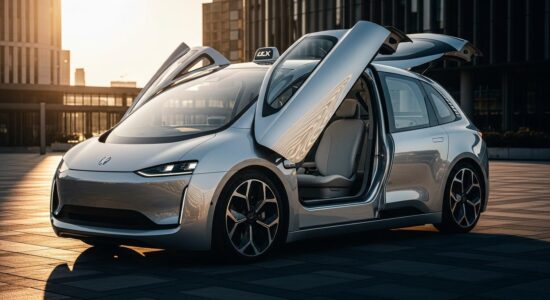
The Cybercab specifically addresses these 90% of urban trips: compact, economical, optimized for one to two people. For families and groups of 3 to 4 people, the standard Model Y joins the robotaxi fleet. If deployment in North America is confirmed, the Model Y Long will be able to accommodate 5 to 6 passengers. Finally, the Robovan targets groups of 10 people or more, ideal for shuttles and collective transport.
This approach illustrates Tesla’s strategy to offer accessible vehicles adapted to each use. Rather than an oversized universal vehicle for daily use, Tesla prioritizes efficiency by use. It’s an unassailable mathematical logic: why move 1.5 tons of metal to transport a single person when a lighter vehicle is sufficient?
Besoin d'accessoires pour ta Tesla ?
Looking for accessories for your Tesla?
Cybercab: Production Confirmed for April 2026 Without Compromising Autonomy
A Radical Bet on Autonomous Driving
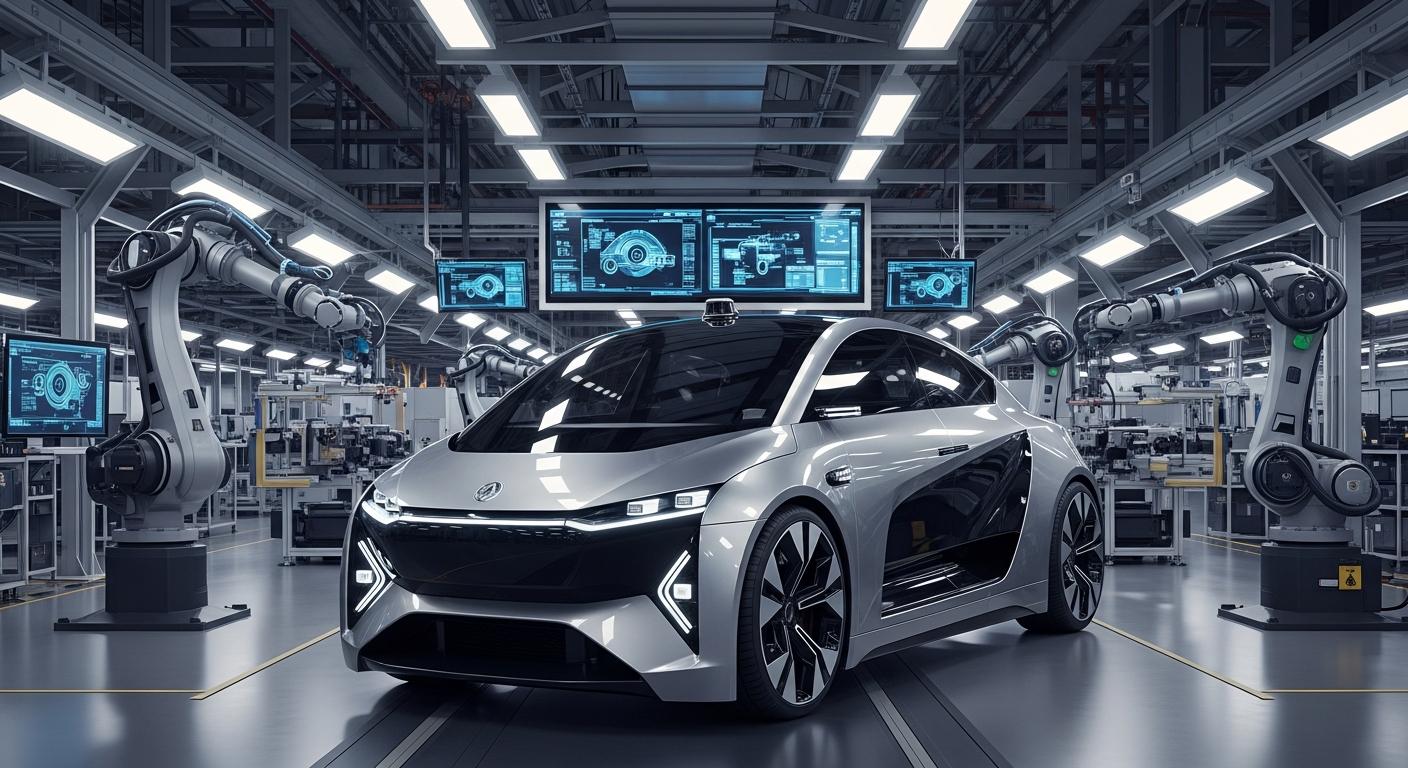
The Cybercab embodies a radical technological bet: no steering wheel, no pedals from conception. This bold decision reflects Tesla’s absolute confidence in its ability to deploy full Level 5 autonomy.
The compact design, optimized for 1 to 2 passengers, allows for a drastic reduction in production and operating costs. The production date is set: April 2026. But the ambition doesn’t stop there.
Tesla plans to produce more Cybercabs than all its other vehicles combined eventually. This massive volume reflects a clear vision: that of an automaker transforming into an autonomous fleet manager. It’s not just a new model in the catalog; it’s a complete business model change.
Of course, regulatory and technical challenges remain. Full autonomy without supervision is not yet validated by all authorities. But the precise schedule and announced volumes show that Tesla isn’t making mere promises.
Cybercab Charging: Pragmatism First, Innovation Second
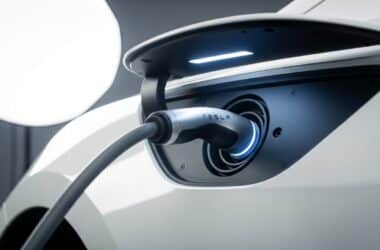
On the current Cybercab prototypes, Tesla has installed a classic manual charging port at the rear of the vehicle. Nothing revolutionary, but fully functional.
The long-term vision aims for wireless induction charging for autonomous operation. This technology is essential for a robotaxi: it’s impossible to send a human to plug in each vehicle. But Tesla adopts a realistic iterative approach: start with what works, migrate to innovation once the technology is mature.
Induction poses concrete challenges: energy losses during transfer, heat management, cost of infrastructure installation. Compared to the current Supercharger network already operating efficiently, induction represents a significant technological leap.
This technology already exists on niche electric vehicles, but Tesla will have to industrialize it on a large scale. In the meantime, the manual port ensures that the Cybercab can be operational as early as 2026, without waiting for perfection.
4680 Batteries: The Dry Process Breakthrough Finally Realized
Mass Production with Dry Electrode for Anode AND Cathode
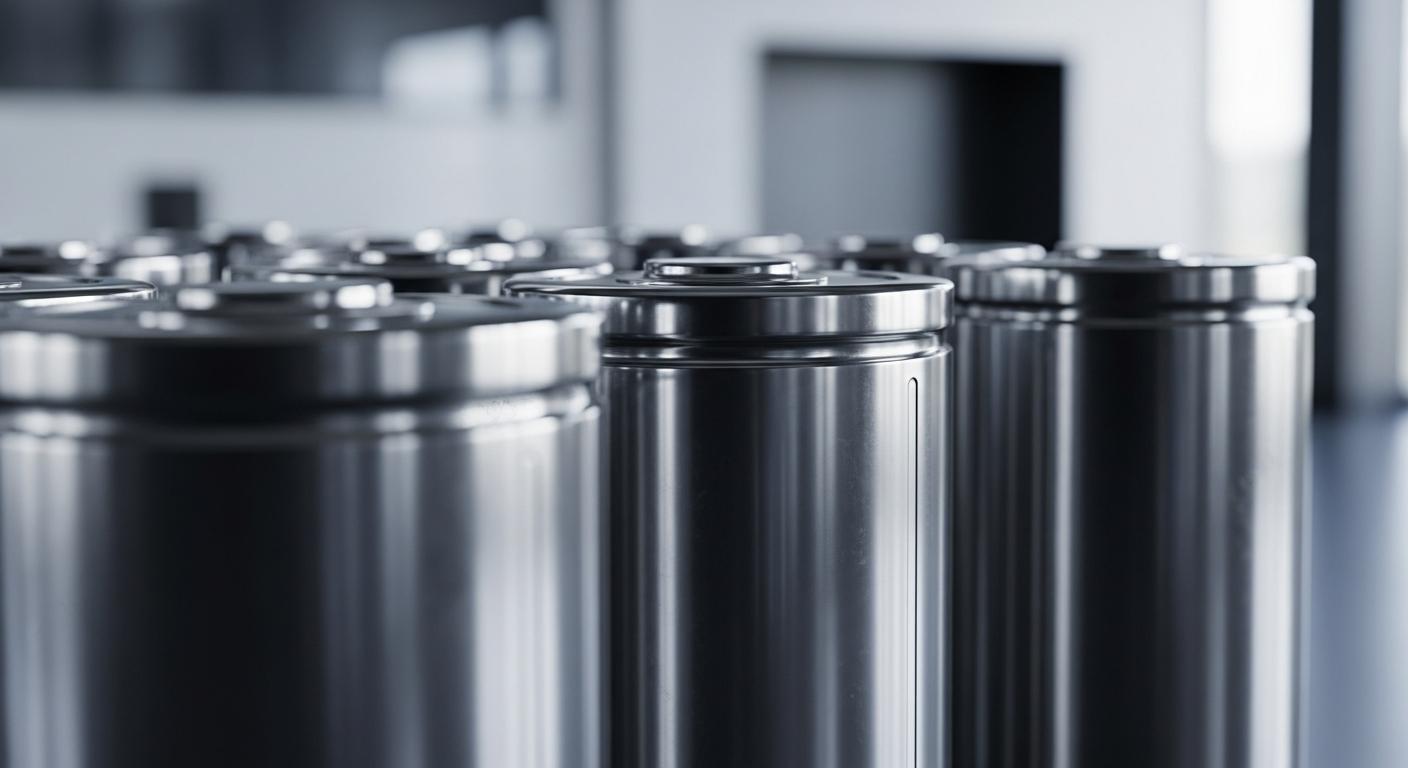
Tesla has officially confirmed mastery of the dry electrode process for its 4680 Batteries. After years of development and doubts, industrial scaling is underway.
Integration has already begun: some Model Ys are receiving 4680 Battery packs manufactured with this revolutionary process. The advantages are considerable:
- Reduction in production costs by over 50%
- Factory footprint reduced tenfold
- More ecological process with fewer solvents
- Improved energy density
This major technological breakthrough strengthens Tesla’s competitiveness against Chinese manufacturers who currently dominate battery production. As explained, the question of batteries and their origin remains central for Tesla, and mastering this technology internally changes the game.
These 4680 Batteries will be at the heart of the Cybercab, allowing it to achieve the necessary autonomy and reliability for intensive operation. Many doubted Tesla’s ability to industrialize this process. It’s now done, even if it’s just the beginning.
Optimus Robot: From Fremont to Texas, the Industrial Ramp-Up
Beyond vehicles, Tesla is accelerating on the Optimus humanoid robot. The Fremont factory hosts the first production line with a capacity of 1 million units per year. But it’s at Giga Texas that the ambition is fully revealed.
Besoin d'accessoires pour ta Tesla ?
Looking for accessories for your Tesla?
The Optimus V4 line installed in Texas aims for a capacity of 10 million units per year. A staggering figure that recalls the ramp-up of automotive Gigafactories. The strategy is clear: internal use in Tesla factories first, then commercialization.
Elon Musk mentioned the potential impact on US GDP, projections to be taken with caution. What really matters are the concrete industrial capacities deployed. Tesla builds production infrastructure even before validating all use cases. It’s risky, but that’s how the company has always operated.
Tesla adopts a pragmatic and modular approach that doesn’t bet everything on a single technology. Technical milestones are reached: 4680 Batteries are in production, the Cybercab schedule is confirmed for April 2026, and the robotaxi range covers all mobility needs.
Two crucial elements remain to be demonstrated: full autonomy without supervision and regulatory acceptance. According to recognized industry sources, the legal framework for autonomous driving is evolving rapidly.
I am personally impressed by the consistency of this strategy, which builds brick by brick, without waiting for perfection to move forward. What do you think of this modular approach? Share your thoughts in the comments.
Profitez d'avantages exclusifs en achetant votre Tesla
Vous envisagez d'acquérir une Tesla ? En utilisant mon code de parrainage lors de votre achat, vous pouvez bénéficier d'avantages exceptionnels !
Des kilomètres gratuits de recharge ou d'autres récompenses exclusives, mon code de parrainage est votre passeport pour des avantages supplémentaires : https://ts.la/antoine49352 🤩
Pas de pression, juste une opportunité à saisir pour enrichir votre expérience Tesla.
Découvrez ici le système du parrainage et comment utiliser le code.
Get exclusive perks when buying your Tesla
Thinking about getting a Tesla? If you use my referral code when you purchase, you may be eligible for extra perks.
Free Supercharging miles or other exclusive rewards - my referral code can unlock additional benefits: https://ts.la/antoine49352 🤩
No pressure - just a simple option if you want to enhance your Tesla experience.
Learn how the Tesla referral program works and how to use the code.