

Have you been following the news? Tesla just completely changed its monetization strategy for Full Self-Driving. Elon Musk announced in January 2026 the end of the permanent purchase option at $8,000: starting February 15, 2026, in the United States (and March 31 in Australia), it will be impossible to acquire FSD once and for all. The only choice left? A monthly subscription at $99, with no alternative.
This decision shakes up the relationship between Tesla and its customers. For us, current owners and future buyers, it radically changes the financial game. How much will it really cost over time? Why this sudden shift toward a subscription-only model? And above all: what does it reveal about the company’s global strategy?
In Europe, the situation remains on hold: FSD is still not available here, with a launch hoped for late 2026. I suggest we dissect this announcement and its concrete implications.
The $8,000 option is disappearing: how Tesla made this change
In January 2026, Elon Musk used his X account (formerly Twitter) to announce the end of the one-time purchase of Full Self-Driving. The deadline? February 15, 2026, for North America (United States, Canada, Mexico), with immediate effect. No customer can now spend $8,000 to get lifetime access to all supervised autonomous driving features.
Besoin d'accessoires pour ta Tesla ?
Looking for accessories for your Tesla?
The old system allowed you to buy FSD as a permanent option attached to the vehicle. Once paid, this $8,000 guaranteed unlimited access to all system software updates at no extra cost for as long as you kept your Tesla.
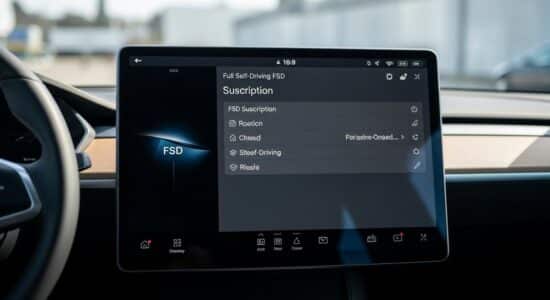
The new model imposes a monthly subscription only at $99. No more ownership, no more permanent purchase: you pay as long as you want to use the service, and if you stop, you lose access. It’s as simple as that.
Crucial point to remember: owners who already bought FSD for $8,000 before this date keep their access at no extra cost. If you’re one of them, rest assured: your investment remains valid. Tesla hasn’t retroactively removed acquired rights, which would have likely triggered a legal storm.
Australia got a short reprieve with a deadline pushed back to March 31, but the principle remains the same: the end of permanent purchase, mandatory move to the recurring model.
Seven countries affected, but Europe is still waiting
This transition currently affects 7 countries where FSD is officially available: the United States, Canada, China, Mexico, Australia, New Zealand, and South Korea. If you live in Europe like me, you’ll notice our glaring absence from this list.
The European launch is estimated for late 2026 according to Tesla’s latest communications, but with no firm guarantee. European regulatory constraints remain a major obstacle: complex approvals, a strict legal framework regarding autonomous driving, liability in case of an accident… all hurdles slowing down the rollout.
This wait inevitably impacts our perception of FSD. While North American drivers have been experimenting with (and paying for) the system for years, we remain spectators. When FSD arrives here, will it come directly in subscription-only mode? Most likely.
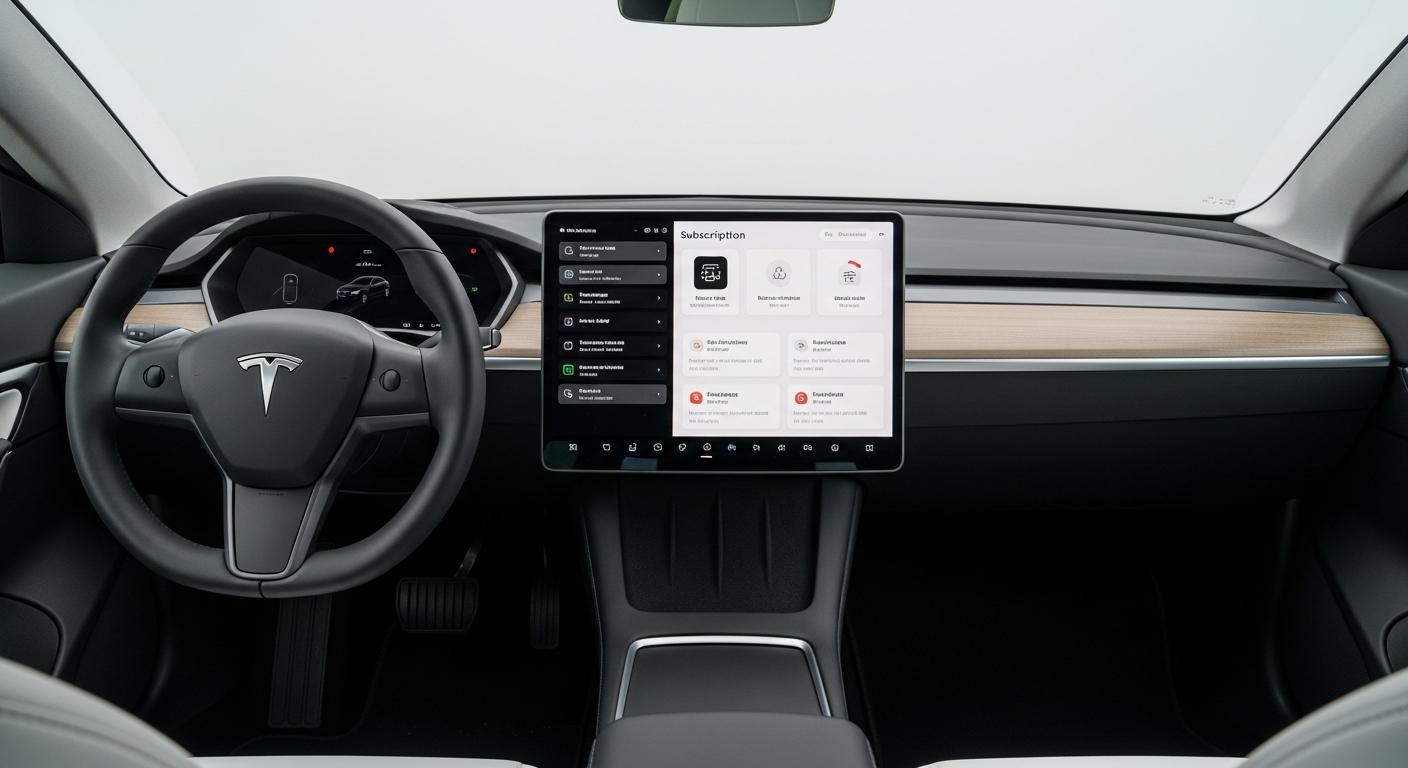
$99/month vs. $8,000: which model was truly profitable?
Let’s do a simple calculation: $8,000 divided by $99/month gives about 80.8 months, or 6.7 years of ownership. This is the break-even point: if you keep your Tesla for less than 6 years and 8 months, the subscription costs you less than the permanent purchase. Beyond that, the one-time purchase becomes more financially advantageous.
According to available data, the average Tesla ownership duration is around 4 to 5 years. In this scenario, the subscription represents a total of about $4,750 to $5,950 over the entire ownership period, compared to $8,000 for a direct purchase. Mathematically, the subscription therefore seems advantageous for the majority.
But let’s look closer at the profiles:
- Who the subscription is good for: those who change vehicles regularly (every 3-4 years), occasional FSD users (only for long-distance trips), or those who wanted to test before buying (except now, the purchase option no longer exists).
- Who it was better for before: owners keeping their vehicle for 8 years or more, daily FSD users who get constant value from it, and everyone who psychologically values “ownership” over the perpetual rental of a feature.
My personal take? This transition clearly favors Tesla. Recurring revenue offers financial predictability that one-off sales don’t guarantee. For the company, it’s a more stable business model that’s more valuable on the stock market. For some users, it’s a legitimate frustration: we’re moving from an asset purchase to an endless rental.
The hidden objective: 10 million subscribers to validate Musk’s salary
Let’s be honest: this change isn’t just about an improved user experience. It’s part of Tesla’s global financial strategy, and more specifically Elon Musk’s controversial compensation package. One of the tranches of this package requires reaching 10 million active FSD subscriptions.
Do the math: 10 million subscribers at $99/month represents $990 million monthly, or $11.88 billion per year in recurring revenue. That’s colossal. To put it in context, the global Tesla fleet is currently estimated at between 6 and 7 million vehicles on the road.
Besoin d'accessoires pour ta Tesla ?
Looking for accessories for your Tesla?
To reach this ambitious goal, Tesla is also counting on expanding its range with the future $25,000 compact Tesla, which should democratize access to electric vehicles and therefore multiply potential subscribers.
It’s a bold bet: they would need to convert a massive portion of the installed base (say 70-80% of current vehicles) while counting on new buyers to systematically sign up for the subscription. Is it realistic? Personally, I have my doubts. At $99 a month, many will hesitate, especially as long as the system requires constant supervision.
Let’s be transparent: it’s not just about improving technology or better serving customers. It’s about validating specific financial goals linked to the CEO’s compensation. This transparency deserved to be put on the table.
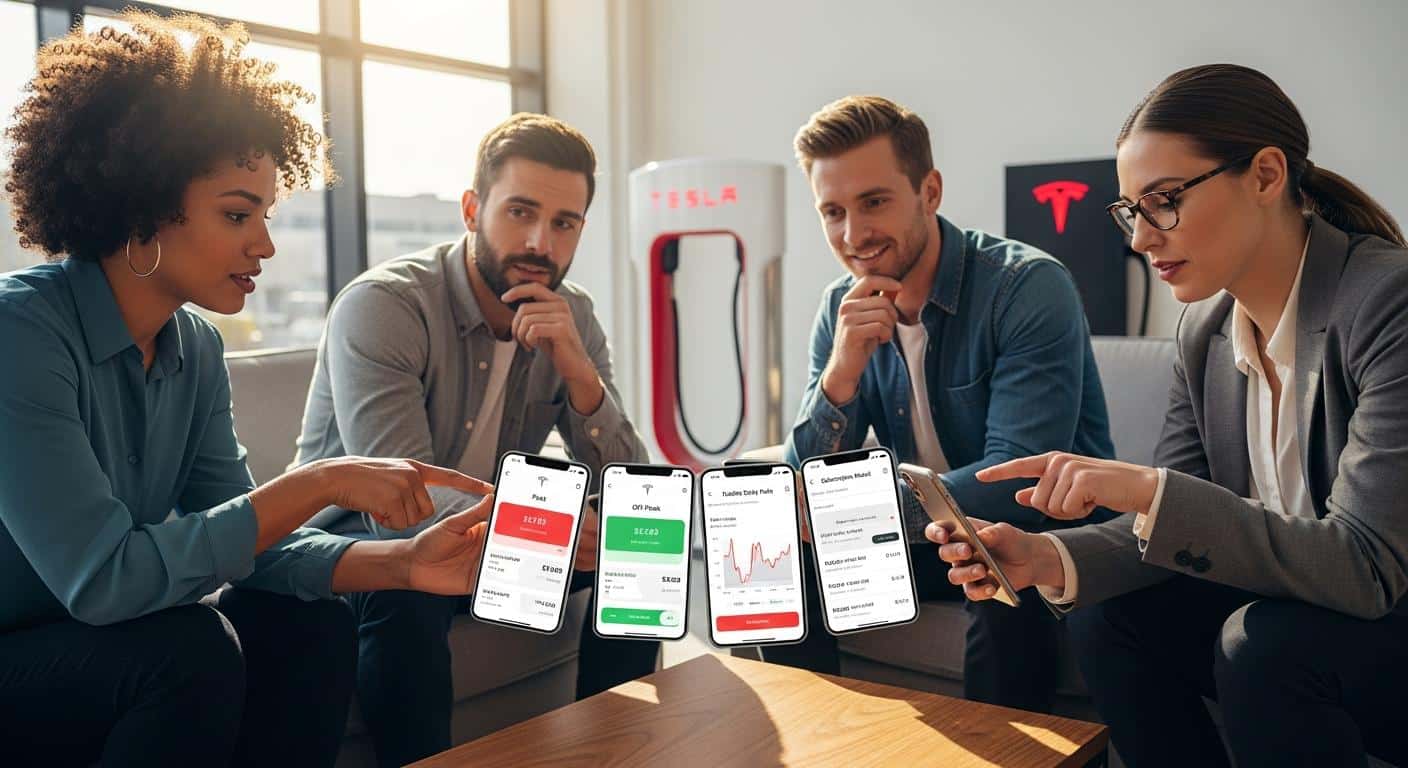
What owners really want: more pricing flexibility
Browsing Tesla owner forums, social media groups, and feedback from the Tesla community, one observation comes up constantly: users are calling for pricing flexibility. The $99 monthly subscription doesn’t fit everyone’s usage.
Here are the main requests emerging:
- Daily pricing: ideal for occasional road trips, for example $15 to $20 per day. Perfect for summer vacations without a monthly commitment.
- Weekly subscription: for those going on a week-long trip, for example $50 a week.
- Annual rate with a discount: rewarded long-term commitment, for example $990 instead of $1,188 (12 × $99), which is two months free.
- Tiers based on features: distinguishing FSD Supervised (current, requiring supervision) from the future FSD Unsupervised (full autonomy) with differentiated prices.
This request for granularity is nothing extraordinary. Other sectors have already adopted it: Netflix offers monthly plans but also the ability to cancel at any time, Spotify offers free trials, Adobe has several subscription levels depending on the software used.
My personal opinion? Tesla would benefit from offering this flexibility. While waiting for more pricing flexibility on FSD, you can already optimize the use of your Tesla’s advanced features using shortcuts for faster and more intuitive control. Personally, I would use FSD mainly in the summer for long trips to the south of France. A three-month subscription (June-July-August) would suit me perfectly, but paying for 12 months to use 3? That holds me back.
The distinction between FSD Supervised vs. Unsupervised: a two-speed future?
Today, the available system is called FSD Supervised: it requires constant driver supervision, hands on the wheel, ready to take over at any time. It’s technically impressive, but far from the promised full autonomy.
FSD Unsupervised, promised for the future, corresponds to level 4-5 autonomy: complete hands-free, the possibility to sleep or work during the trip, responsibility transferred to the system. It’s the ultimate vision, but it remains hypothetical in the short term.
The question arises: will Tesla create two separate subscriptions? A plausible hypothesis: $99 for the current Supervised, and $149 to $199 for Unsupervised once available. The regulatory stakes before the latter’s deployment remain huge, especially regarding legal liability.
My analysis: as long as FSD remains in “Supervised” mode, the perceived value at $99/month remains questionable for many users. Paying $1,200 a year for a system that still forces me to stay constantly attentive? The economic equation doesn’t convince everyone.
And tomorrow? Inevitable price hikes according to Elon Musk
Elon Musk has said it repeatedly: the price of FSD will increase as capabilities progress. It’s a recurring promise, and history proves him right. For the permanent purchase, FSD went from $5,000 in 2019 to $8,000 in 2024. A 60% increase in five years.
With the subscription model, we can project a similar evolution: moving from $99 to $120, or even $150/month by 2027-2028. Especially if the system actually reaches full autonomy (Unsupervised) and obtains the necessary regulatory authorizations.
The critical question remains: will the delivered value keep up with the price hike? Currently, FSD is impressive in certain situations (highways, simple urban trips), but still very limited in others (complex parking, unmapped roads, difficult weather conditions). The gap between the marketing promise and daily reality remains significant.
The risk of acceptability becomes real: at what price will users say “no” en masse? Personally, I’m willing to pay $99 for a system that’s 95% reliable, but $150 for something that still requires my constant supervision? That becomes hard to justify. This question of perceived value isn’t new at Tesla: I was already asking it with the Tesla Model S Plaid and its performance, which also raises the question of utility vs. price – a $150/month system will clearly have to prove its ROI daily.
Tesla is betting on continuous technology improvement to justify the hikes. It’s consistent, but it assumes that progress is perceptible and measurable by users. If the system stays stuck at its current level while the price climbs, resistance will build. Moreover, industry analyses show that the acceptability of autonomous driving systems depends heavily on their perceived reliability and their cost-benefit ratio.
For now, the move to subscription-only is a done deal. For us, owners and future buyers, it remains to be seen if the proposal is worth the recurring investment. The ball is in Tesla’s court: to turn this financial constraint into indisputable value. The bet is on.
Profitez d'avantages exclusifs en achetant votre Tesla
Vous envisagez d'acquérir une Tesla ? En utilisant mon code de parrainage lors de votre achat, vous pouvez bénéficier d'avantages exceptionnels !
Des kilomètres gratuits de recharge ou d'autres récompenses exclusives, mon code de parrainage est votre passeport pour des avantages supplémentaires : https://ts.la/antoine49352 🤩
Pas de pression, juste une opportunité à saisir pour enrichir votre expérience Tesla.
Découvrez ici le système du parrainage et comment utiliser le code.
Get exclusive perks when buying your Tesla
Thinking about getting a Tesla? If you use my referral code when you purchase, you may be eligible for extra perks.
Free Supercharging miles or other exclusive rewards - my referral code can unlock additional benefits: https://ts.la/antoine49352 🤩
No pressure - just a simple option if you want to enhance your Tesla experience.
Learn how the Tesla referral program works and how to use the code.