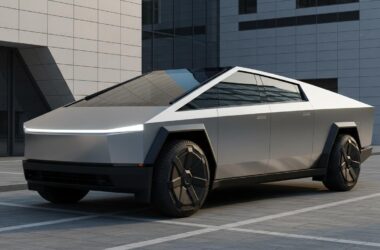

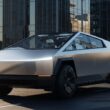

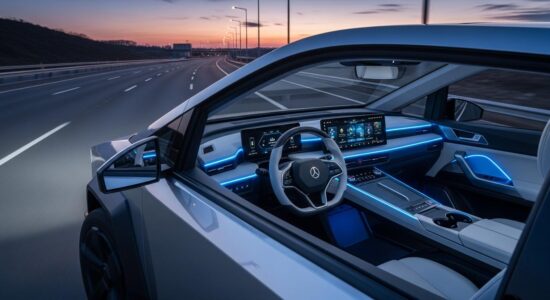
On February 20, 2026, a Cybertruck owner experienced a waking nightmare on a California highway: a severe allergic reaction caused him to lose consciousness while driving at full speed. But instead of ending in tragedy, this story went viral for an unexpected reason: his vehicle’s Full Self-Driving (FSD) Supervised took control, brought him to safety, and likely saved his life. The incident quickly made the rounds on social media, even drawing a response from Elon Musk himself. But beyond the buzz, what actually happened inside this cabin intérieure turned autonomous?
When your body gives out at 110 km/h on the highway
The driver didn’t see it coming. After an involuntary 17-hour fast and taking a new medication that same morning, he was driving calmly on the highway when the first symptoms appeared. The allergic reaction was brutal: dizziness, blurred vision, then a progressive loss of consciousness that left no chance to pull over.
His last conscious reflex? Calling his wife to tell her something was wrong. The call cut off abruptly. In 99% of cases, at that exact moment, the story ends in a head-on collision or running off the road. But not this time.
The Tesla Cybertruck equipped with FSD was driving in supervised mode. And it was exactly this system that would make all the difference between a tragic news story and a testimony of a life saved by technology.
Besoin d'accessoires pour ta Tesla ?
Looking for accessories for your Tesla?
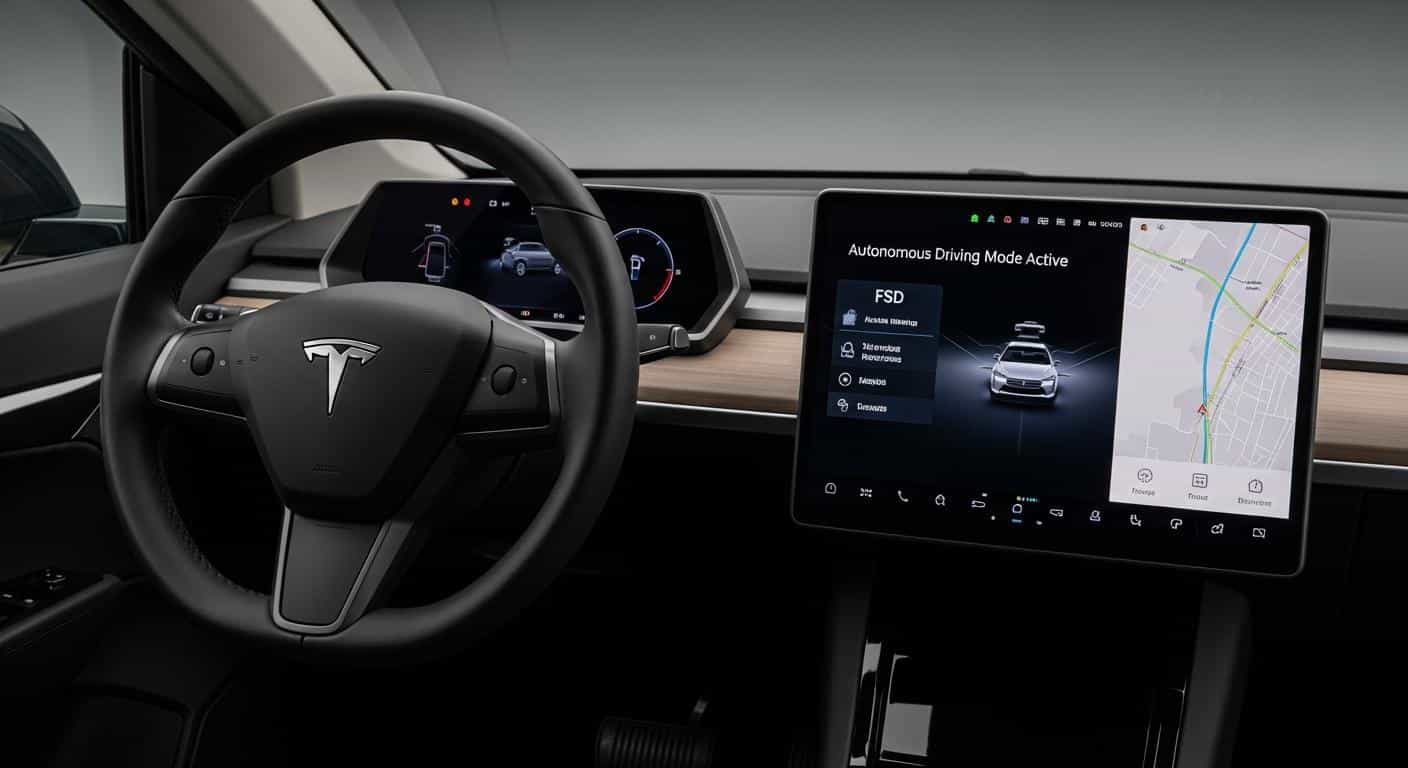
FSD detects the problem and takes control.
Contrary to what many imagine, Full Self-Driving Supervised doesn’t just manage the road. It also monitors the driver. The cabin camera constantly analyzes gaze, head movements, and general attention. As soon as it detects abnormal inactivity or a lack of response to alerts, the emergency protocol activates automatically.
That’s exactly what happened that day. The system understood the driver was no longer responding and initiated a perfectly orchestrated emergency sequence:
- Gradual slowing of the vehicle without sudden braking
- Automatic activation of hazard lights
- Intelligent guidance to the emergency shoulder
- Complete safe stop on the side of the road
If you want to customize safety features via Tesla shortcuts, know that this type of driver monitoring is an integral part of the system and cannot be disabled. And honestly, thankfully so.
Crucial reminder: FSD remains a supervised driving system. Normally, the driver must remain attentive and ready to take back control. But in this medical emergency, it was precisely this two-way monitoring that changed everything.
Help alerted and autonomous trip to the ER
While the Cybertruck was parking safely, the driver’s wife hadn’t lost a second. Thanks to Life360 (a family geolocation app), she knew the vehicle’s exact position. She immediately contacted emergency services, who arrived on the scene in less than 5 minutes.
First responders assessed the situation and suggested an ambulance transport. But that’s where the story takes a surprising turn: the owner, having come to and aware of his condition, refused the ambulance. His decision? Use his Cybertruck in FSD mode to drive himself to the hospital.
The autonomous trip to the ER went off without a hitch. Was it the best decision medically speaking? One could legitimately doubt it. In case of a severe allergic reaction, continuous medical monitoring during transport is recommended. But the testimony illustrates the absolute trust some owners place in their assistance system.
Going viral on X and Elon Musk’s reaction
A few days after the incident, the owner posted his testimony on X (formerly Twitter). The detailed account, filled with gratitude toward Tesla engineering, quickly racked up hundreds of thousands of views and thousands of shares.
Elon Musk personally replied to the tweet, praising the system’s performance and expressing relief that the driver was okay. The official Tesla account then shared the story, significantly amplifying its media reach.
Obviously, the reactions in the comments are mixed. Enthusiasts see it as irrefutable proof that autonomous driving saves lives. Skeptics point to the convenient marketing aspect of an isolated case, reminding everyone that the system remains imperfect. The truth? This testimony is both an impressive real-world case AND an excellent communication tool for Tesla. The two are not mutually exclusive.
Impressive FSD safety figures
A safety record 8 times better than average
To contextualize this incident, let’s look at the official Tesla statistics from the fourth quarter of 2025. The numbers are telling:
- With FSD Supervised active: 1 major collision every 5,300,676 miles driven
- US national average (all vehicles): 1 collision every 660,164 miles
- Resulting in a 8:1 safety ratio in favor of the Tesla system
This data is based on over 8 billion miles driven in FSD mode, representing a significant statistical sample. It’s hard to ignore such a difference. Besides, the technological power of modern Teslas is no longer limited to acceleration: it’s the entire software infrastructure pushing the boundaries.
Important nuance: this data comes from Tesla. No independent body has yet validated these figures with an external methodology.
Besoin d'accessoires pour ta Tesla ?
Looking for accessories for your Tesla?
What do independent studies say?
This is where the picture gets more complex. Third-party studies on FSD remain rare and methodologies vary. Some researchers point to a selection bias: drivers using FSD often drive in more favorable conditions (highways, good weather) than the national average.
Nevertheless, even critical observers recognize the considerable technical progress made by Tesla. Compared to other systems like Waymo (more geographically limited) or Cruise (which suspended operations), the large-scale deployment of FSD constitutes a notable advancement.
The safety data therefore deserves to be taken seriously, while keeping a critical eye on the conditions of its production.
And what about FSD in France?
If you are a Tesla owner in France reading this story with envy, I have bad news: Full Self-Driving is not available in Europe. For now, we have to settle for Enhanced Autopilot, which already offers great features but remains far from the capabilities of the American FSD.
Why this difference? European regulations impose much stricter homologation criteria. The Vienna Convention on Road Traffic, which the European Union follows, requires a driver to maintain permanent control of their vehicle. The camera monitoring system also raises personal data protection questions.
For French Tesla owners, it’s a legitimate source of frustration. We pay the same price (or nearly) for reduced features. But this regulatory caution isn’t absurd: it aims to ensure that autonomous systems are truly safe before mass deployment.
Tesla is currently negotiating with European authorities to obtain the necessary authorizations. The democratization of Tesla autonomous technologies will inevitably go through these regulatory approvals. The question remains: can this type of incident accelerate homologation by proving the system’s vital utility?
This California story spectacularly illustrates the potential of advanced driver assistance systems. A man literally owed his life to technology that, just ten years ago, was the stuff of science fiction. But let’s remember one last time: FSD remains a “Supervised” system, which theoretically requires constant driver attention. According to official data, onboard camera monitoring also raises significant privacy protection issues.
We find ourselves facing a productive tension between technological innovation and regulatory frameworks, between maximum safety and accessibility. One thing is certain: these stories of lives saved will multiply as autonomous electric vehicles become more common. And you, would you trust FSD in such a situation?
Profitez d'avantages exclusifs en achetant votre Tesla
Vous envisagez d'acquérir une Tesla ? En utilisant mon code de parrainage lors de votre achat, vous pouvez bénéficier d'avantages exceptionnels !
Des kilomètres gratuits de recharge ou d'autres récompenses exclusives, mon code de parrainage est votre passeport pour des avantages supplémentaires : https://ts.la/antoine49352 🤩
Pas de pression, juste une opportunité à saisir pour enrichir votre expérience Tesla.
Découvrez ici le système du parrainage et comment utiliser le code.
Get exclusive perks when buying your Tesla
Thinking about getting a Tesla? If you use my referral code when you purchase, you may be eligible for extra perks.
Free Supercharging miles or other exclusive rewards - my referral code can unlock additional benefits: https://ts.la/antoine49352 🤩
No pressure - just a simple option if you want to enhance your Tesla experience.
Learn how the Tesla referral program works and how to use the code.