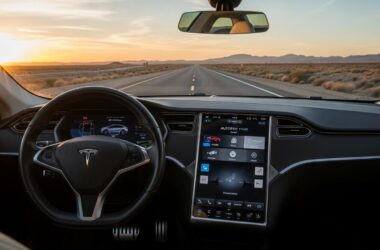





January 23, 2026 will remain a significant date for the Tesla community. On that day, the American manufacturer announced the removal of standard Basic Autopilot on all new vehicles sold in the United States. Specifically, future buyers will no longer have access to Autosteer or automatic lane centering, despite being included for years.
Only Traffic Aware Cruise Control (adaptive cruise control) now remains included for free. This decision represents a major strategic turning point that raises many questions about the direction Tesla is taking and Tesla’s sometimes controversial strategic choices.
I suggest we explore together the concrete implications of this change, both for current and future customers and for Tesla’s positioning against the competition, without forgetting the potential repercussions for us, European drivers.
What specifically changes for future Tesla buyers
The break is clear and deserves to be detailed precisely. Before January 23, 2026, every new Tesla owner automatically benefited from Basic Autopilot, which included three essential features:
Besoin d'accessoires pour ta Tesla ?
Looking for accessories for your Tesla?
- Autosteer (semi-autonomous highway driving)
- Automatic lane centering
- Adaptive Cruise Control (Traffic Aware Cruise Control)
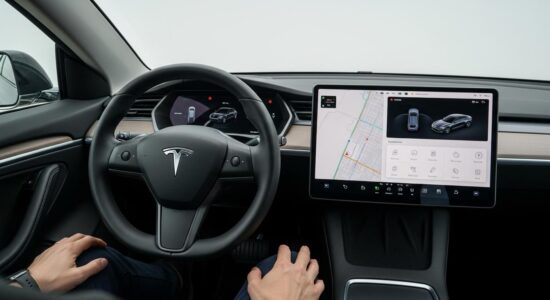
After January 23, 2026, the situation changes radically. Only Traffic Aware Cruise Control remains included for free in new vehicles. This system maintains a safe distance from the vehicle ahead and automatically adjusts speed, but it absolutely does not manage the vehicle’s steering.
The technical difference is fundamental: an adaptive cruise control system only manages acceleration and braking, while Autosteer also handled trajectory, actively keeping the car in the center of its lane. It is this lateral assistance that is disappearing from the basic offering.
To regain these now-absent functions, new buyers have only one path: subscribe to FSD (Full Self-Driving) at $99/month as a subscription, or buy it outright for $8,000 – but beware, this last option permanently disappears on February 14, 2026.
My conclusion is clear: this is a significant downgrade of the basic offering, even though Basic Autopilot was a historical selling point and a central element of Tesla’s identity. For future owners, I strongly recommend checking all the details of your configuration before delivery, as these changes directly impact the daily driving experience.
Autopilot, a pillar of Tesla’s identity from the beginning
Let’s remember: Autopilot has been included as standard for years, constituting a major differentiating factor compared to traditional manufacturers. This technology represented a significant part of the perceived value by customers. Many Tesla owners specifically chose this brand to access these advanced driver assistance systems, considered a glimpse into the automotive future.
The paradox is striking: Tesla positions itself as the global leader in autonomous driving, invests massively in FSD development, but simultaneously removes basic driver assistance features that had become a standard for the brand. This contradiction questions the coherence of the product strategy.
A Tesla community that is furious
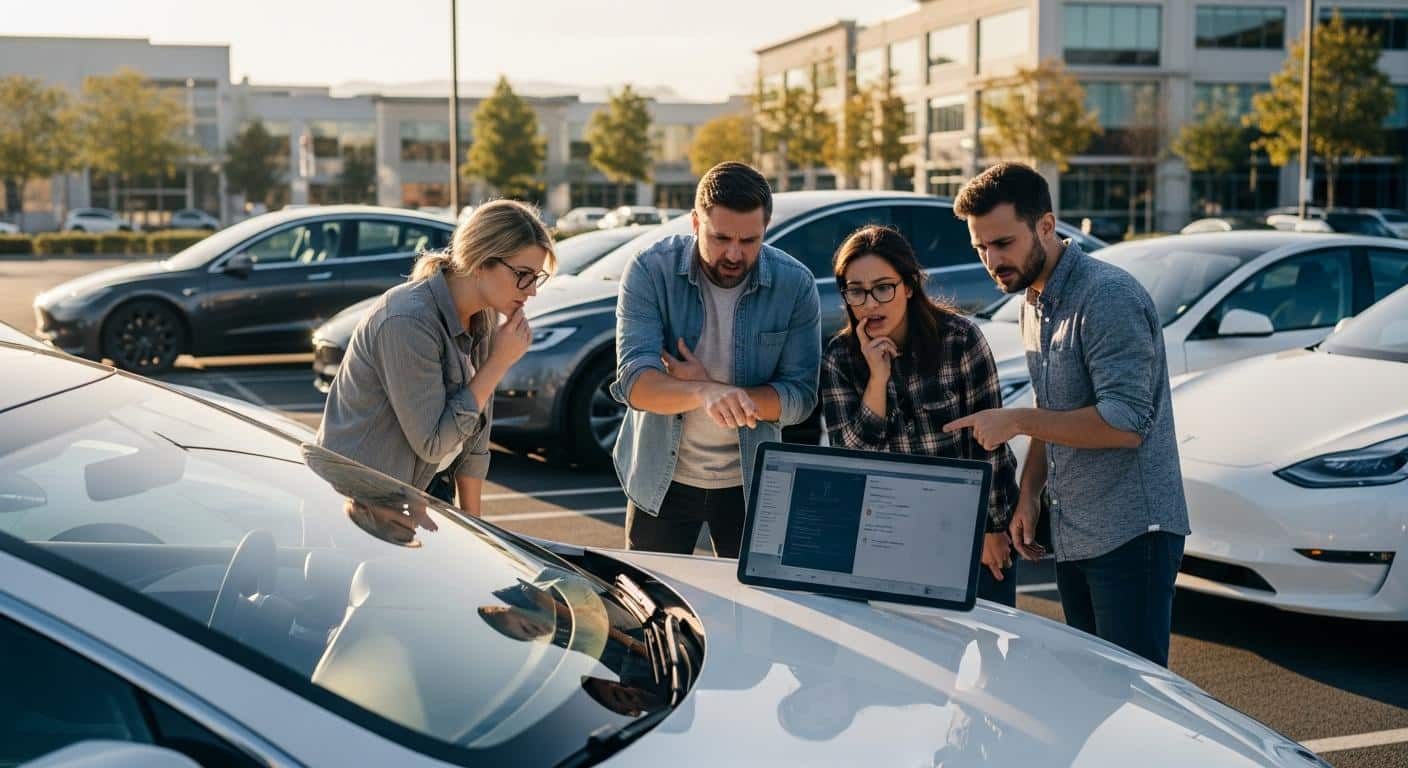
The reaction was swift. On social media, Tesla owners forums, and specialized discussion groups, a wave of criticism quickly spread. The dominant feeling? An impression of regression, where a feature that was considered a given is being removed.
The comparison with the competition is particularly embarrassing for Tesla. Manufacturers like Toyota, Honda, or even Hyundai now offer lane centering as standard, including on their entry-level models. Seeing Tesla, a self-proclaimed pioneer of automotive technology, backtrack on this specific point does not go unnoticed.
Early adopters, those loyal customers who trusted Tesla from the early years, express a feeling of betrayal. They paid for their vehicles with Autopilot included, and now see new customers deprived of this feature – unless they pay an additional monthly subscription.
Personally, I perfectly understand this frustration. When observing the evolution of automotive market standards, where driver assistance systems are rapidly becoming widespread, this withdrawal appears to be a step in the wrong direction.
The question of safety brought to the table
Beyond the commercial aspect, a deeper debate emerges: is lane centering a safety feature or simply a comfort feature? The nuance is important.
The safety argument is strong: this assistance concretely helps prevent unintentional lane departures, often caused by inattention or fatigue. Numerous studies demonstrate the effectiveness of these systems in reducing certain types of accidents.
Therefore, removing a function with a potential impact on safety to encourage subscribing to a paid plan raises a legitimate ethical question. However, I qualify my statement: Traffic Aware Cruise Control remains included and also constitutes valuable assistance. But the overall package, with automatic lane centering, undeniably offered an additional reassuring layer of safety.
Besoin d'accessoires pour ta Tesla ?
Looking for accessories for your Tesla?
The big shift towards “all-subscription”
This decision is part of a broader transformation of Tesla’s economic model. The date of February 14, 2026 marks a historic turning point: it will be the last day to buy FSD outright for the price of $8,000.
After this deadline, only one option will remain: the monthly subscription at $99/month. Elon Musk has also announced that this price will gradually increase as improvements are made to the autonomous driving system.
Let’s do a quick calculation to measure the financial impact. At $99/month, it reaches $1,188 per year. Over a 7-year period (average vehicle ownership duration), this represents more than $8,300, thus exceeding the cost of the one-time purchase that will soon disappear.
My analysis of this subscription strategy is twofold. On one hand, this recurring economic model provides Tesla with predictable and regular revenue, particularly attractive to investors. On the other hand, it objectively proves less advantageous for loyal customers who keep their vehicles long-term.
This evolution reflects a fundamental trend in the automotive industry, which is gradually adopting the codes of the software sector: think of Netflix, Adobe Creative Cloud, or Microsoft 365. The vehicle becomes a platform, and features are transformed into recurring services. This dynamic also fits into Tesla’s overall product strategy, as can be seen with the future compact Tesla at $25,000, where the low entry price will likely be offset by paid options and services.
What about Europe? What needs to be closely monitored
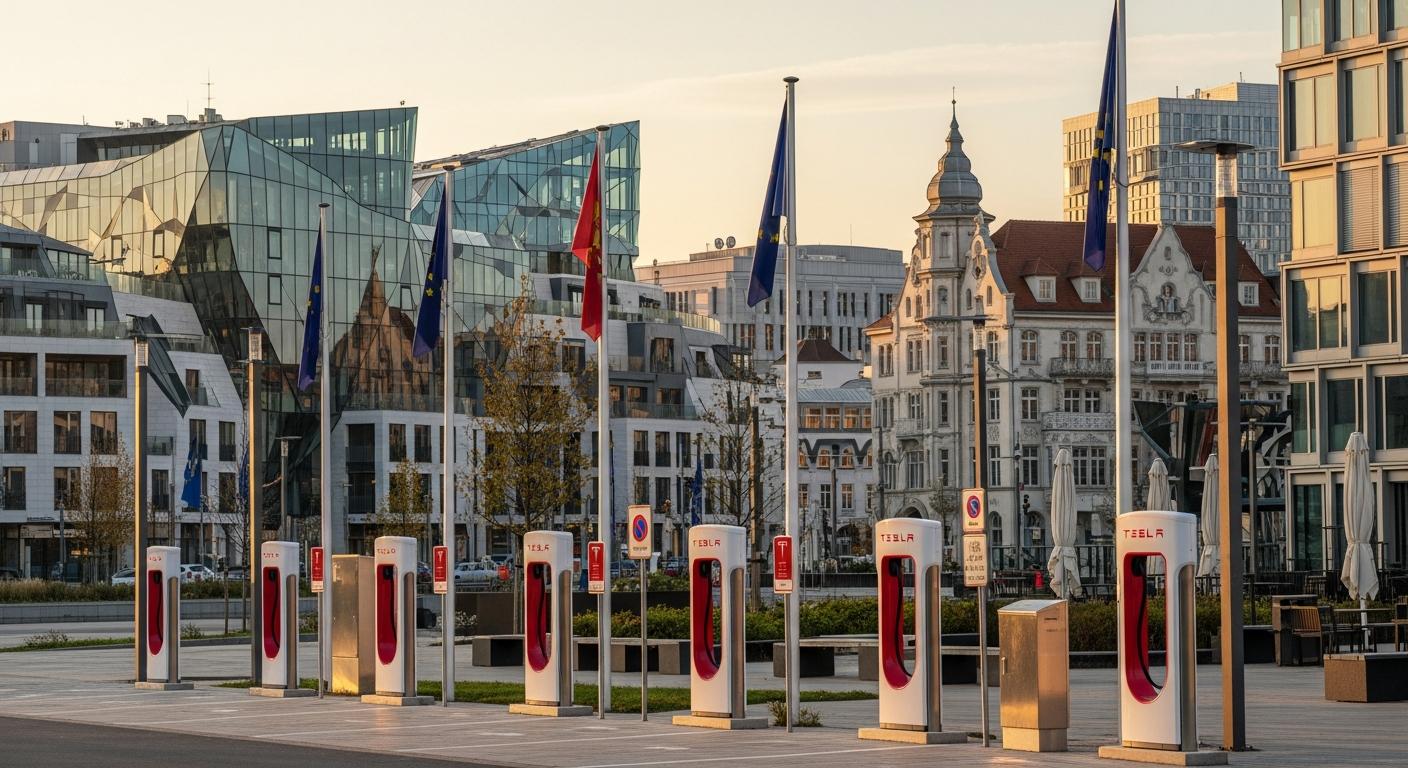
For now, an essential clarification: this change exclusively concerns the United States. Orders placed in France and the rest of Europe are not affected at this stage.
But let’s remain vigilant. Tesla’s history shows that strategies deployed across the Atlantic often end up crossing the ocean, usually with a few months’ delay. It would be naive to think that Europe will be definitively spared.
However, the European regulatory context presents notable differences. European regulations, particularly through Euro NCAP criteria, actively push manufacturers to integrate more driver assistance systems as standard. These systems directly influence safety ratings, which have a real commercial impact on sales.
The competitive environment also differs significantly. Mercedes, BMW, Volkswagen, and other European manufacturers are increasingly including ADAS (Advanced Driver Assistance Systems) as standard equipment, precisely to meet the growing expectations of European consumers regarding safety.
My personal opinion: a similar decision would be even more poorly perceived in Europe, where safety standards and regulatory expectations are particularly high. If this strategy were to arrive in France, it could seriously weaken Tesla’s competitiveness against electric alternatives offered by European manufacturers.
I recommend you carefully monitor upcoming configuration updates on the Tesla.com/fr website and stay connected to specialized information channels to anticipate any developments.
This decision undeniably marks a turning point in the relationship between Tesla and its customers. The subscription strategy may prove profitable for the company in the short term, but it deeply questions the long-term value proposition for Tesla owners. As independent industry analyses highlight, the evolution of standards for connected and automated vehicles profoundly transforms consumer expectations.
The central question remains open: Will Tesla maintain its technological advantage and desirability if the basic experience continues to degrade? I will continue to monitor this evolution closely and share my analyses here, on Tesliens.com. Feel free to check back regularly to follow the news and understand how these changes could directly impact you.
Profitez d'avantages exclusifs en achetant votre Tesla
Vous envisagez d'acquérir une Tesla ? En utilisant mon code de parrainage lors de votre achat, vous pouvez bénéficier d'avantages exceptionnels !
Des kilomètres gratuits de recharge ou d'autres récompenses exclusives, mon code de parrainage est votre passeport pour des avantages supplémentaires : https://ts.la/antoine49352 🤩
Pas de pression, juste une opportunité à saisir pour enrichir votre expérience Tesla.
Découvrez ici le système du parrainage et comment utiliser le code.
Get exclusive perks when buying your Tesla
Thinking about getting a Tesla? If you use my referral code when you purchase, you may be eligible for extra perks.
Free Supercharging miles or other exclusive rewards - my referral code can unlock additional benefits: https://ts.la/antoine49352 🤩
No pressure - just a simple option if you want to enhance your Tesla experience.
Learn how the Tesla referral program works and how to use the code.