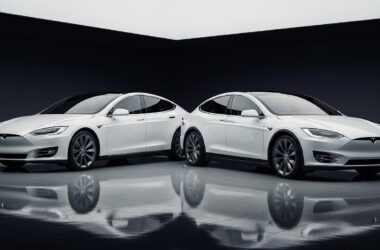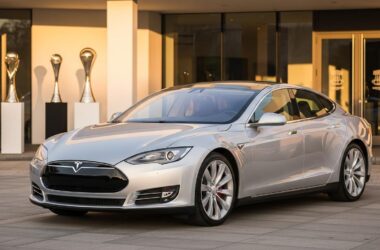


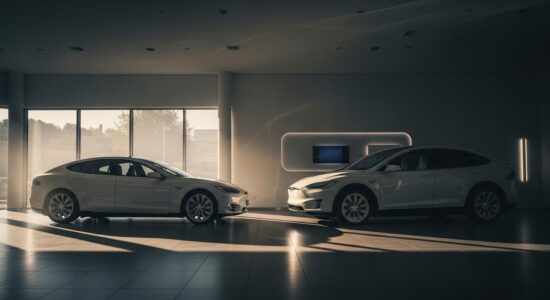
On January 28, 2026, during the Q4 2025 Earnings Call, Elon Musk confirmed what many had been anticipating for years: Tesla will stop production of the Model S and Model X in the second quarter of 2026. The CEO spoke of an “honorable discharge” for these models that made the brand’s history, but no longer align with its current strategy.
I must admit, even if this announcement was predictable, it truly marks the end of an era. These two vehicles propelled Tesla into the premium segment and proved that an electric car could compete with German cars. But behind this decision lies an implacable industrial logic: to free up the Fremont factory to produce one million Optimus robots per year.
Let’s analyze together why this break was inevitable and what it reveals about Tesla’s future priorities.
A decision announced years ago
If you’ve been following Tesla for a while, you know this announcement didn’t come out of nowhere. As early as 2019, Elon Musk had stated unequivocally that the Model S and X were maintained “for sentimental reasons, not economic ones”. This sentence perfectly summarizes the situation: these vehicles represented the brand’s historical DNA, but not its commercial future.
Besoin d'accessoires pour ta Tesla ?
Looking for accessories for your Tesla?
The warning signs have multiplied in recent years:
- In July 2025, Tesla discreetly stopped custom orders in Europe
- Production volumes have gradually decreased since 2022
- Major updates specific to these models have become less frequent
I think that Tesla used the Model S and X as a technological showcase for as long as necessary. The Tesla Model S Plaid and its spectacular performance allowed the brand to demonstrate its capabilities, but this mission is now accomplished.
Since 2020, the share of these models in the product mix has steadily decreased, in favor of the Model 3/Model Y duo which now accounts for the majority of deliveries. This transition was planned, methodical, and ultimately logical.
The figures explaining the discontinuation
A marginal contribution
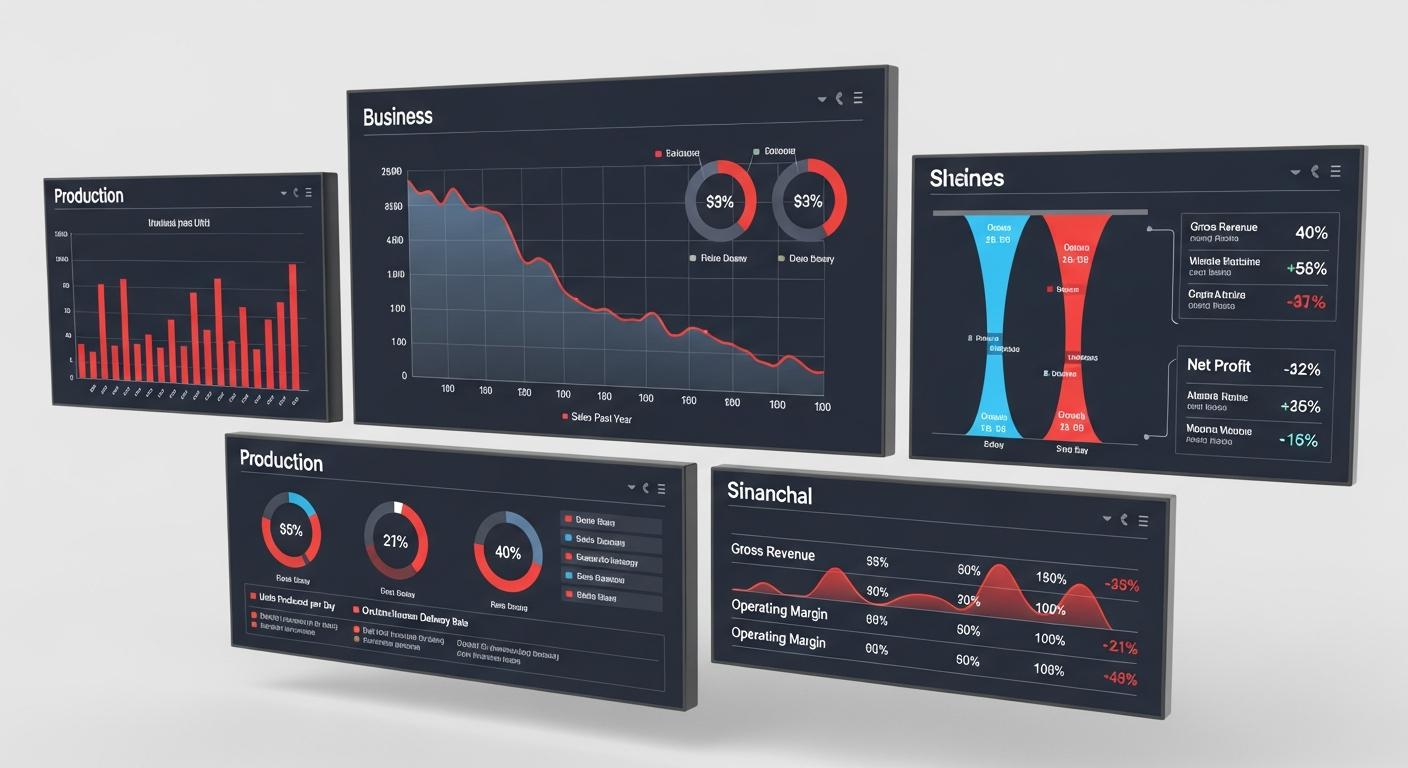
Let’s talk numbers. Tesla described the contribution of the Model S and X as “minor” compared to the 1.7 million vehicles delivered annually since 2022. Even if the brand no longer communicates detailed volumes by model, estimates converge towards less than 5% of total deliveries.
In practical terms, this means that Tesla mobilizes entire production lines, with all their industrial complexity, to produce perhaps 80,000 to 100,000 vehicles per year. That’s enormous in terms of resources, negligible in terms of volumes.
The Model S and X are based on older platforms which require specific manufacturing processes, different from those used for the Model 3 and Y. This diversity complicates production and dilutes the operational efficiency that Tesla constantly seeks.
The burden of industrial compromises
The Fremont factory, already saturated, sees its Model S/X production lines occupying valuable space for relatively low yields. Tesla has always sought to optimize its factories according to a logic of maximum simplification: fewer models, higher volumes, better profitability.
Today, the strategy is to focus efforts on two main platforms (Model 3/Y) and the Cybertruck. The Model S and X, with their high production costs and their sales prices, which are difficult to increase given European premium competition, no longer fit into this equation.
I note that this decision also reflects Tesla’s industrial maturity: the brand is abandoning its sentimental icons to prioritize profitability and scale.
Optimus takes center stage: Tesla’s true priority
Now, let’s talk about what truly replaces the Model S and X: the Optimus humanoid robot. Musk was clear during the announcement: the production lines freed up in Fremont will be immediately converted to produce 1 million humanoid robots per year.
This strategic reconversion is not insignificant. It illustrates Tesla’s profound transformation, which no longer considers itself a mere car manufacturer but as a robotics company and artificial intelligence company.
Musk mentioned Optimus’s potential impact on US GDP and his concept of “high universal income.” Beyond these ambitious statements, there is a technical coherence: Optimus shares essential components with the Tesla ecosystem (batteries, AI systems, electric motors).
The timing is symbolic: Tesla is sacrificing its glorious automotive past to accelerate towards its robotic future. The future $25,000 compact car that now concentrates efforts also fits into this logic of massive volumes and accessibility, far from the premium positioning of the S and X.
Besoin d'accessoires pour ta Tesla ?
Looking for accessories for your Tesla?
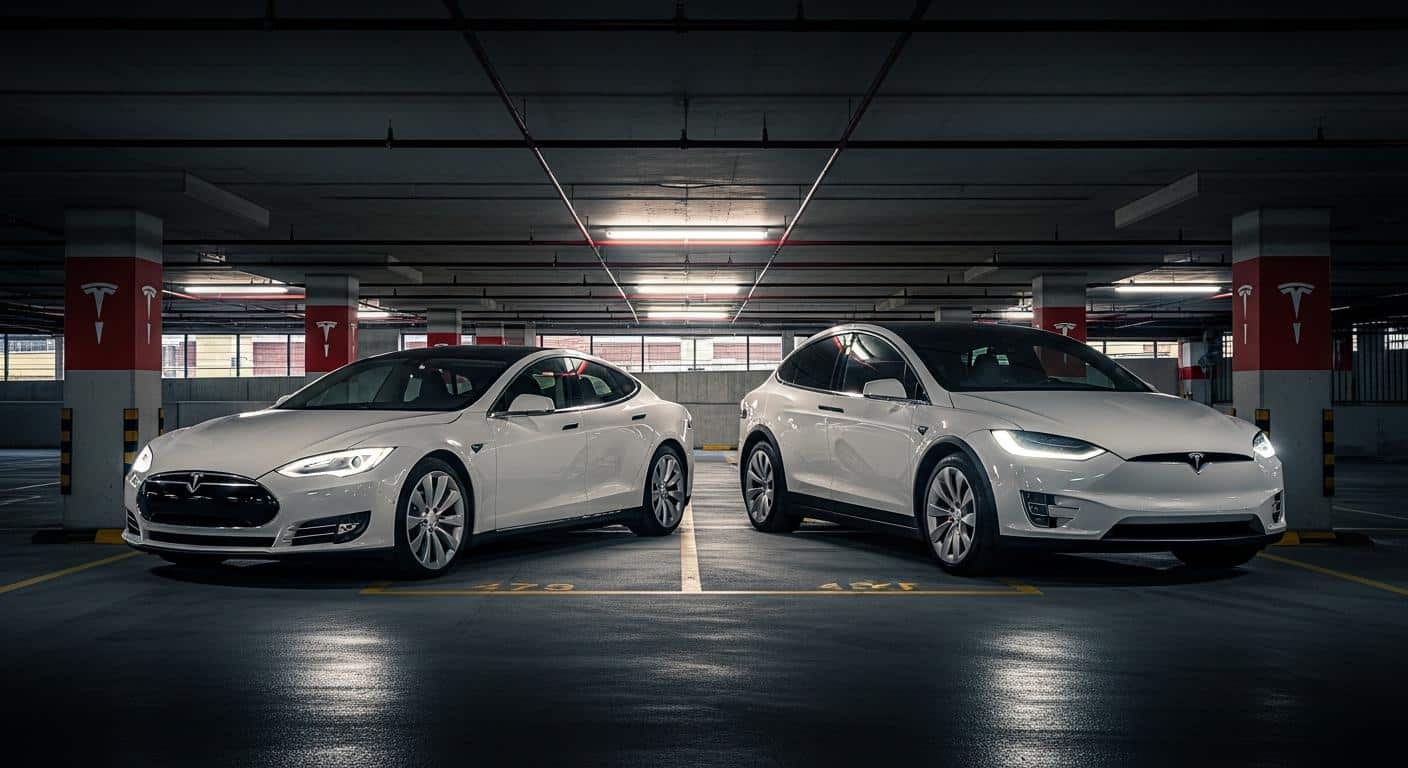
What about current owners?
If you own a Model S or X, this question legitimately concerns you. Tesla has reassured owners: after-sales service remains guaranteed, with the maintenance of spare parts, technical support, and software updates.
Here’s the exact timeline:
- Q2 2026: official end of deliveries (liquidation of remaining stock)
- After 2026: Tesla’s commitment to maintain after-sales service with no announced deadline
Regarding the residual value, I think we will witness an interesting phenomenon. In the short term, depreciation is probable because the status of an “abandoned model” always causes concern. But in the medium term, the “last generation” label could enhance the value of these vehicles among collectors and enthusiasts.
The Model S and X retain unique specificities: record driving range, exceptional performance, generous interior space. The owner community remains active and loyal, which should help maintain a certain heritage value.
The self-driving future without Model S and X
This decision makes perfect sense when placed within Tesla’s robotaxi strategy. The brand’s Full Self-Driving vision now focuses on the Model 3, Model Y, and the future Cybercab.
Musk openly acknowledges: the majority of trips involve 2 passengers or fewer. Following this logic, offering 5 to 7-seater vehicles like the Model S and X makes no economic sense for autonomous ride-sharing. The sedan or compact SUV format proves much more profitable for robotaxi operation.
There is also a technical incompatibility: the Model S and X platforms, designed more than ten years ago, are less optimized for autonomy than newer architectures. Their high operating cost disqualifies them for an economic model based on volume and profitability per kilometer traveled.
Tesla thus unifies its range around vehicles designed from conception for autonomous driving. This strategic coherence also explains why the uncertain fate of the new generation Roadster raises so many questions: “sentimental” projects now come after industrial and robotic priorities.
I think this decision, however symbolic it may be, attests to Tesla’s strategic maturity. The brand is definitively turning the page on its beginnings to embrace a vision where the automobile is just one element of a larger ecosystem, dominated by AI, robotics, and autonomy. According to official Tesla sources, this transition is accompanied by specific commitments to current owners and the community.
Profitez d'avantages exclusifs en achetant votre Tesla
Vous envisagez d'acquérir une Tesla ? En utilisant mon code de parrainage lors de votre achat, vous pouvez bénéficier d'avantages exceptionnels !
Des kilomètres gratuits de recharge ou d'autres récompenses exclusives, mon code de parrainage est votre passeport pour des avantages supplémentaires : https://ts.la/antoine49352 🤩
Pas de pression, juste une opportunité à saisir pour enrichir votre expérience Tesla.
Découvrez ici le système du parrainage et comment utiliser le code.
Get exclusive perks when buying your Tesla
Thinking about getting a Tesla? If you use my referral code when you purchase, you may be eligible for extra perks.
Free Supercharging miles or other exclusive rewards - my referral code can unlock additional benefits: https://ts.la/antoine49352 🤩
No pressure - just a simple option if you want to enhance your Tesla experience.
Learn how the Tesla referral program works and how to use the code.