

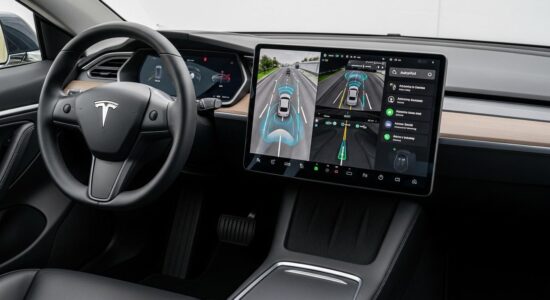
Some news has the merit of being brutally honest. Sendil Palani, a Tesla executive, has just publicly confirmed what many suspected: all car manufacturers have refused the Full Self-Driving (FSD) license. Yes, you read that right. The most advanced autonomous driving technology on the market remains on the shelf, and no one wants it. Yet, Tesla has been offering to share it since 2023.
This collective refusal raises questions: why is a technologically lagging industry refusing a turnkey solution? Let’s delve into the real reasons behind this industrial paradox.
The Public Admission That Embarrasses the Entire Automotive Industry
On February 3, 2026, Sendil Palani dropped a bombshell on X: despite active discussions, no manufacturer has accepted the FSD license. Not a single one. This public statement follows Elon Musk’s mentions during the Q2 2023 and Q1 2024 Earnings Calls, where he already spoke of confidential discussions with several manufacturers.
The most credible lead? Ford. Jim Farley, Ford’s CEO, maintains a cordial relationship with Elon Musk. Exchanges reportedly took place, but nothing official ever leaked. Three years later, the conclusion is clear: these secret discussions led nowhere.
Besoin d'accessoires pour ta Tesla ?
Looking for accessories for your Tesla?
This public admission puts enormous pressure on the competition. How many manufacturers truly negotiated? And above all, why the radio silence?
Safety Figures That Widen the Gap
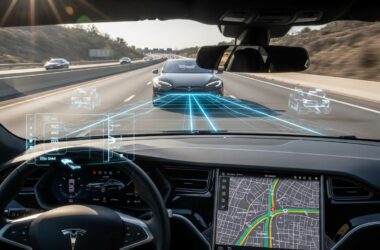
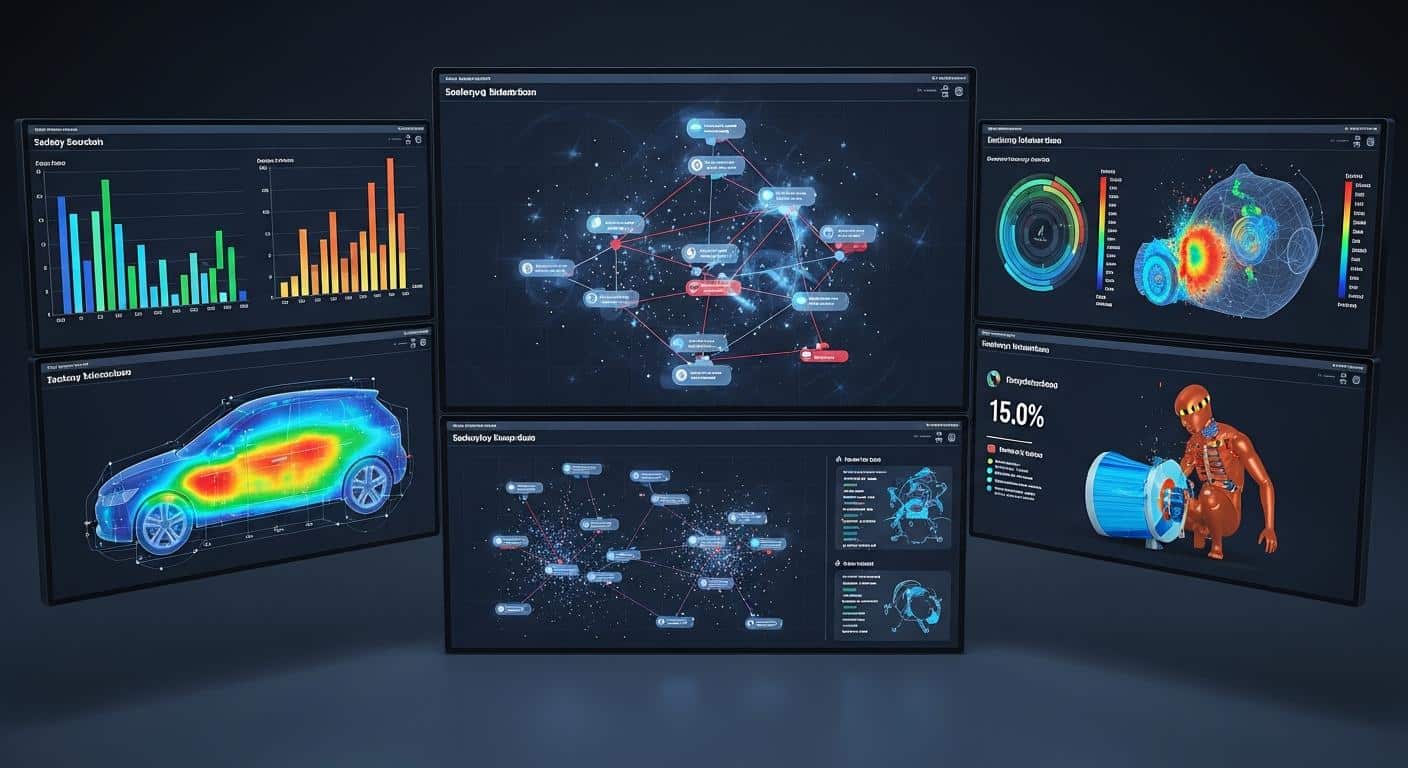
Let’s talk raw data. With FSD activated, Tesla records one major accident every 5.1 million miles driven. Compared to the 699,000 miles of an average human driver, the calculation is stark: FSD is 7.3 times safer than a human behind the wheel.
According to the NHTSA, 94% of accidents are caused by human error: distraction, fatigue, alcohol. Machines don’t get tired, don’t check their smartphones, and don’t drive after three beers. Logically, these figures should convince any manufacturer concerned about road safety.
But there’s more. Tesla’s double cryptographic signature prevents any external takeover. No documented case of a Tesla in circulation being hacked has been reported. Cybersecurity, often brandished as a bogeyman, becomes a concrete argument for Tesla here.
And yet, still no takers. Strange, isn’t it?
The Real Reasons for the Refusal (Pride and Dependence)
Let’s dig into the real problem. It’s not about technology, but technological pride. Major manufacturers suffer from the “we can do it ourselves” syndrome. Except, in reality, they can’t. Not at this level. Not at this speed.
Accepting FSD means publicly admitting one’s technological delay. It also means creating a strategic dependence on Tesla, a direct competitor. Imagine the management of Stellantis or Renault announcing that they are delegating autonomous driving to Elon Musk. The humiliation would be total.
Certainly, the license cost is probably high. But it is certainly lower than the billions swallowed up in internal R&D programs that don’t deliver. Where are European manufacturers like Renault, Stellantis, or Mercedes really on autonomous driving? Nowhere near Tesla.
History repeats itself. In 2014, Tesla offered to share its electric vehicle patents. The industry’s refusal was almost universal. The result? Ten years of delay for some manufacturers, who are now paying a heavy price. The electric transition was missed due to pride. Are we reliving the same scenario with autonomy? Everything suggests it.
This approach perfectly illustrates Tesla’s technological philosophy: pushing boundaries, even if it means intimidating the competition.
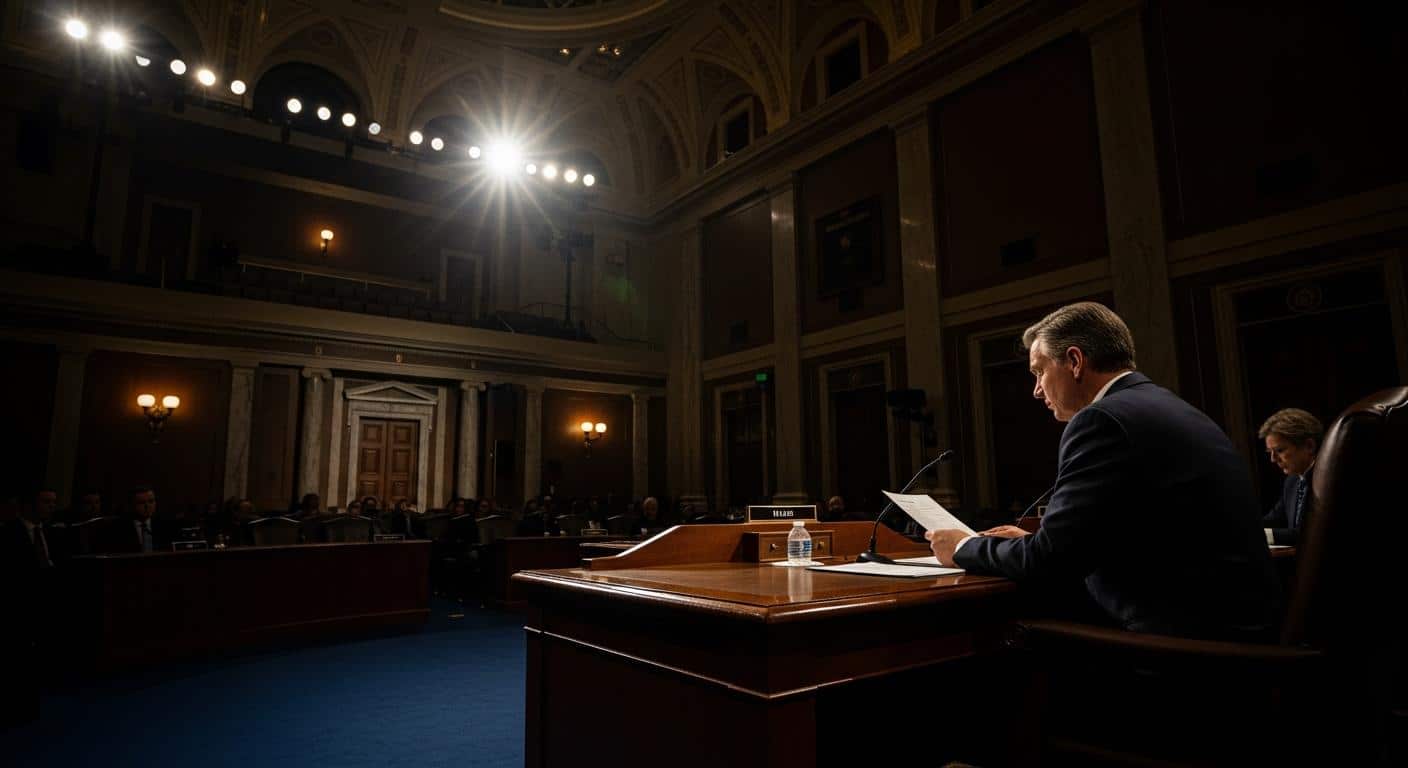
Tesla Pleads Its Case Before the U.S. Senate
On February 4, 2026, Lars Moravy, VP Vehicle Engineering at Tesla, testified before the U.S. Senate. His message? We need a unified federal framework for autonomous driving. Currently, 50 states = 50 different legislations. A regulatory nightmare that hinders deployment.
The geopolitical argument weighed heavily: competition with China in artificial intelligence and autonomy is fierce. BYD, Nio, and others are investing massively. While the West hesitates, Asia advances. Lars Moravy also highlighted technological competition with China in the automotive sector, a major strategic issue.
But there’s also a social dimension: elderly, disabled, or mobility-impaired individuals would massively benefit from autonomous driving. Not to mention the economic argument: the drastic reduction in accidents would generate colossal savings for public health.
Besoin d'accessoires pour ta Tesla ?
Looking for accessories for your Tesla?
Tesla is pursuing a smart lobbying strategy here, with arguments that are hard to dispute. It remains to be seen if Congress will follow.
The Improbable Scenario: What if Tesla Stopped Making Cars?
Sendil Palani put forth a provocative hypothesis: if all manufacturers adopted the FSD license, could Tesla stop making cars? The idea seems crazy, but it’s based on solid business logic.
As a software publisher, Tesla would show much higher margins than a traditional car manufacturer. The stock market valuation would explode, comparable to the strategic transformation experienced by Apple or Microsoft.
But beware of the major risk: betraying the fan base. Tesla owners are attached to the car brand, not just the software. Abandoning production would be perceived as a betrayal. Moreover, Tesla’s ambition to democratize its technologies via a $25,000 compact car shows that the company has not given up on the automotive sector.
This scenario remains improbable in the short and medium term. But the strategic questioning is legitimate. Is Tesla primarily a tech company or a car manufacturer?
When Pride Delays Progress
Let’s return to the initial paradox: the best autonomous driving technology is available, and no one wants it. The safety figures are there, cybersecurity is assured, but pride prevails. As sector reports confirm, the regulatory and competitive challenges surrounding autonomous driving are becoming more complex.
As a Tesla owner, I savor this technological advantage. But I worry about the European automotive industry. Will manufacturers eventually yield to regulatory and competitive pressure? Or will they miss the autonomous driving train, just as they missed the electric one?
The real question remains open: how long can pride delay progress?
Profitez d'avantages exclusifs en achetant votre Tesla
Vous envisagez d'acquérir une Tesla ? En utilisant mon code de parrainage lors de votre achat, vous pouvez bénéficier d'avantages exceptionnels !
Des kilomètres gratuits de recharge ou d'autres récompenses exclusives, mon code de parrainage est votre passeport pour des avantages supplémentaires : https://ts.la/antoine49352 🤩
Pas de pression, juste une opportunité à saisir pour enrichir votre expérience Tesla.
Découvrez ici le système du parrainage et comment utiliser le code.
Get exclusive perks when buying your Tesla
Thinking about getting a Tesla? If you use my referral code when you purchase, you may be eligible for extra perks.
Free Supercharging miles or other exclusive rewards - my referral code can unlock additional benefits: https://ts.la/antoine49352 🤩
No pressure - just a simple option if you want to enhance your Tesla experience.
Learn how the Tesla referral program works and how to use the code.