

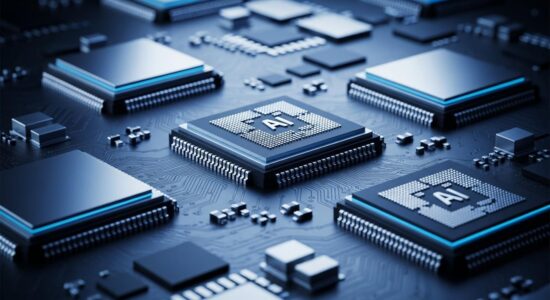
On February 17, 2026, Tesla Korea published an announcement that sent shockwaves through the semiconductor industry: the company is actively seeking engineers specializing in AI chip design to develop what it presents as the highest global volume mass-production AI chips. This statement was immediately validated by Elon Musk on X, amplifying the message to millions of people.
As a Tesla enthusiast, this announcement intrigues me as much as it raises real questions: is it a realistic ambition or a bold communication stunt? Let’s analyze this industrial strategy together, which could redefine Tesla’s approach to artificial intelligence.
South Korea, a strategic epicenter for Tesla semiconductors
Why Korea, the global silicon hub?
The choice of South Korea is no coincidence. This country is home to Samsung Foundry, one of the world’s leading manufacturers of advanced chips, alongside major players like SK Hynix. The Korean ecosystem is highly developed in advanced lithography and nanometric etching, critical skills for producing high-performance AI chips.
Compared to the American ecosystem concentrated around Austin and Palo Alto, Korea offers immediate proximity to production capabilities. This is a decisive advantage when looking to move quickly from prototype to mass manufacturing.
Besoin d'accessoires pour ta Tesla ?
Looking for accessories for your Tesla?
Required profiles and criteria for excellence
The recruitment offer is accessible via Ai_Chips@Tesla.com, and the requirements match the stated ambition. Tesla asks candidates to describe the three most complex problems they have solved, an approach that immediately filters out junior profiles.
The company is specifically looking for experts in “chip manufacturing” and “AI software,” with an expected level of expertise at senior engineer or system architect rank. A clear signal: Tesla aims for technical excellence, not just a high volume of applications.
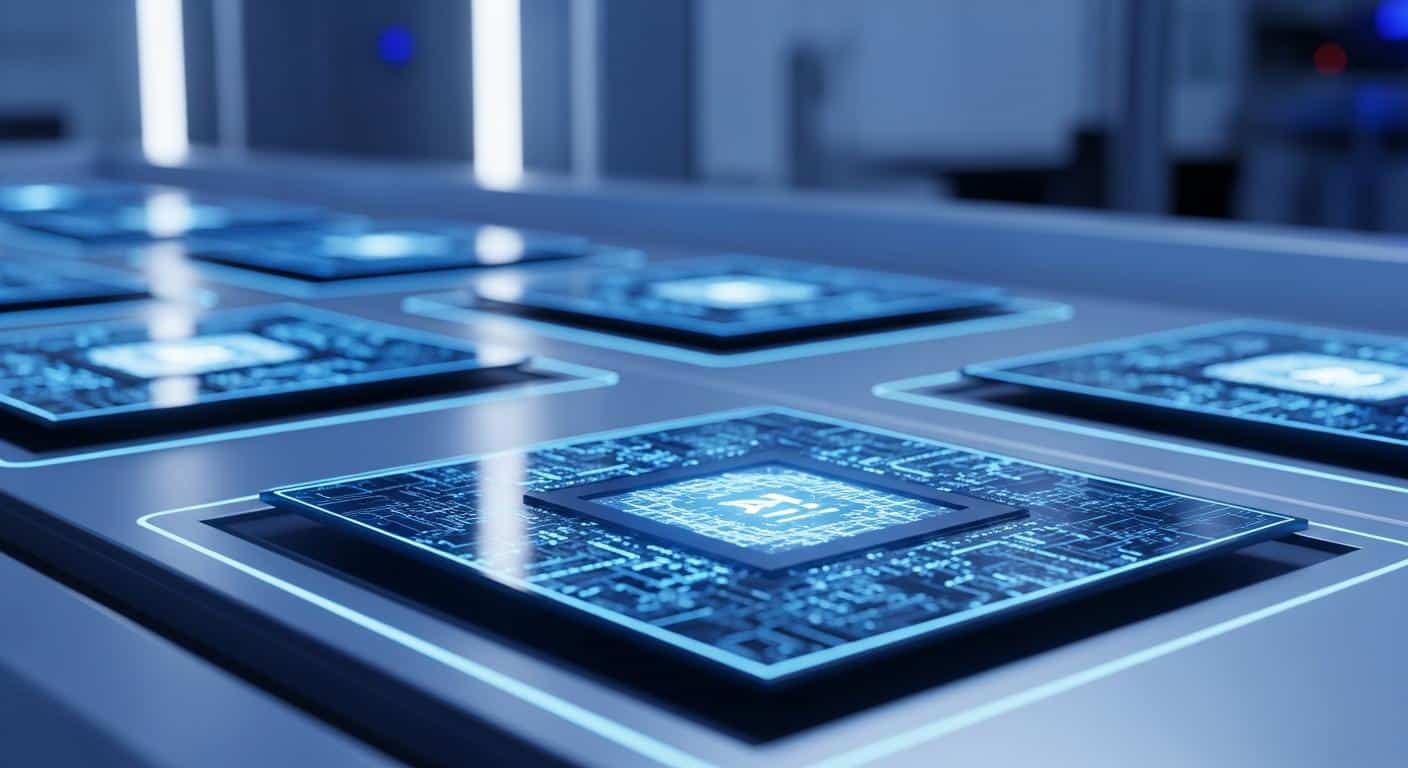
“Highest global volume”: realistic ambition or communication stunt?
Benchmark with current market volumes
Claiming to want to produce the highest global volume AI chips requires comparison with current benchmarks. Nvidia dominates the market with its H100 and H200, produced in hundreds of thousands of units annually. AMD with its MI300 and Intel with its Gaudi also represent considerable volumes.
Achieving this level of production requires not only colossal manufacturing capabilities but also incompressible lead times: count at least 18 to 24 months between final design and mass production. An industrial reality that inevitably tempers immediate enthusiasm.
Essential industrial partnerships
Tesla cannot do it alone. The hypothesis of a partnership with Samsung Foundry seems logical, even if nothing is officially confirmed. The production capacities of Korean foundries are among the most advanced in the world, with mastery of 3nm and 5nm etching processes.
Tesla has already succeeded with this vertical integration approach for its batteries, proving its ability to internalize complex technologies. The development of Hardware 3 and Hardware 4 chips for the FSD system also constitutes an encouraging precedent.
The Tesla chip ecosystem: FSD, Optimus, and xAI infrastructure
Tesla’s current architecture relies on Hardware 3 chips (launched in 2019) and Hardware 4 (deployed since 2023). But needs are exploding with the ambition to achieve full autonomy via FSD version 13 and beyond.
These chips would not only serve vehicles. The Optimus robot also requires considerable vision processing and embedded AI capabilities. Added to this are synergies with xAI, Elon Musk’s artificial intelligence company, which raised $2 billion to develop its data centers.
The announced volume is therefore justified by a simple equation: millions of vehicles + Optimus robots + massive cloud infrastructure. No traditional automaker faces such diverse needs on such a scale. Tesla has already proven its vertical integration capability with its batteries manufactured in China, an industrial precedent that inspires confidence.
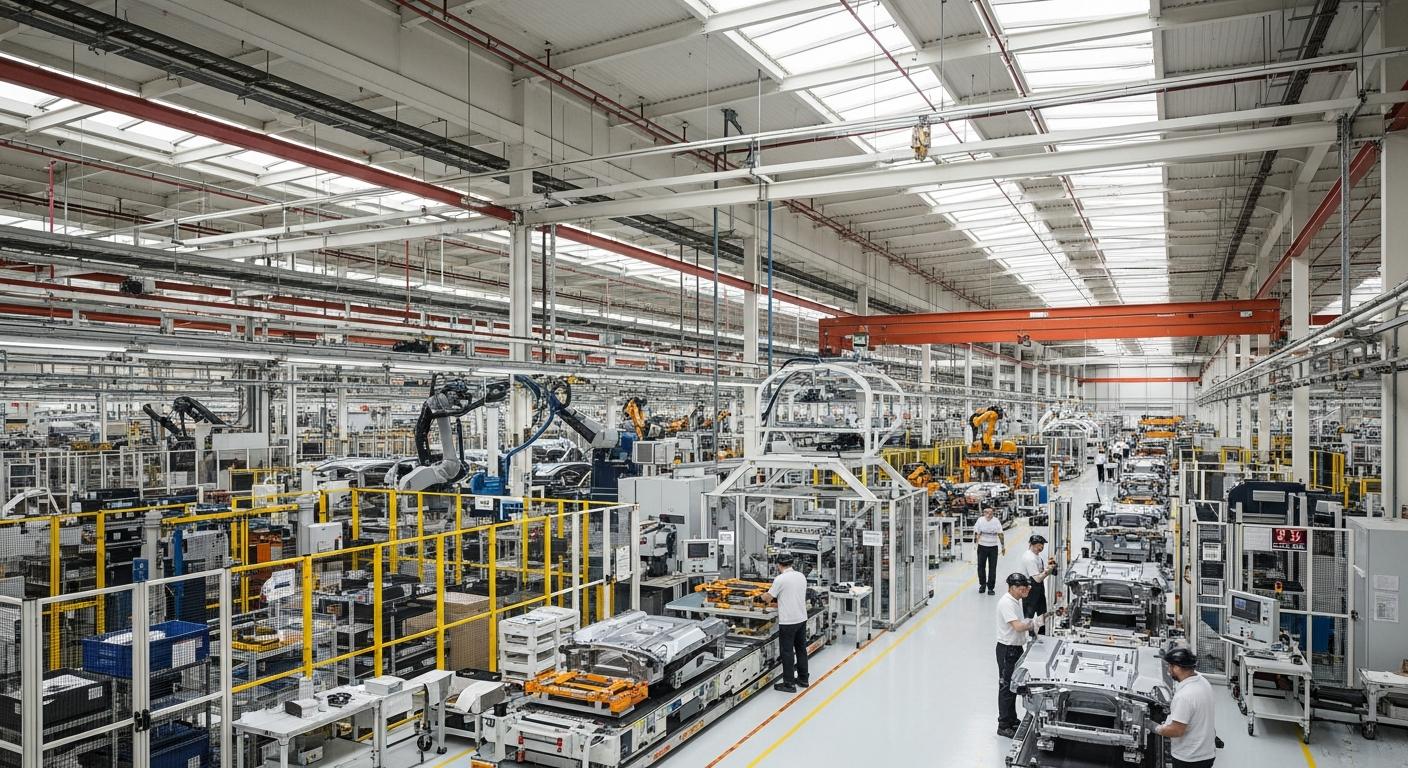
An all-out vertical integration strategy
This recruitment in South Korea is part of a much broader dynamic. Tesla is simultaneously hiring in Austin, Palo Alto, and now Korea, with specialized positions in lithography and etching, two critical areas of advanced manufacturing.
The massive $2 billion investment in xAI (Series E funding) reveals the ultimate goal: to achieve independence from external suppliers like Nvidia or AMD. Tesla wants to fully control its value chain, exactly as it has done for batteries, motors, and software.
This approach is reminiscent of Apple with its M1/M2/M3 chips or Google with its TPUs. This cost control could particularly benefit the compact Tesla project at $25,000, by reducing dependence on expensive external components.
The challenges to overcome to turn the announcement into reality
Despite the stated ambition, the obstacles remain considerable. The technical complexity of 3nm or 5nm etching imposes very difficult production yields to achieve. The incompressible lead times of at least 18 to 24 months between design and mass production constitute an unavoidable industrial constraint.
Besoin d'accessoires pour ta Tesla ?
Looking for accessories for your Tesla?
The necessary investments amount to several billion dollars: manufacturing equipment, ASML lithography machines, test infrastructure. Competition is fierce: Nvidia, AMD, and Intel have decades of lead and colossal R&D budgets.
The geopolitical context also complicates the equation, with the semiconductor war between the United States and China. Tesla will have to navigate this environment carefully, while managing its dependence on equipment manufacturers like ASML or Applied Materials. And let’s not forget Tesla’s development timelines, as seen with the Roadster, which can sometimes stretch well beyond initial announcements.
Furthermore, industry players are closely following this development, aware that Tesla could disrupt established balances.
This announcement confirms Tesla’s long-term vision: vertical integration is part of the brand’s DNA. Questions remain open about industrial partnerships, actual timelines, and the concrete applications of these future chips.
But one thing is certain: if Tesla succeeds in this gamble, it could simultaneously redefine both the automotive industry AND embedded artificial intelligence. The game is well worth the candle.
Profitez d'avantages exclusifs en achetant votre Tesla
Vous envisagez d'acquérir une Tesla ? En utilisant mon code de parrainage lors de votre achat, vous pouvez bénéficier d'avantages exceptionnels !
Des kilomètres gratuits de recharge ou d'autres récompenses exclusives, mon code de parrainage est votre passeport pour des avantages supplémentaires : https://ts.la/antoine49352 🤩
Pas de pression, juste une opportunité à saisir pour enrichir votre expérience Tesla.
Découvrez ici le système du parrainage et comment utiliser le code.
Get exclusive perks when buying your Tesla
Thinking about getting a Tesla? If you use my referral code when you purchase, you may be eligible for extra perks.
Free Supercharging miles or other exclusive rewards - my referral code can unlock additional benefits: https://ts.la/antoine49352 🤩
No pressure - just a simple option if you want to enhance your Tesla experience.
Learn how the Tesla referral program works and how to use the code.