
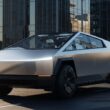


Less than 100 days separate us from the scheduled production launch of the Tesla Cybercab, that famous autonomous robotaxi without a steering wheel or pedals that Elon Musk has been promising us for years. April 2026 is fast approaching, and yet, a rare occurrence for the Tesla boss, recent statements clearly temper expectations.
Where one might have expected a usual triumphant speech, Elon Musk openly warns: the ramp-up will be “excruciatingly slow” before becoming “incredibly fast.” This unusual realism strikes me, and I think it deserves our attention.
Between a radically new vehicle, a total dependence on unsupervised Full Self-Driving, and excessive production ambitions, the challenges are piling up. Here’s a breakdown of what truly awaits us.
Less Than 100 Days Before Launch: A Timeline That Raises Questions
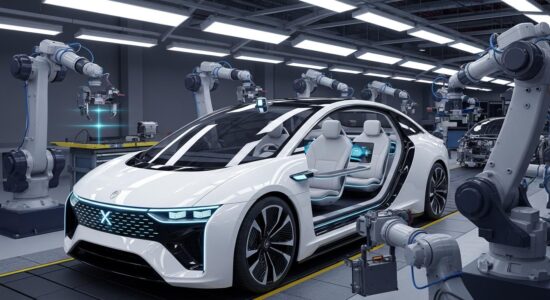
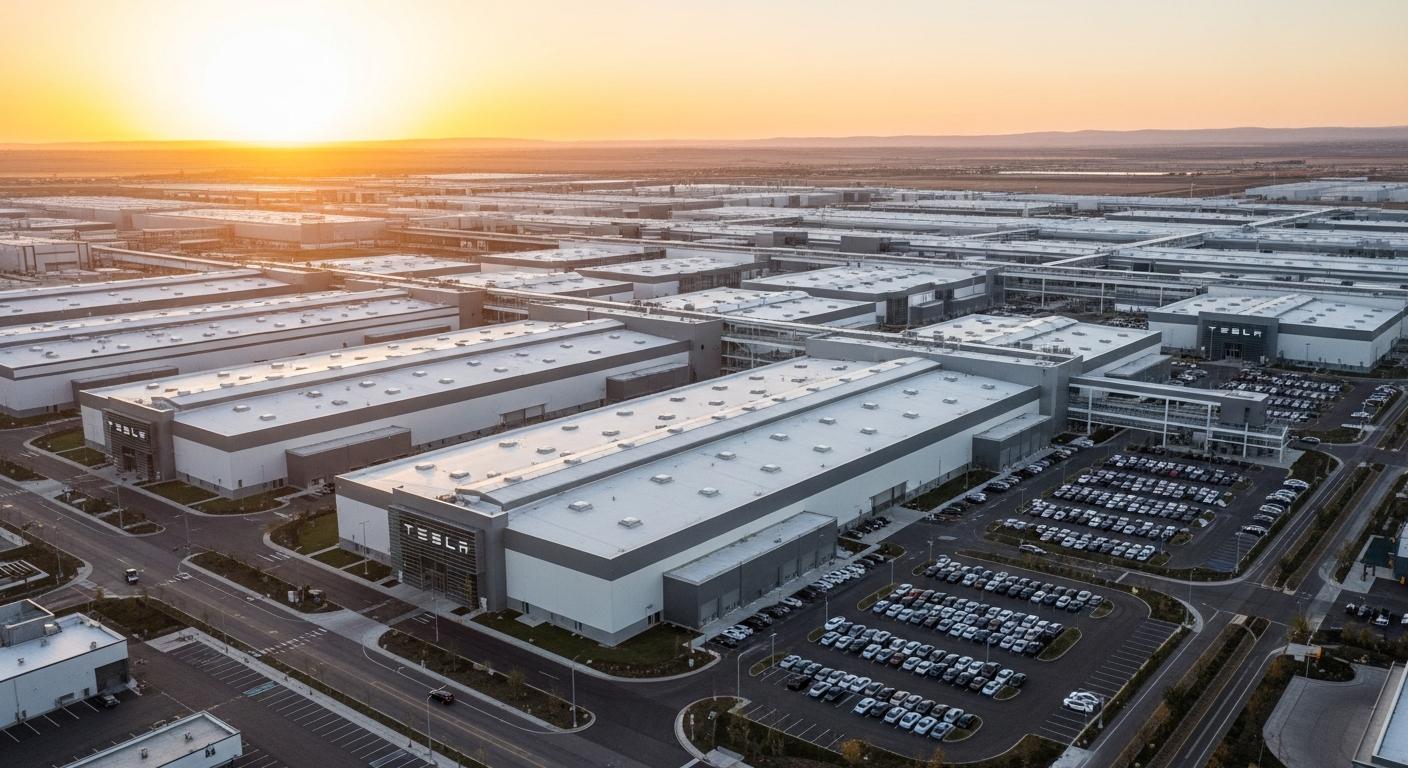
The April 2026 deadline is now confirmed for the start of production at Giga Texas. In less than 100 days, the first Cybercab units should theoretically roll off the lines of the Texas factory, the very same one that currently produces the Model Y and the Cybertruck.
Besoin d'accessoires pour ta Tesla ?
Looking for accessories for your Tesla?
Based on my experience following Tesla launches for years, this timing is not impossible for a start. But be careful to understand the nuance: “production start” absolutely does not mean “mass production.” We’re probably talking about a few dozen units per week, or even per month.
What really makes me wonder is the underlying issue: unsupervised Full Self-Driving must be ready in parallel. Without validated and approved autonomous driving, a vehicle without a steering wheel is strictly useless. The technical timeline is therefore doubly critical.
I followed the launch of the Model 3 in 2017, and the initial deadlines had also slipped by several months. This time, Musk seems to have learned from the past by being upfront now.
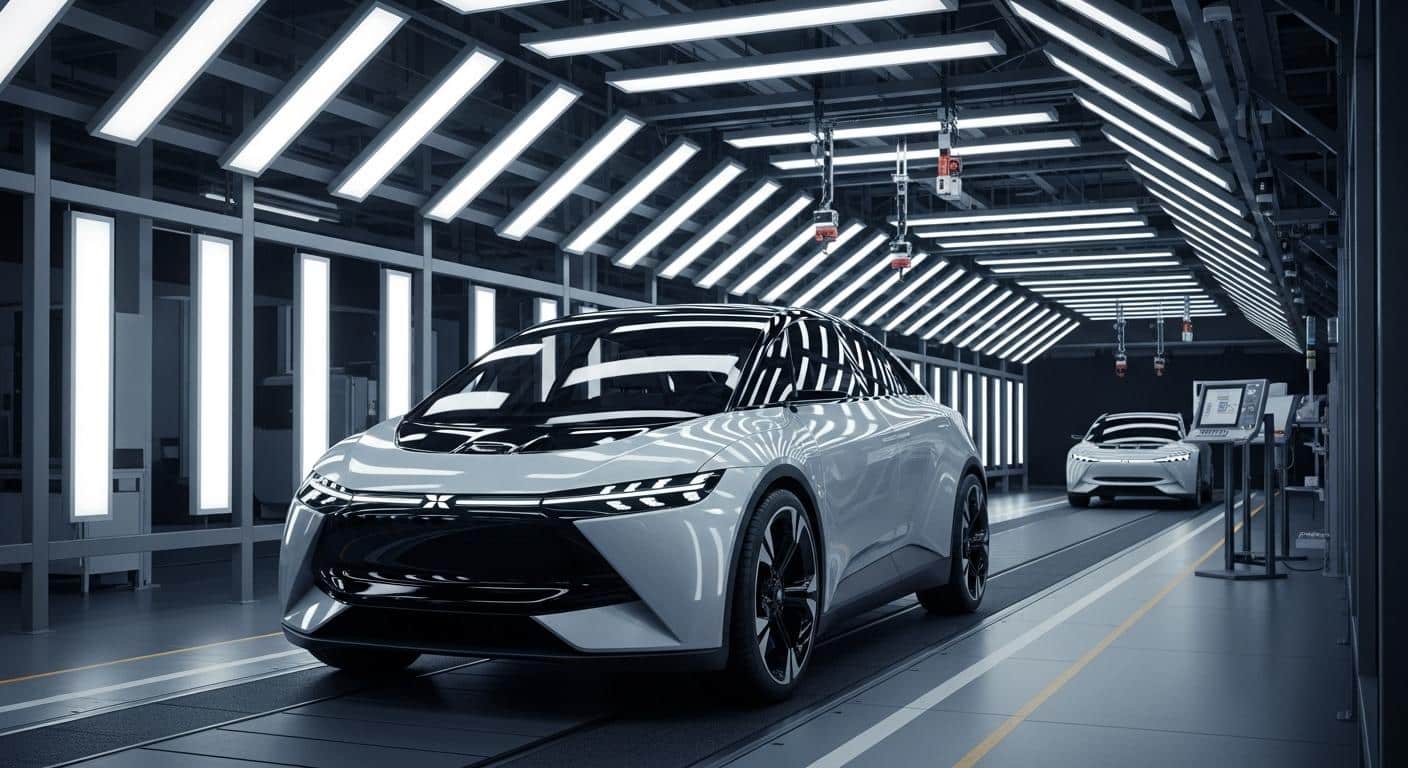
Elon Musk Warns: An “Excruciatingly Slow” Ramp-Up
The Famous Production S-Curve
Exact quote from Elon Musk: “Initial production will be excruciatingly slow… but will eventually be incredibly fast.” This sentence perfectly summarizes the production S-curve well-known in the automotive industry.
- Phase 1: Very slow start with a few units per day, resolving production line issues
- Phase 2: Gradual acceleration with process optimization
- Phase 3: Mass production once all bugs are eliminated
Why this unusual transparency? Musk clearly anticipates criticism and prefers to warn rather than disappoint. It’s a notable change in communication compared to the often overly optimistic announcements of the past, such as the production ramp-up difficulties I had already analyzed for the Tesla Roadster.
The Precedent of the Model 3’s “Production Hell”
My memory of the Model 3’s “production hell” in 2017-2018 remains vivid. For months, Tesla missed its production targets, Elon Musk literally slept at the factory, and investors panicked.
The initial targets of 5,000 units per week took almost a year to achieve, even though they were announced for late 2017. The ramp-up proved to be much more complex than expected, particularly due to excessive automation of the production line.
More recently, the Cybertruck faced similar difficulties with its stainless steel and extreme construction tolerances. Lessons learned: it’s better to be upfront than to abruptly disappoint market expectations.
A Radical Vehicle Without a Steering Wheel or Pedals
The Cybercab represents a complete break from traditional automotive codes. Its minimalist features are impressive:
- Only 2 seats
- No steering wheel, no pedals
- A single screen as visible interior equipment
- Futuristic design with butterfly doors
My personal reaction? It’s audacious, almost unsettling. The total absence of manual controls means an absolute dependence on FSD. There’s no Plan B, no possibility of taking over in case of a problem. It’s a major technological gamble.
Compared to the already minimalist interior of current Teslas, the Cybercab goes even further. Even the Model 3 and Model Y retain a steering wheel and pedals. Here, it’s all or nothing: either the autonomous robotaxi works perfectly, or it doesn’t work at all.
The regulatory question remains open: how many American states, how many countries will agree to approve such a vehicle without a steering wheel or pedals? This administrative battle could delay deployment far beyond technical capabilities.
The Exorbitant Goal: 2 to 4 Million Units Per Year
Here’s what truly perplexes me: Tesla aims for a minimum target of 2 million Cybercabs per year, with a long-term ambition of potentially 4 million units.
Besoin d'accessoires pour ta Tesla ?
Looking for accessories for your Tesla?
To put these figures into perspective: Tesla currently produces approximately 1.8 million vehicles per year across all models. We are therefore talking about doubling, or even quadrupling, current total production… solely for the Cybercab.
Let’s be honest: these insane volumes clearly do not target sales to individuals. The logic is a robotaxi fleet market. Vehicles in service 24/7, with high turnover, accelerated wear, and thus a massive need for replacement.
Musk mentioned a multi-factory production strategy without specifying which ones. Giga Texas to start, probably Giga Shanghai and Giga Berlin next? This approach is reminiscent of the multi-factory setup I had mentioned for Teslas manufactured in China, the only way to achieve such volumes.
The Technological Challenge: “Almost Everything is New”
Quote from Elon Musk that summarizes everything: “Almost everything is new.” This sentence applies to both the Cybercab and the Optimus robot, two revolutionary projects that Tesla is developing simultaneously.
The factors of production complexity are piling up:
- Entirely new vehicle platform (not a derivative of the existing Model 3/Y platform, unlike the $25,000 compact car platform that was supposed to be sold worldwide)
- 100% autonomous control system without mechanical redundancies
- Integration of unprecedented manufacturing processes
- Extremely demanding safety validation
My point of view? Musk’s displayed caution is totally justified. Developing the Cybercab and the Optimus robot simultaneously represents a colossal engineering challenge.
The most critical challenge remains reaching the 10 billion miles necessary to statistically validate the safety of unsupervised FSD. Without this validation, it’s impossible to obtain regulatory approvals.
The timeline becomes an equation with three unknowns: Validated FSD + controlled production + obtained approvals = real deployment. Miss a single element, and everything collapses.
That’s why I appreciate this unusual cautious realism from Elon Musk. The transparency about upcoming difficulties is a pleasant change from the sometimes excessive optimism of past announcements.
My personal feeling? April 2026 will probably see the first Cybercab units roll out of Giga Texas, that’s plausible. But mass production, the one that will allow for true large-scale commercial deployment, will certainly take several additional quarters.
The main challenge remains reliable, safe, and above all, approved unsupervised Full Self-Driving. According to official Tesla sources, technical progress is constant, but the road to validated full autonomy remains long.
See you in a few months to see if this ambitious timeline holds up. One thing is certain: the Cybercab represents Tesla’s most audacious gamble to date. Succeed or fail, it will be spectacular.
Profitez d'avantages exclusifs en achetant votre Tesla
Vous envisagez d'acquérir une Tesla ? En utilisant mon code de parrainage lors de votre achat, vous pouvez bénéficier d'avantages exceptionnels !
Des kilomètres gratuits de recharge ou d'autres récompenses exclusives, mon code de parrainage est votre passeport pour des avantages supplémentaires : https://ts.la/antoine49352 🤩
Pas de pression, juste une opportunité à saisir pour enrichir votre expérience Tesla.
Découvrez ici le système du parrainage et comment utiliser le code.
Get exclusive perks when buying your Tesla
Thinking about getting a Tesla? If you use my referral code when you purchase, you may be eligible for extra perks.
Free Supercharging miles or other exclusive rewards - my referral code can unlock additional benefits: https://ts.la/antoine49352 🤩
No pressure - just a simple option if you want to enhance your Tesla experience.
Learn how the Tesla referral program works and how to use the code.