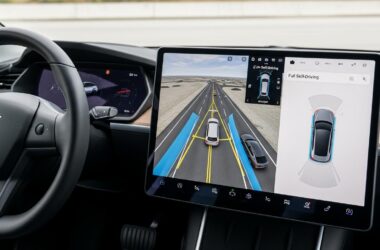





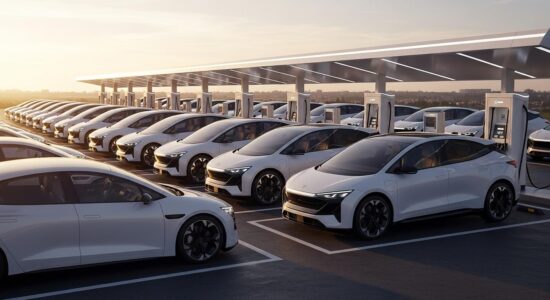
After 8 months of tracking the Tesla Robotaxi deployment, I finally see a symbolic milestone: 200 autonomous vehicles operational by January 2026. Far from sometimes overly optimistic promises, this methodical progress marks a concrete turning point for the Tesla Robotaxi fleet.
I recall the initial complaints about catastrophic availability: endless waiting times, frustrated users, and tarnished credibility. Today, the numbers tell a different story.
In this article, I’ll analyze this concrete evolution, compare Tesla’s strategy with Waymo’s, and anticipate the expansion prospects emerging for 2026.
A Symbolic Milestone After 8 Months of Operation
The fleet of 200 vehicles is unevenly distributed between two strategic geographical areas: 158 vehicles operate in the Bay Area in California, while 42 are deployed in Austin, Texas.
Besoin d'accessoires pour ta Tesla ?
Looking for accessories for your Tesla?
This gradual yet methodical growth since May 2025 contrasts with the chaotic beginnings I documented. I recall the initial feedback last November: users sometimes waited over 15 minutes, with some outright abandoning the app.
Tesla is applying the same philosophy here as it did during the early days of Autopilot: progress through successive iterations, prioritizing safety over deployment speed. While 200 vehicles might seem modest compared to the stated ambitions, this cautious approach is starting to bear fruit in the field.
The initial complaints primarily stemmed from a severe lack of available autonomous vehicles. Today, with this doubling of the fleet, user frustration is noticeably decreasing.
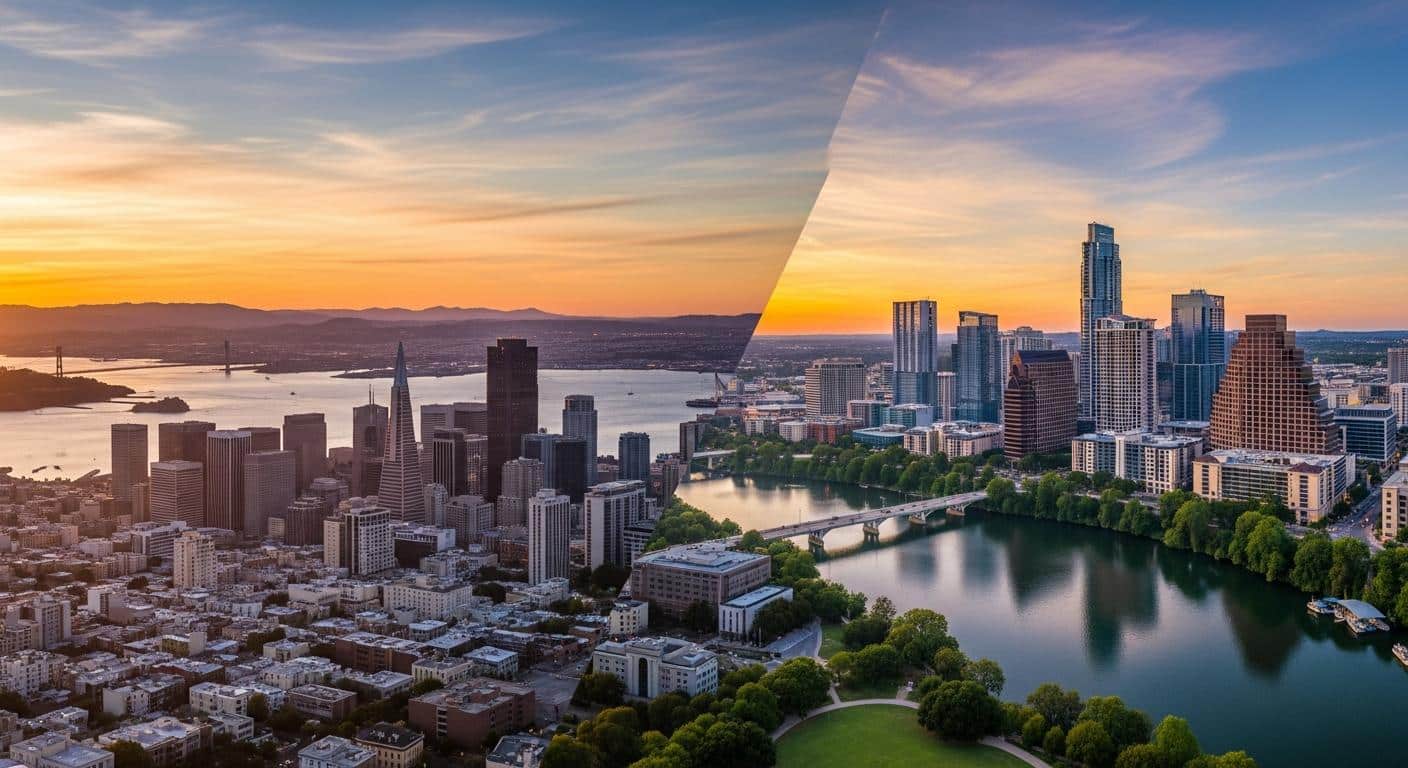
Bay Area vs. Austin: Two Operational Laboratories
Different Levels of Supervision
What particularly fascinates me is the operational differentiation between the two areas. In the Bay Area, every trip is conducted with Safety Monitors present on board, ensuring direct and immediate supervision.
In Austin, Tesla is experimenting with a slightly different model: escorts are positioned in the front, but their role seems less intrusive. According to my sources, internal tests without any supervision are even underway in controlled conditions.
This two-tiered approach is not uniform: some rides in Austin are already taking place with remote supervision rather than physical, marking a step towards full autonomy.
What This Reveals About Tesla’s Strategy
This differentiation is not trivial: it illustrates Tesla’s iterative philosophy. Rather than imposing a single model, the company tests different configurations to identify the most effective one before widespread adoption.
Local regulations also play a decisive role: Texas has historically been more permissive than California regarding autonomous vehicles. Tesla intelligently leverages these regulatory disparities to accelerate its learning.
Finally, this collection of comparative data directly feeds the autonomy algorithms. Every kilometer traveled, every human intervention avoided or necessary, enriches the Full Self-Driving neural network.
The Battle for Coverage Areas with Waymo
In Austin, Tesla currently covers 171 square miles, compared to 140 square miles for Waymo. This difference of 31 square miles gives Tesla a slight territorial advantage in this city.
But be careful not to over-interpret this figure. Waymo has just extended its coverage area by +50% in Austin, signaling a clear acceleration of its deployment. The geofence battle is far from over.
The crucial nuance I must emphasize: Waymo operates in full autonomy, without any supervisor on board. Its vehicles are true autonomous robots in the regulatory sense. Tesla, despite its larger area, still operates with human supervision.
Two strategies are clashing here: Tesla favors rapid geographical deployment with a human safety net, while Waymo advances more cautiously but with claimed technical perfection. Neither approach is intrinsically superior; they stem from distinct corporate philosophies.
Besoin d'accessoires pour ta Tesla ?
Looking for accessories for your Tesla?
Finally Acceptable Waiting Times
The numbers speak for themselves. In November 2025, the average wait reached 15 minutes, generating a wave of complaints on social media. In January 2026, this delay fell below the 5-minute mark.
This three-fold improvement radically transforms the user experience. Having tested classic ride-hailing services, I know that the 5-minute mark is psychological: beyond that, impatience sets in; below it, the service becomes fluid.
The user testimonials I collected confirm this shift: “It’s finally becoming usable daily,” an early adopter from Austin told me. Immediate availability remains the ultimate goal: Tesla aims for less than 2 minutes of waiting, the standard for Uber and Waymo.
This reduced waiting time facilitates adoption, strengthens the service’s credibility, and increases competitiveness against traditional taxis. It’s a much more relevant operational indicator than the raw number of vehicles.
5 New Target Cities
Tesla has identified 5 target cities for its national expansion in 2026: Miami, Las Vegas, Houston, Phoenix, and Dallas. Each presents specific regulatory challenges according to state laws.
The logistics of Robotaxi deployment goes far beyond simply dropping off vehicles. It requires structuring local maintenance, installing charging infrastructure, recruiting operational teams, and negotiating with industry benchmarks showing variable regulatory complexities.
This ambition must be put into perspective: Waymo is already present in 7 cities, maintaining its lead. To catch up, Tesla will have to accelerate its pace while maintaining its service quality. This is similar to Tesla’s expansion strategy with more accessible vehicles: aiming for mass adoption requires solid infrastructure.
The key question remains that of supervision: Will Tesla maintain its Safety Monitors or switch to full autonomy? This decision will condition the optimization of Tesla’s production costs and the service’s profitability. If supervisors disappear, the economic advantage over traditional ride-hailing services will become massive.
As often with Tesla’s production announcements, I remain cautious about the timelines. The methodical approach observed over the past 8 months suggests that Tesla now prioritizes robustness over speed.
Ultimately, these 200 vehicles mark tangible progress, with a concrete improvement in waiting times and credible geographical expansion. But let’s be honest: Waymo maintains its technological lead with its true unsupervised autonomy.
I continue to follow this race closely, as it redefines our relationship with urban mobility. And you, would you be ready to get into a Tesla Robotaxi in your city?
Profitez d'avantages exclusifs en achetant votre Tesla
Vous envisagez d'acquérir une Tesla ? En utilisant mon code de parrainage lors de votre achat, vous pouvez bénéficier d'avantages exceptionnels !
Des kilomètres gratuits de recharge ou d'autres récompenses exclusives, mon code de parrainage est votre passeport pour des avantages supplémentaires : https://ts.la/antoine49352 🤩
Pas de pression, juste une opportunité à saisir pour enrichir votre expérience Tesla.
Découvrez ici le système du parrainage et comment utiliser le code.
Get exclusive perks when buying your Tesla
Thinking about getting a Tesla? If you use my referral code when you purchase, you may be eligible for extra perks.
Free Supercharging miles or other exclusive rewards - my referral code can unlock additional benefits: https://ts.la/antoine49352 🤩
No pressure - just a simple option if you want to enhance your Tesla experience.
Learn how the Tesla referral program works and how to use the code.