



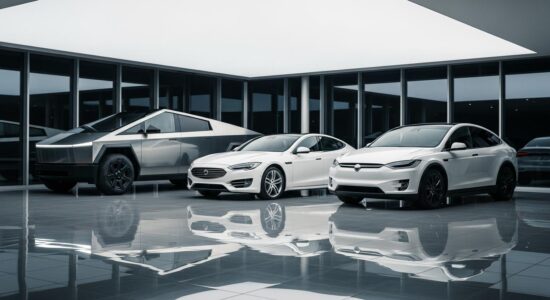
A surprising debate is stirring the Tesla community: Gary Black, an influential former investor and Future Fund manager, recommends discontinuing the Cybertruck rather than the Model S and X. This position goes against Elon Musk’s decision, who just confirmed the end of production for the Model S and X at the Fremont Factory.
The question fascinates me: Is Tesla making the right strategic choices by sacrificing its premium sedans for a controversial pickup? On one hand, sales figures advocate for the historical models. On the other, the vision of full autonomous driving justifies radical trade-offs.
For us, French Tesla owners and enthusiasts, this debate is all the more interesting as the Cybertruck remains unapproved in Europe. I will dissect the arguments of both sides to understand this strategy that pits immediate profitability against disruptive vision.
Gary Black defends a controversial vision
Gary Black is not just any observer. Future Fund manager and former Tesla shareholder, he completely divested in 2025 while keeping an expert eye on the technology sector and autonomous driving.
Besoin d'accessoires pour ta Tesla ?
Looking for accessories for your Tesla?
His main argument? According to him, the Cybertruck generates “negative brand equity”. In other words, its polarizing design and the multiple controversies it stirs would harm Tesla’s overall image.
His shocking recommendation: discontinue the Cybertruck despite its status as the best-selling electric pickup on the market. For Black, it would be better to preserve the Model S and X, which generate three times higher volumes and maintain a loyal premium clientele.
What makes this position fascinating is that it comes from a former investor who intimately knows Tesla’s strategy. His disagreement with Musk is not that of an external critic, but of an informed observer who questions the hierarchy of priorities.
The figures fueling the controversy
Sales Volumes: A Revealing Gap
2025 projections speak for themselves:
- Cybertruck: approximately 10,000 units expected
- Model S + Model X: 30,000 combined units
The Model S and X therefore sell three times more than the Cybertruck, despite their age and the absence of major redesigns in recent years. These premium models retain a loyal customer base that appreciates their refinement and performance.
For Black, this volume difference alone justifies prioritizing the historical sedans. These vehicles remain profitable and contribute positively to the brand image, unlike the controversial pickup.
The chasm between promises and pricing reality
The Cybertruck’s case is weighed down by a major pricing credibility issue. During its presentation in 2019, Musk announced prices between $39,990 and $69,990.
The reality at launch? Prices exceeding $100,000 for the first available versions. A discrepancy that led to massive pre-order cancellations and harmed Tesla’s reputation for keeping its commitments.
Compared to more accessible competitors like the Ford F-150 Lightning or the Rivian R1T, the Cybertruck struggles to convince beyond the circle of early adopters.
Paradoxically, despite these difficulties, it remains the best-selling electric pickup. A fragile leadership that raises questions about its real growth potential.
Elon Musk justifies his strategic choice
Musk’s response was unambiguous: end of production for the Model S and X at the Fremont Factory. He even used the expression “honorable discharge” to describe this decision.
His stated reason? These models no longer contribute to the autonomous driving mission that now structures Tesla’s entire strategy. Production lines will be reallocated to the manufacturing of the Optimus Gen 3 robot, a cornerstone of the company’s robotics vision.
Tesla’s 2025 strategy now focuses on three pillars:
Besoin d'accessoires pour ta Tesla ?
Looking for accessories for your Tesla?
- Model 3 and Model Y for mass volumes
- Cybercab, the autonomous robotaxi in development
- Cybertruck for local goods transport with autonomous driving
For Musk, sacrificing the short-term profitability of the Model S and X is worth the gamble of accelerating the arrival of full autonomous driving. A radical vision that accepts losing immediate revenue to transform the sector in the long term.
It’s hard not to think of the Tesla Model S Plaid and its impressive performance when one realizes that Tesla is turning the page on this iconic model capable of exceeding 1,000 horsepower.
Why the Cybertruck remains in the plans
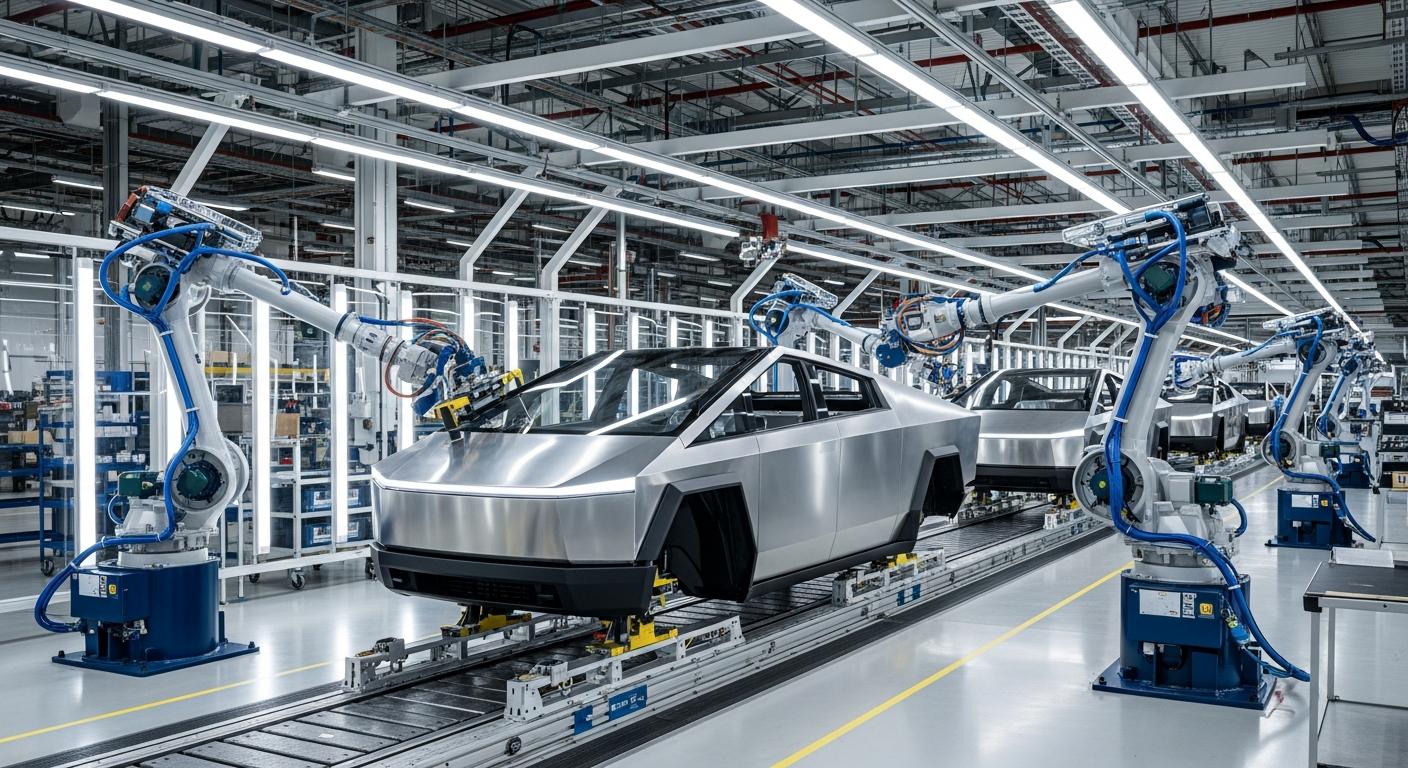
If Musk maintains the Cybertruck despite its disappointing figures, it’s because it occupies a unique position in the lineup: the only Tesla vehicle in the pickup segment.
Its strategic role for local goods transport with autonomous driving justifies its retention. The vehicle’s architecture, designed from the outset to integrate autonomous driving systems, makes it an ideal platform for future robotic delivery services.
Despite modest volumes today, the Cybertruck dominates its electric segment. Its growth potential is linked to the arrival of full autonomous driving, which would radically transform its use and profitability.
Musk’s argument therefore holds true: the Cybertruck fits into the long-term vision of a multi-functional autonomous fleet, whereas the Model S and X represent a glorious but bygone past in this new strategy.
My analysis: two visions, one Tesla
Both positions have their legitimacy. Gary Black defends a logic of immediate financial and brand image: why sacrifice profitable and appreciated models for a controversial vehicle?
Elon Musk takes a more radical gamble: to transform Tesla from a premium car manufacturer into a leader in autonomous driving and robotics. A calculated risk that requires painful trade-offs.
The Model S and X embody established profitability, Tesla’s technical expertise, and a loyal high-end clientele. Their abandonment is not insignificant: it marks a symbolic break with the brand’s historical DNA.
For us, Tesla owners, the question arises: can the company afford to abandon its premium models without losing a part of its soul? In Europe, where the Cybertruck remains unapproved, this debate indirectly concerns us but reveals the brand’s future priorities.
Our interest lies in observing this trade-off between immediate profits and disruptive vision. Tesla has always operated this way: by taking bold bets that defy classic industrial logic.
Beyond the Model S and X, Tesla is developing other foundational projects such as the future $25,000 compact car intended for the global market, or the long-awaited Tesla Roadster, whose production is slow to materialize.
The year 2025 will be revealing: will Musk’s choices bear fruit with the arrival of autonomous driving, or will Black have been right to point out the risks of too radical a strategy? Industry observers, including industry analysts, are closely following this major transformation of Tesla.
And you, which vision seems most accurate? That of financial prudence or that of the transformational gamble? One thing is certain: Tesla never does things by halves, for better or for worse.
Profitez d'avantages exclusifs en achetant votre Tesla
Vous envisagez d'acquérir une Tesla ? En utilisant mon code de parrainage lors de votre achat, vous pouvez bénéficier d'avantages exceptionnels !
Des kilomètres gratuits de recharge ou d'autres récompenses exclusives, mon code de parrainage est votre passeport pour des avantages supplémentaires : https://ts.la/antoine49352 🤩
Pas de pression, juste une opportunité à saisir pour enrichir votre expérience Tesla.
Découvrez ici le système du parrainage et comment utiliser le code.
Get exclusive perks when buying your Tesla
Thinking about getting a Tesla? If you use my referral code when you purchase, you may be eligible for extra perks.
Free Supercharging miles or other exclusive rewards - my referral code can unlock additional benefits: https://ts.la/antoine49352 🤩
No pressure - just a simple option if you want to enhance your Tesla experience.
Learn how the Tesla referral program works and how to use the code.