




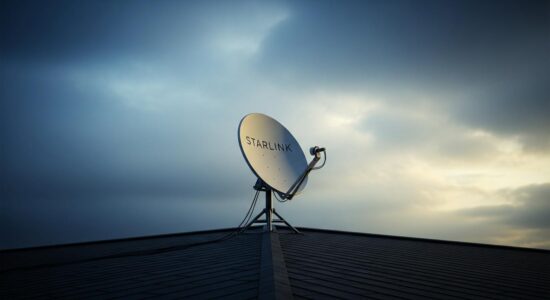
SpaceX has just struck a major blow by massively deactivating Starlink terminals illegally used by Russian forces in Ukraine. This operation, officially confirmed by Ukrainian authorities and shared by Elon Musk himself on X, marks a historic turning point: it is the first war where a private satellite infrastructure becomes a decisive military factor. Beyond the technical aspect, this decision raises major questions about the role of technology companies in modern conflicts. I will break down this situation that redefines the rules of 21st-century warfare.
SpaceX Strikes Hard with Massive Terminal Deactivation
The facts are now official: Ukrainian defense authorities have confirmed that SpaceX has proceeded with the deactivation of hundreds of Starlink terminals used by Russian troops. On February 1, 2026, Elon Musk himself published an unequivocal tweet denouncing the unauthorized use of his equipment by Russian armed forces.
The scale of the operation is considerable. SpaceX identified and remotely cut off illegally acquired terminals, demonstrating a formidable capacity for centralized control. Technically, each terminal has a unique identifier allowing SpaceX to geolocate and deactivate it instantly from its control centers.
The timing is not insignificant. After months of relative tolerance for illegal use that remained marginal, the accumulation of cases became too significant to ignore. This targeted deactivation demonstrates the power of a centralized infrastructure: with a simple click, SpaceX can render equipment unusable even if it is physically functional. This is a reality that completely changes the game in the recent tensions involving Elon Musk in the conflict.
Besoin d'accessoires pour ta Tesla ?
Looking for accessories for your Tesla?
The Immediate Impact on Russian Military Operations
Disruption of Frontline Communications
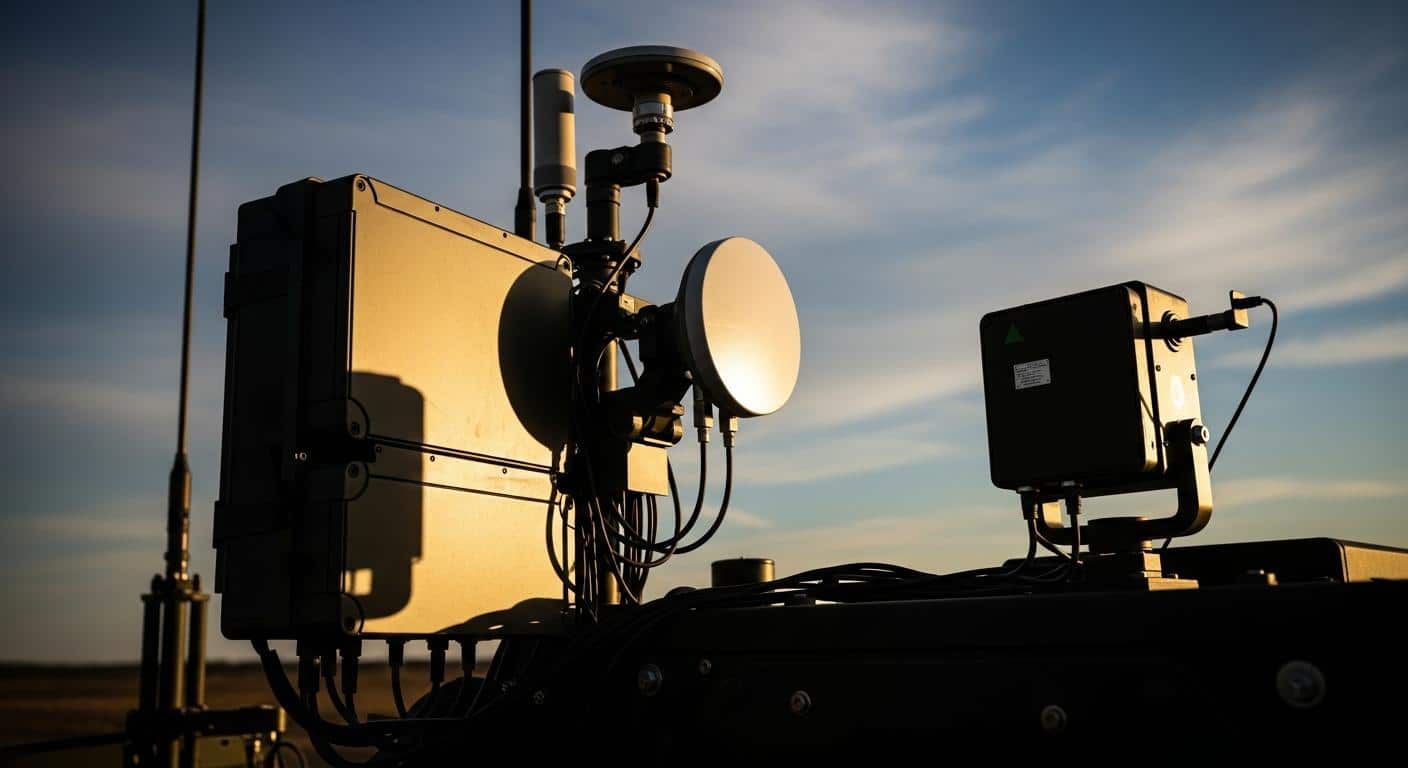
The cutoff caused immediate chaos on the front. Russian units equipped with Starlink terminals found themselves abruptly deprived of communications. This dependence had become critical for many units deployed in areas where conventional infrastructure is destroyed or nonexistent.
The forced return to conventional radio systems poses several problems: these devices are less efficient, offer limited coverage, and most importantly, they are much more easily intercepted by opposing forces. It’s a technological step back several decades.
Consequences for Drone Piloting
The most critical impact probably concerns drone piloting. FPV (First Person View) drones and other modern UAV systems require a stable, low-latency connection to be operational. Without Starlink, real-time coordination capability collapses.
Several Russian military bloggers have confirmed these difficulties on Telegram, mentioning significant operational losses. The modern drone is totally dependent on a reliable satellite connection: without it, it reverts to being a simple remote-controlled toy with a range of a few kilometers instead of dozens.
Why Starlink Technologically Dominates the Battlefield
Starlink’s superiority is not accidental but stems from a radically different architecture. Unlike traditional geostationary satellites orbiting at 36,000 km altitude, Starlink’s low Earth orbit constellation (around 550 km) offers unbeatable latency: between 20 and 40 milliseconds compared to over 600 ms for classic satellites.
This continuous coverage allows for a stable connection even in highly mobile conflict zones. The throughput is also incomparable: up to 220 Mbps for downloads where available Russian systems struggle to reach a few tens of Mbps at best.
Russian alternatives are limited: the Gonets satellite system offers uneven coverage and poor performance, while the Sphere project is still not deployed. Crucially, a Starlink terminal is operational in less than 10 minutes, compared to hours or even days to deploy heavy satellite infrastructure.
Why can’t Russia simply replicate this technology? The technological gap is immense, international sanctions block access to critical components, and the complexity of an LEO constellation requires colossal investments over at least a decade. Technically, it’s the difference between a modern smartphone and a 1990s landline phone.

The Technological Battle of Control and Circumvention
The Ukrainian Verification System
Faced with increasing illegal use, Ukraine and SpaceX have implemented a register of authorized terminals. This system works through cross-verification: each terminal is registered with its unique serial number and expected geolocation.
The approach is proactive: rather than a simple blacklist of suspicious terminals, it’s a whitelist that explicitly authorizes legitimate equipment. Any unregistered terminal or one operating in an unauthorized zone can be instantly cut off.
Russian Attempts to Circumvent the Blockade
Russian forces are not passive. Several circumvention strategies have been identified: registration via civilians in third countries, black market purchases with false identities, reshipment from abroad via intermediaries.
It’s a true technological cat-and-mouse game. But the effectiveness of these circumventions remains limited: SpaceX can detect suspicious behavior through algorithms analyzing location, usage patterns, and inconsistencies between the registration address and the actual GPS position. A terminal purchased in Berlin but permanently used near Donetsk immediately triggers alerts.
A Private Company in a State Conflict: A New Paradigm
This situation illustrates the unprecedented role of a private company controlling critical infrastructure that has become decisive in an armed conflict between states. SpaceX is neither an army nor a state, but its decisions have a direct operational impact on the ground.
Besoin d'accessoires pour ta Tesla ?
Looking for accessories for your Tesla?
The question of neutrality becomes central: can a private company remain neutral in a conflict, or does it have a duty to take sides? Historically, this is the first time that a private space infrastructure has become such a decisive military factor. Even during the Cold War, satellites remained under direct state control.
The implications for future conflicts are major. We are witnessing the emergence of a strategic dependence on private technological actors: Microsoft for military cloud, Google for imagery intelligence, and now SpaceX for communications. This new geopolitical paradigm redefines power balances.
This situation is part of Elon Musk’s broader strategic vision, as he controls both Tesla and SpaceX, two companies with growing geopolitical ramifications. To better understand these strategic issues and their military context, I recommend in-depth geopolitical analyses that shed light on the role of space technologies in modern conflicts. We are witnessing the emergence of a new type of power: that of private technological infrastructures capable of directly influencing the outcome of wars.
Profitez d'avantages exclusifs en achetant votre Tesla
Vous envisagez d'acquérir une Tesla ? En utilisant mon code de parrainage lors de votre achat, vous pouvez bénéficier d'avantages exceptionnels !
Des kilomètres gratuits de recharge ou d'autres récompenses exclusives, mon code de parrainage est votre passeport pour des avantages supplémentaires : https://ts.la/antoine49352 🤩
Pas de pression, juste une opportunité à saisir pour enrichir votre expérience Tesla.
Découvrez ici le système du parrainage et comment utiliser le code.
Get exclusive perks when buying your Tesla
Thinking about getting a Tesla? If you use my referral code when you purchase, you may be eligible for extra perks.
Free Supercharging miles or other exclusive rewards - my referral code can unlock additional benefits: https://ts.la/antoine49352 🤩
No pressure - just a simple option if you want to enhance your Tesla experience.
Learn how the Tesla referral program works and how to use the code.