



Le Wall Street Journal l’a révélé le 12 mai 2026 : SpaceX et Google seraient en négociations avancées pour déployer des data centers… en orbite terrestre. Ni l’un ni l’autre n’a confirmé officiellement l’information. Et pourtant, difficile de balayer ça d’un revers de main.
Monter ses serveurs dans l’espace ? Ça semble fou au premier regard. Jusqu’à ce qu’on regarde les chiffres. Et là, l’idée commence à ressembler moins à de la science-fiction, et plus à une réponse sérieuse à un problème très concret.
Voici pourquoi cette perspective, aussi spectaculaire soit-elle, est en train de devenir crédible.
Pourquoi l’IA étouffe les data centers terrestres
Le point de départ, c’est une crise énergétique silencieuse mais massive. En 2024, les data centers ont consommé 415 TWh d’électricité dans le monde, selon l’Agence Internationale de l’Énergie. La projection pour 2030 ? 945 TWh. Soit une hausse de +128 % en six ans.
Besoin d'accessoires pour ta Tesla ?
Looking for accessories for your Tesla?
Le seuil des 1 000 TWh pourrait même être franchi dès 2026 — ce qui équivaut à la consommation électrique totale du Japon. Pour alimenter des modèles d’IA toujours plus gourmands, les serveurs dédiés progressent à un rythme de +30 % par an.
Et le problème, c’est que la Terre oppose trois murs physiques à cette croissance :
- L’électricité : les réseaux saturent, les coûts explosent, les délais de raccordement s’allongent
- Le foncier : trouver un terrain disponible, proche d’une source d’énergie fiable, devient une quête
- L’eau : les systèmes de refroidissement engloutissent des millions de litres chaque jour
On ne parle plus d’un problème de croissance à gérer. On parle d’un mur physique. C’est exactement ce que montrent les investissements massifs dans les data centers IA, comme celui de xAI à Memphis — des projets titanesques, à des coûts vertigineux, pour gratter quelques mégawatts supplémentaires.
L’orbite comme solution radicale : les avantages concrets
L’espace casse ces trois contraintes d’un coup. Pas métaphoriquement — physiquement.
En orbite, les panneaux solaires captent 5 fois plus d’énergie qu’au sol. Pas de nuit, pas d’atmosphère qui filtre et atténue. Une production continue, stable, prévisible.
Pour le refroidissement, le vide spatial à −270 °C fait le travail gratuitement. Exit les climatisations énergivores, exit les bassins d’eau. L’économie est massive.
Et puis, zéro contrainte réglementaire terrestre. Pas de permis de construire. Pas de riverains. Pas de réseau électrique national à négocier pendant des années.
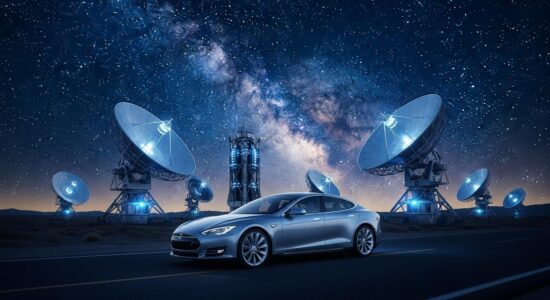
La preuve de concept existe déjà : fin 2025, Starcloud est devenue la première entreprise à entraîner un LLM directement en orbite. Ce n’est plus une hypothèse théorique.
Radicalement avantageux sur le papier, donc. Les obstacles, eux, arrivent un peu plus loin.
Ce que SpaceX apporte à la table
SpaceX n’arrive pas les mains vides dans cette négociation. Loin de là.
L’entreprise a déposé auprès de la FCC une demande pour 1 million de satellites à des altitudes allant de 500 à 2 000 km. Ce n’est pas une rumeur — c’est un document officiel, public, consultable. Ces satellites porteraient une capacité de calcul IA projetée à 100 gigawatts.
SpaceX dispose en plus de trois atouts uniques :
- Le réseau Starlink déjà déployé, avec ses communications inter-satellites opérationnelles
- Starship, le seul lanceur capable d’acheminer des charges utiles massives à un coût potentiellement viable
- Une maîtrise verticale de toute la chaîne — du lanceur à la constellation
Elon Musk a déclaré début 2026 que l’espace deviendrait le lieu le plus rentable pour l’IA dans “30 à 36 mois”. Ses timelines sont souvent optimistes, c’est un fait établi. Mais la demande de SpaceX pour un million de satellites dédiés aux data centers, elle, est réelle et documentée.
Besoin d'accessoires pour ta Tesla ?
Looking for accessories for your Tesla?
Le projet secret de Google : Suncatcher
Du côté de Google, le WSJ évoque le projet Suncatcher — une initiative interne, un nom de code, pas encore un produit annoncé. Aucune confirmation officielle à ce stade.
Le plan tel que décrit : deux satellites prototypes équipés de TPUs — les puces IA maison de Google — prévus pour début 2027. Sundar Pichai aurait évoqué en interne la vision d’un “data center orbital normal” d’ici dix ans.
TPU en orbite : une innovation dans l’innovation
Un TPU (Tensor Processing Unit) est une puce conçue spécifiquement pour les calculs d’apprentissage automatique. Google en équipe ses propres data centers depuis des années — c’est son avantage concurrentiel sur le silicium.
Le problème ? L’espace est un environnement radiatif hostile. Les particules cosmiques dégradent l’électronique grand public en quelques semaines. Faire survivre et performer un TPU en orbite, c’est une innovation dans l’innovation.
Si Google réussit ce prototype, ce n’est pas juste une victoire pour Google. C’est un changement de paradigme pour toute l’industrie des semi-conducteurs spatiaux.
Les obstacles techniques à ne pas minimiser
Soyons lucides. Entre l’idée et l’infrastructure opérationnelle, il y a une liste d’obstacles qui n’ont rien de symbolique.
- Hardware résistant aux radiations : tout le parc de puces actuelles est à repenser pour survivre en orbite
- Communications laser inter-satellites : transférer des pétaoctets depuis l’espace avec une latence acceptable reste un défi non résolu à grande échelle
- Gestion des débris orbitaux : un million de satellites supplémentaires dans un espace déjà encombré, c’est un risque systémique réel — le syndrome de Kessler n’est pas une métaphore
- Économie des lancements : même avec Starship, le coût par kilogramme reste un facteur limitant majeur pour des infrastructures de plusieurs tonnes
- La concurrence : Amazon et Blue Origin travaillent sur des projets similaires — cette course a plusieurs coureurs
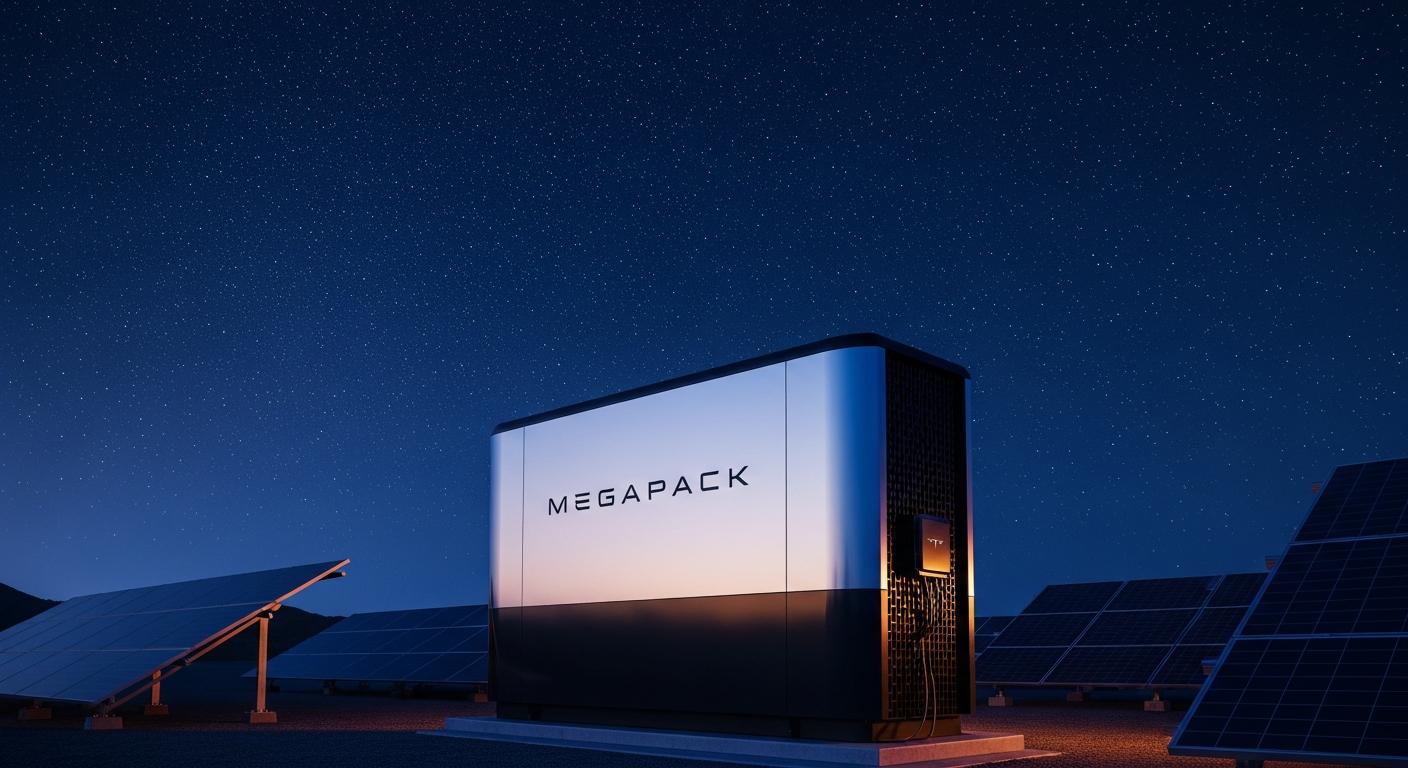
Pour alimenter tout ça, les solutions énergétiques terrestres montrent déjà leurs limites. Des projets comme les solutions d’alimentation énergétique des data centers à base de Megapacks Tesla illustrent à quel point chaque kilowattheure compte — et pourquoi l’orbite, avec son soleil permanent, fait rêver les ingénieurs.
La question n’est plus vraiment de savoir si des data centers orbitaux existeront. Les signaux — dépôts FCC, prototypes, investissements — convergent trop clairement. La vraie question, c’est quand. Et les obstacles d’aujourd’hui sont précisément les roadmaps de demain.
Ce que confirment les experts consultés par Le Monde : d’ici 2030, la consommation des data centers atteindra l’équivalent de celle du Japon. À ce niveau de pression, même les solutions les plus radicales deviennent alors réellement raisonnables.
Profitez d'avantages exclusifs en achetant votre Tesla
Vous envisagez d'acquérir une Tesla ? En utilisant mon code de parrainage lors de votre achat, vous pouvez bénéficier d'avantages exceptionnels !
Des kilomètres gratuits de recharge ou d'autres récompenses exclusives, mon code de parrainage est votre passeport pour des avantages supplémentaires : https://ts.la/antoine49352 🤩
Pas de pression, juste une opportunité à saisir pour enrichir votre expérience Tesla.
Découvrez ici le système du parrainage et comment utiliser le code.
Get exclusive perks when buying your Tesla
Thinking about getting a Tesla? If you use my referral code when you purchase, you may be eligible for extra perks.
Free Supercharging miles or other exclusive rewards - my referral code can unlock additional benefits: https://ts.la/antoine49352 🤩
No pressure - just a simple option if you want to enhance your Tesla experience.
Learn how the Tesla referral program works and how to use the code.