


Elon Musk has just reaffirmed for the third time in six months that production of the Tesla Cybercab will begin in April 2026. This autonomous robotaxi without a steering wheel or pedals represents a radical bet on full autonomy, a project that generates as much enthusiasm as skepticism.
Between Tesla’s well-documented history of delays and Musk’s unusual insistence on this deadline, this announcement deserves serious attention. As a Tesla enthusiast, I’ve learned to take announced timelines with a grain of salt… but this time, something seems different. Let me explain why.
Elon Musk Reaffirms (Again) the Cybercab Timeline
The chronology of announcements is revealing. In December 2025, Musk mentioned the first tests of the production system. On January 23, 2026, he publicly confirmed the date of April 2026 for the start of production. And on February 16, 2026, another reaffirmation on X (formerly Twitter).
This insistence is unusual in Tesla’s communication. Normally, Elon Musk gives an ambitious date and then… radio silence until the inevitable delay announcement. Here, he’s repeating the deadline as if to anchor this promise in people’s minds.
Besoin d'accessoires pour ta Tesla ?
Looking for accessories for your Tesla?
This repetition can signal two things: either genuine confidence in production capabilities, or a communication strategy to reassure an increasingly impatient market. The pressure from investors is palpable, and Tesla must prove that its robotaxi vision is not just a technological mirage.
In his latest statement on February 16, Musk stayed the course unequivocally, reaffirming that April 2026 remains the target for seeing the first Cybercabs roll off the production lines.
A Radical Autonomous Vehicle Without Compromise
No Manual Controls: The Bet on Full Autonomy
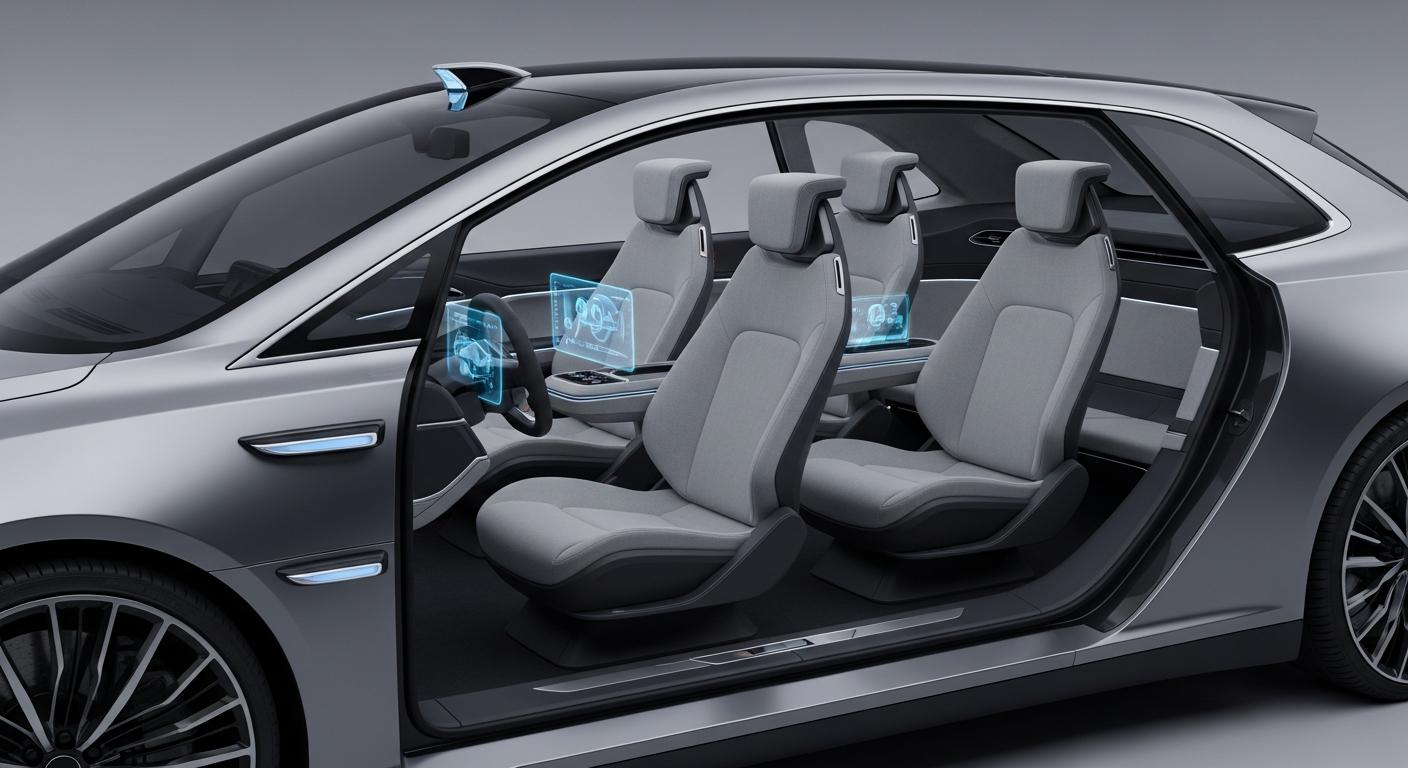
Tesla has technically confirmed the complete absence of a steering wheel, pedals, or manual controls on the Cybercab. No more speculation about potential “backup systems” to reassure regulators or anxious passengers.
This approach is radically different from competitors like Waymo, which initially kept backup controls on its first prototypes. Tesla is making an all-or-nothing choice: either FSD (Full Self-Driving) works perfectly, or the vehicle cannot operate.
The regulatory implications are massive, particularly in Europe where automotive safety standards are among the strictest in the world. This radical choice reflects either absolute confidence in Tesla technology, or a form of arrogance that could prove costly in terms of approval.
Tesla’s Complicated Past with Deadlines
The History That Dampens Enthusiasm
It’s impossible to talk about Tesla’s promises without mentioning the emblematic delays that mark the company’s history.
- Production of the Tesla Roadster promised since 2017: still no deliveries in 2026
- The Tesla Semi: announced in 2017, very limited production nine years later
- Unsupervised FSD: promised “next year” since 2016, a running gag in the Tesla community
But let’s be fair: Tesla has also accumulated impressive successes. The Model 3 eventually reached record production rates, the Gigafactories were built in record time, and the Supercharger network has been deployed globally.
Why could the Cybercab be different this time? Several factors work in its favor: the technology builds on the proven foundation of the Model 3 and Model Y, the simplified design reduces the number of components, and above all, competitive pressure from Waymo, Cruise, and Zoox is now real.
An Acknowledged Gradual Production Ramp-Up
The Famous “S-Curve” of Production
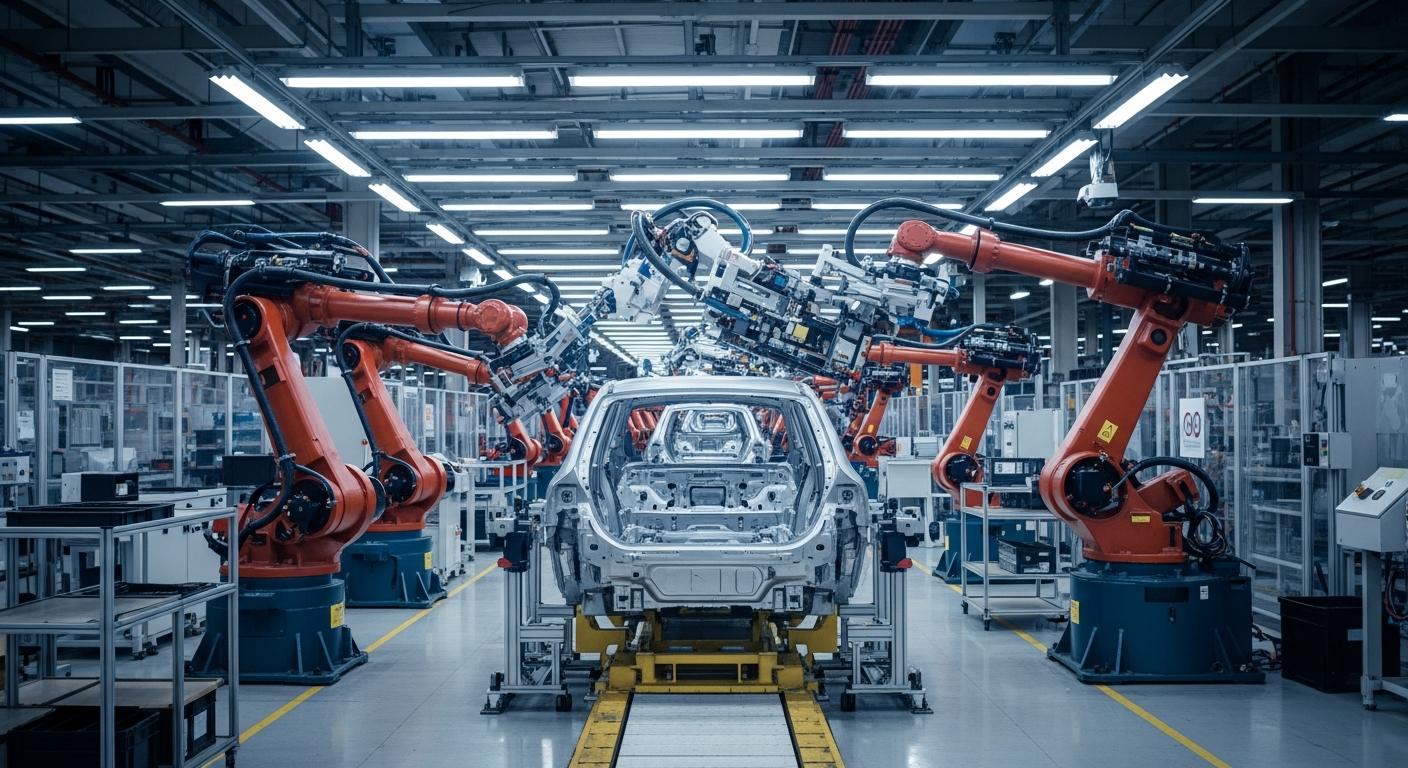
Musk has been surprisingly transparent about short-term expectations: “Almost everything is new, so the initial production rate will be atrociously slow, but will eventually be incredibly fast.”
This S-curve production ramp is a classic in the automotive industry, but rarely communicated so clearly:
- Phase 1 (slow start): identifying and resolving production issues, constant adjustments
- Phase 2 (rapid acceleration): mastered process, optimized automation, accelerating pace
- Phase 3 (plateau): maximum capacity reached, stabilized production
Expectations must therefore be tempered: April 2026 means the first vehicle coming off the factory floor, not 10,000 units per month from the start. The first months will probably resemble the famous “production hell” of the Model 3 in 2018, that chaotic but ultimately successful period.
The Strategic Challenge of the Robotaxi for Tesla
The Cybercab represents much more than a new model: it’s a complete transformation of Tesla’s business model. The company would shift from automaker to mobility operator, with recurring revenue rather than one-time sales.
The potential competitive advantage is enormous: Tesla already has a fleet of millions of vehicles equipped with FSD hardware, collecting data in real-world conditions. This head start could prove decisive.
Besoin d'accessoires pour ta Tesla ?
Looking for accessories for your Tesla?
Financially, the margins of a robotaxi service would far exceed those of conventional vehicle sales. But major challenges remain: obtaining regulatory approval (particularly complex in Europe), achieving the 99.9999% reliability necessary for a vehicle without manual controls, and convincing the general public to give up control.
For the $25,000 compact Tesla intended for the global market, the democratization strategy could also apply to robotaxis. But in France and Europe, we’ll probably have to wait until 2027-2028 before seeing these autonomous vehicles on our streets.
My Take: Between Caution and Curiosity
Let’s be transparent: I remain cautious about the timelines announced by Tesla. The track record speaks for itself, and promising a specific date in the automotive industry is often wishful thinking.
Yet three factors make me think this time could be different: the three close-together reaffirmations (unusual for Musk), the acknowledged acceptance of a slow-starting S-curve production ramp, and the production challenges Tesla has already overcome in China prove its ability to scale quickly.
In the coming weeks, I’ll be closely watching factory photos, official approval requests, and especially feedback from early testers. These signals will tell us whether April 2026 is realistic or whether we’re heading for yet another delay, as suggested by Tesla’s official statements on European regulatory challenges.
For us, Tesla owners in France, this potential mobility revolution still seems distant. But if the Cybercab delivers on its promises, it could redefine our relationship with urban transportation within a few years.
What about you—do you think we’ll see Cybercabs on the road in April 2026? Or are you in the skeptics’ camp? Let me know in the comments what you think!
Profitez d'avantages exclusifs en achetant votre Tesla
Vous envisagez d'acquérir une Tesla ? En utilisant mon code de parrainage lors de votre achat, vous pouvez bénéficier d'avantages exceptionnels !
Des kilomètres gratuits de recharge ou d'autres récompenses exclusives, mon code de parrainage est votre passeport pour des avantages supplémentaires : https://ts.la/antoine49352 🤩
Pas de pression, juste une opportunité à saisir pour enrichir votre expérience Tesla.
Découvrez ici le système du parrainage et comment utiliser le code.
Get exclusive perks when buying your Tesla
Thinking about getting a Tesla? If you use my referral code when you purchase, you may be eligible for extra perks.
Free Supercharging miles or other exclusive rewards - my referral code can unlock additional benefits: https://ts.la/antoine49352 🤩
No pressure - just a simple option if you want to enhance your Tesla experience.
Learn how the Tesla referral program works and how to use the code.