



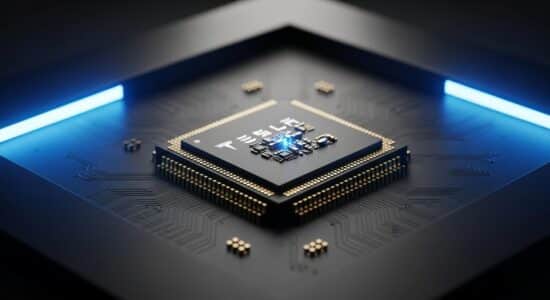
Elon Musk has just dropped a bombshell that deserves our full attention: the AI5, Tesla’s next-generation artificial intelligence chip, is in its final design phase. But that’s not all. The Tesla boss unveiled an even bolder ambition: a 9-month development cycle per chip generation. Yes, you read that right. Nine months to go from AI5 to AI6, then to AI7, and so on up to AI9.
For us, Tesla owners, this announcement is not just a technical feat. It directly impacts the evolution of Full Self-Driving, the computing power embedded in our vehicles, and even the future of the Optimus robot, which shares the same technology.
I propose we decipher this announcement and what it truly means for the future of our Teslas, but also for the company’s competitive position against traditional semiconductor giants.
AI5 enters final phase: what I know today
According to Elon Musk’s latest statements, the AI5 design is almost complete. This chip represents a major evolution compared to the AI4 (Hardware 4) that currently powers our most recent Model 3, Model Y, Tesla Model S, and Model X vehicles.
Besoin d'accessoires pour ta Tesla ?
Looking for accessories for your Tesla?
The production strategy reveals a particularly intelligent approach: Tesla has selected two foundries to manufacture AI5, a decision that recalls the dual-sourcing strategy Tesla already applies for its batteries.
- TSMC (Taiwan): will use a 3-nanometer etching process
- Samsung (South Korea): will go even further with a 2-nanometer process
This dual-sourcing strategy is not insignificant. It aims to secure the supply chain, a lesson learned from the semiconductor shortages that have paralyzed the automotive industry in recent years. Samsung is also massively recruiting engineers in the United States specifically for this production.
Crucial point for us: both versions (TSMC and Samsung) will be functionally identical in our vehicles. Regardless of which chip powers your future Tesla, the performance will be there.
A 9-month pace: Tesla reinvents the rules of the game
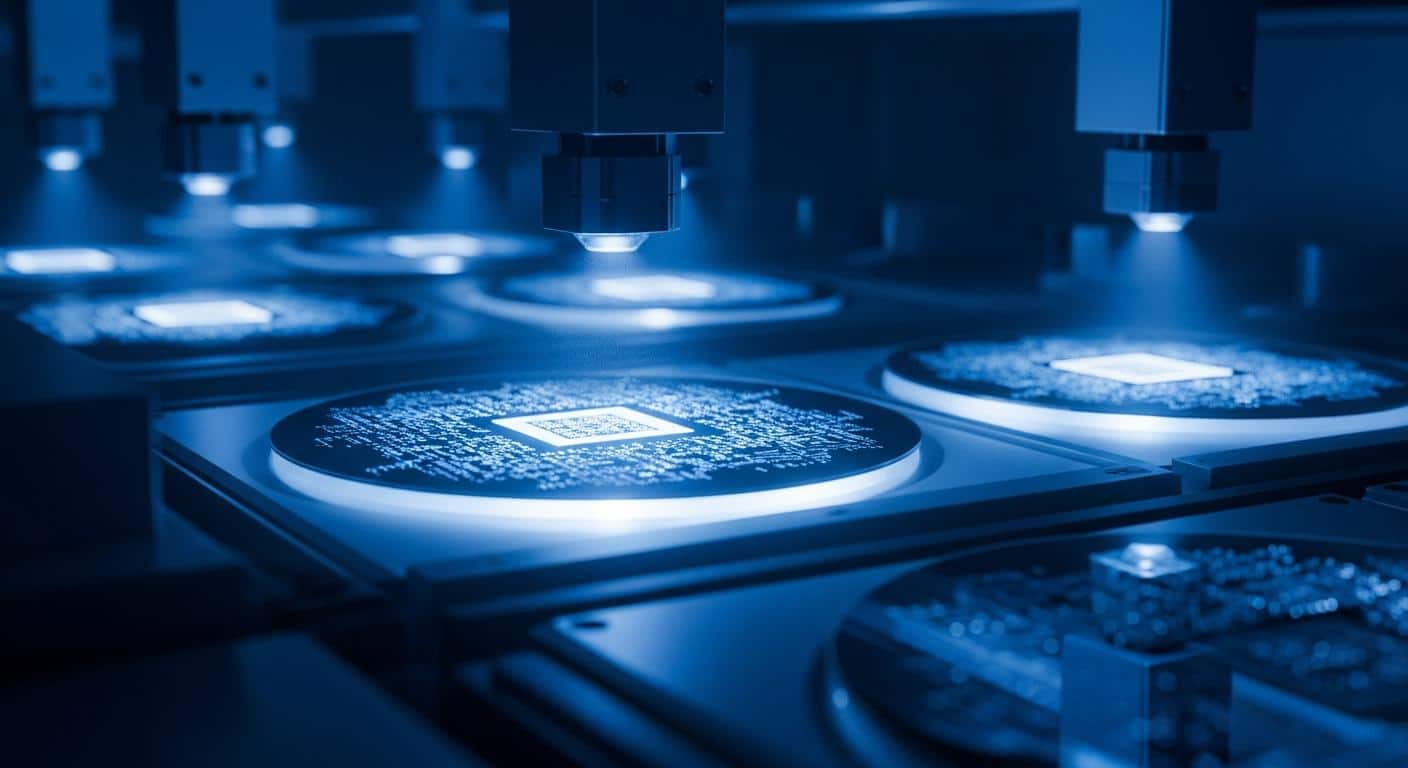
Let’s now talk about the real breakthrough: this 9-month pace per generation. To understand the achievement, we need to compare it with industry standards.
Comparison with the semiconductor industry
In the traditional semiconductor industry, developing a new chip generation typically requires between 18 and 36 months. Intel, AMD, NVIDIA… all operate on these relatively long cycles, which allow for amortizing colossal R&D investments.
Tesla aims for 9 months. That’s dividing the usual lead times by two to four. This approach recalls Tesla’s philosophy in automotive development: where traditional manufacturers work on 5 to 7-year cycles, Tesla constantly iterates with continuous improvements.
This execution speed requires extensive vertical integration. Tesla designs its chips in-house and maintains extremely close partnerships with its foundries. No dependence on a third-party supplier dictating its pace.
The competitive advantage explained
As Herbert Ong brilliantly analyzed, this pace allows Tesla to carve out a significant competitive advantage. While competitors are finalizing one chip generation, Tesla releases two, or even three new ones.
The impact on Full Self-Driving is direct: continuous improvement in computing power, better management of complex situations, exponential performance. Reflecting Tesla’s philosophy of constantly pushing performance further, this race for innovation has only one goal: to offer the best possible experience.
Meanwhile, traditional manufacturers rely on NVIDIA, Mobileye, or other external suppliers, with the constraints this imposes in terms of timing and customization.
From AI5 to AI9: the roadmap that changes everything
The most fascinating information lies in the medium-term vision. AI6 is already in early development, even though AI5 is not yet in mass production. Tesla plans up to AI9, providing 3 to 4 years of visibility.
The stated strategic goal is clear: to become the most produced AI chips in the world by volume. An ambition that may seem excessive, but which is based on a reality: Tesla produces millions of vehicles per year, each equipped with these chips. Add the Optimus robot, which will use the same technology, and the volumes indeed become stratospheric.
This philosophy of continuous improvement contrasts with the “big bang” approach of some competitors who bet everything on a one-time innovation. Tesla prefers permanent evolution, iteration after iteration.
Besoin d'accessoires pour ta Tesla ?
Looking for accessories for your Tesla?
The strongest signal of this ambition? The massive recruitment of semiconductor engineers. When Tesla recruits on this scale, it means the vision is more than just an announcement.
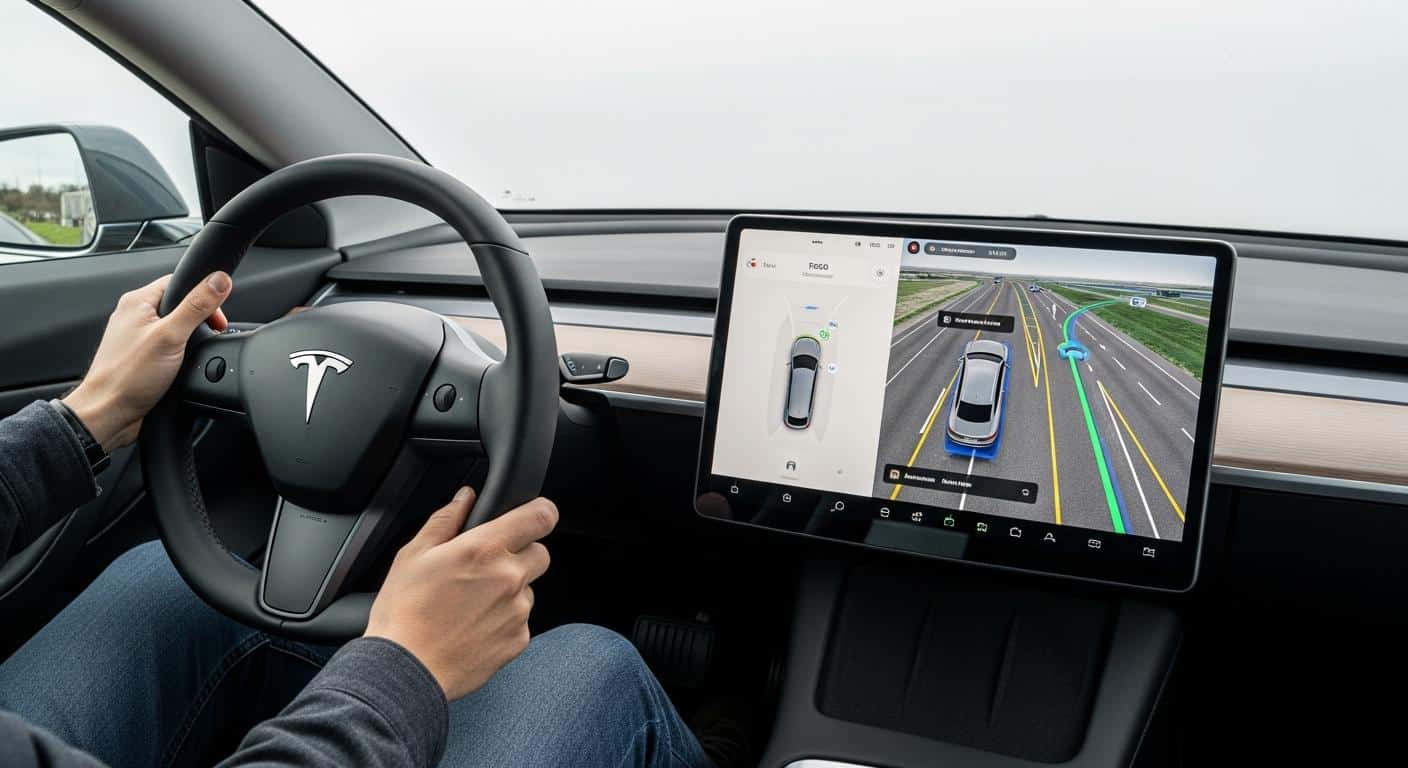
Concretely, what does this change for my Tesla?
The evolution of Full Self-Driving
Let’s get back to what directly interests us: our vehicles. The AI4 (Hardware 4) currently powers recently produced Model 3, Model Y, Tesla Model S, and Model X vehicles. This chip has already enabled significant advancements in Full Self-Driving capabilities.
AI5 will bring superior computing power, allowing for the management of even more complex situations with reduced reaction times. More cameras to process simultaneously, better anticipation, faster decisions in delicate scenarios.
The 9-month cycle means these improvements will reach us faster. But it also raises the question of backward compatibility. Tesla will have to simultaneously manage several chip generations (AI3, AI4, AI5…) across its fleet.
Will some advanced features be reserved for the latest chips? It’s probable. Tesla has done this in the past, limiting certain updates to vehicles equipped with Hardware 3 or higher. A necessary compromise between innovation and supporting older models.
Beyond the car: Optimus enters the scene
Let’s not forget that these same chips will power the Optimus humanoid robot. This R&D synergy is brilliant: improvements developed for one automatically benefit the other.
Elon Musk’s vision relies on massive economies of scale. Millions of vehicles plus millions of potential robots, all using the same chip architectures. For us, Tesliens, this strategy indirectly funds the continuous improvement of our embedded systems.
The more Tesla sells Optimus, the more R&D investments in AI chips are amortized, and the more our vehicles benefit. A virtuous cycle that should further accelerate the pace of innovation.
This impressive 9-month pace per generation reveals unprecedented industrial ambition. According to industry sources, this strategy could redefine production standards in the automotive semiconductor sector. As a Tesla owner, I find it fascinating to see the company not only revolutionize the automotive industry but also directly tackle the AI chip industry.
It remains to be seen if this pace will hold up long-term against inevitable industrial unforeseen events. But one thing is certain: Tesla continues to disrupt the norms, and our vehicles will be the first beneficiaries. Follow these technological advancements that directly impact the company’s valuation, as they shape the future of intelligent mobility.
Profitez d'avantages exclusifs en achetant votre Tesla
Vous envisagez d'acquérir une Tesla ? En utilisant mon code de parrainage lors de votre achat, vous pouvez bénéficier d'avantages exceptionnels !
Des kilomètres gratuits de recharge ou d'autres récompenses exclusives, mon code de parrainage est votre passeport pour des avantages supplémentaires : https://ts.la/antoine49352 🤩
Pas de pression, juste une opportunité à saisir pour enrichir votre expérience Tesla.
Découvrez ici le système du parrainage et comment utiliser le code.
Get exclusive perks when buying your Tesla
Thinking about getting a Tesla? If you use my referral code when you purchase, you may be eligible for extra perks.
Free Supercharging miles or other exclusive rewards - my referral code can unlock additional benefits: https://ts.la/antoine49352 🤩
No pressure - just a simple option if you want to enhance your Tesla experience.
Learn how the Tesla referral program works and how to use the code.