

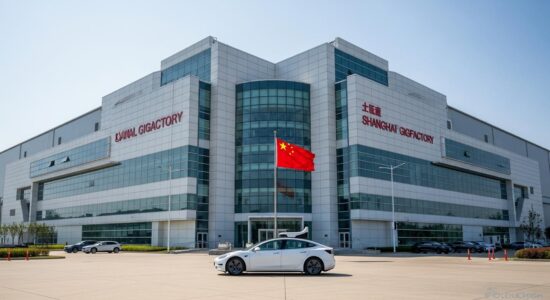
Tesla has just posted a job ad that hasn’t gone unnoticed: a position for an Autopilot test engineer in Shanghai. This strategic hire is taking place in the Lingang district, a special area where Gigafactory Shanghai already produces thousands of vehicles every month.
But this isn’t just another position. This announcement confirms what many suspected: Tesla China is actively preparing to roll out FSD (Full Self-Driving) on the Chinese market. A crucial step in the international expansion of this autonomous driving technology that’s generating so much buzz.
The timing and location of this hiring aren’t incidental. Lingang is one of the few areas in China where autonomous driving tests are allowed on public roads. And Tesla is the first foreign automaker to obtain this exceptional authorization.
A strategic hire in Shanghai’s “FSD zone”
The Autopilot test engineer role offered by Tesla isn’t located randomly. It’s based specifically in the Lingang district, this new economic zone that already hosts Gigafactory Shanghai.
Besoin d'accessoires pour ta Tesla ?
Looking for accessories for your Tesla?
Lingang, also known as Nanhui New City, isn’t just an industrial park. It’s a pilot zone authorized for autonomous vehicle testing on public roads. A boon for Tesla, which can test its system in real-world conditions, facing dense traffic and the specificities of driving in China.
The geographic advantage is obvious: immediate proximity to the factory, easy access to test vehicles, and infrastructure that’s already operational. Everything is designed to speed up development without compromising test quality.
What makes this situation unique is that Tesla is the first foreign automaker authorized to test its autonomous systems in real-world conditions on Chinese territory. A recognition that speaks volumes about the ambitions of the Chinese government and Tesla’s position in this strategic market. To understand the importance of local production, I recommend reading my analysis of Teslas built in China.
This approach shows methodical preparation. No flashy announcement, no unrealistic promise. Just hands-on work—concrete and gradual.
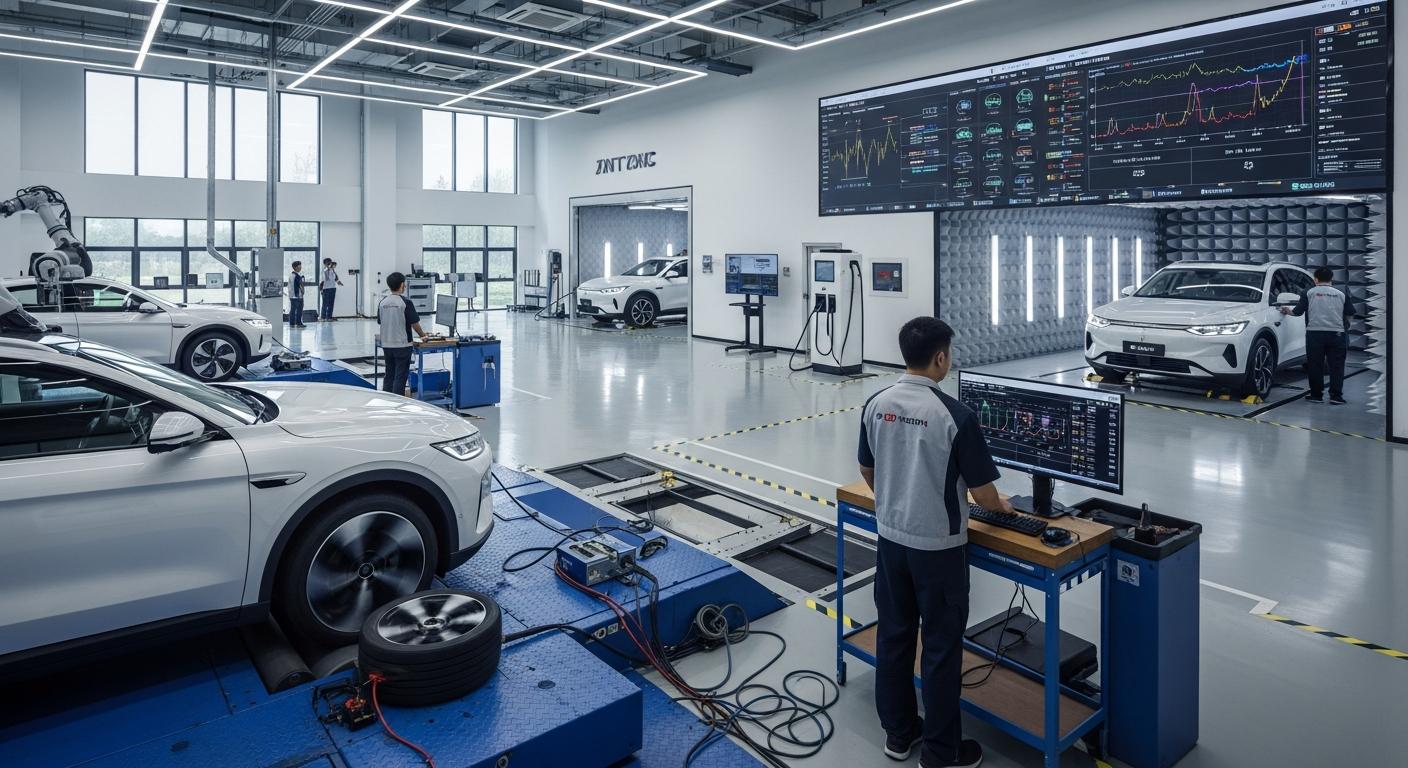
China, a prime testing ground for foreign automakers
An exceptional authorization that changes the game
Getting authorization to test autonomous driving systems in China is no small feat. China’s regulatory environment is particularly strict, especially when it comes to data collection and information flow.
This authorization granted to Tesla marks a historic turning point: it’s the first time a foreign automaker has obtained this privilege. A strong political signal that points to a (even if limited) opening to Western technologies in the automotive sector.
Important context: local players like Xpeng, NIO, and BYD are already very advanced in these technologies. Tesla is therefore entering a field where the competition hasn’t been waiting around.
A strategic market facing fierce competition
The Chinese auto market represents a massive stake for all electric vehicle manufacturers. With hundreds of millions of potential drivers and a growing appetite for driver-assistance technologies, it’s impossible for Tesla to ignore this territory.
But local competition is fierce. Chinese automakers have developed extremely high-performing driver-assistance systems, perfectly adapted to the specifics of local traffic: exceptional density, different driving behaviors, and unique road signage.
Tesla therefore has to prove that its FSD brings real added value compared with in-house solutions. It’s not a given, and that’s exactly why hiring local experts makes perfect sense. In fact, this strategy fits into a broader vision, as I mentioned in my article about the $25,000 compact Tesla aimed at the global market.
Infrastructure and preparation: Tesla lays the groundwork for Chinese FSD
Beyond simply hiring, Tesla is putting real local infrastructure in place. Grace Tao, Vice President of Tesla China, recently announced the creation of a local training center fully dedicated to FSD.
The goal? Train Chinese teams capable of developing, testing, and improving the system in Chinese driving conditions. Because that’s the real challenge: adapting a technology developed primarily in the United States to a radically different environment.
What impresses me most is the performance bar set by Grace Tao. She clearly stated that FSD will have to “outperform human drivers” before any commercial rollout. A much more cautious approach than the gradual beta rollout seen in the United States.
Besoin d'accessoires pour ta Tesla ?
Looking for accessories for your Tesla?
This difference in approach is revealing. In China, Tesla can’t afford the same rough edges as elsewhere. Chinese regulations impose high standards, and the brand’s reputation is at stake against highly capable local competitors.
A sign of maturity: Tesla is taking the time to do things properly. No rushing, no over-the-top communication. Just methodical, rigorous preparation.
Between Elon Musk’s ambitions and the realities of the timeline
An optimistic timeline… but uncertain
Elon Musk mentioned a current “partial approval” and a possible full authorization around February–March 2026. As is often the case with him, these dates should be taken with caution.
An important nuance: Tesla hasn’t published any confirmed official date. History has shown us that Elon Musk has sometimes been… let’s say… optimistic about FSD rollout timelines.
But what does “partial approval” really mean? Probably tests limited to certain geographic areas, with usage restrictions. A controlled trial phase before a potentially broader rollout.
The strategic stakes are enormous. The Chinese market represents a significant share of Tesla’s future growth. And meanwhile, local competition keeps moving forward at high speed.
My personal take? This hiring shows Tesla is moving forward in practical terms, but without rushing. The company is building the foundations needed for a successful rollout rather than chasing an arbitrary date.
As a Tesla owner and a close observer of FSD’s evolution, I find this approach reassuring. It reflects a strategic maturity that contrasts with the sometimes impulsive image people attribute to the company.
The international rollout of FSD is progressing step by step. China is the decisive test to prove that this technology can adapt to every driving environment, even the most complex ones. To better understand the strict regulatory framework Tesla has to operate within, Tesla’s official statements reflect this demanding regulatory reality.
This engineer hire in Shanghai is only one piece of the puzzle. But it’s an important, concrete piece that shows Tesla is patiently building its future in the Chinese market. Now we’ll see whether the stated ambitions materialize within the timelines mentioned. One to watch closely.
Profitez d'avantages exclusifs en achetant votre Tesla
Vous envisagez d'acquérir une Tesla ? En utilisant mon code de parrainage lors de votre achat, vous pouvez bénéficier d'avantages exceptionnels !
Des kilomètres gratuits de recharge ou d'autres récompenses exclusives, mon code de parrainage est votre passeport pour des avantages supplémentaires : https://ts.la/antoine49352 🤩
Pas de pression, juste une opportunité à saisir pour enrichir votre expérience Tesla.
Découvrez ici le système du parrainage et comment utiliser le code.
Get exclusive perks when buying your Tesla
Thinking about getting a Tesla? If you use my referral code when you purchase, you may be eligible for extra perks.
Free Supercharging miles or other exclusive rewards - my referral code can unlock additional benefits: https://ts.la/antoine49352 🤩
No pressure - just a simple option if you want to enhance your Tesla experience.
Learn how the Tesla referral program works and how to use the code.