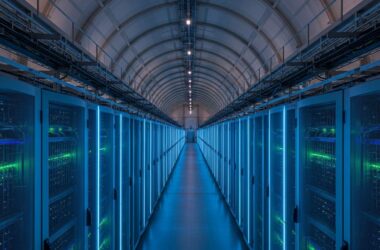



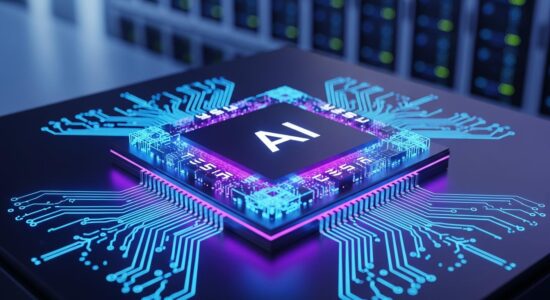
On January 19, 2026, Elon Musk made a surprise announcement on X regarding the official relaunch of Dojo 3, Tesla’s in-house supercomputer. After a strategic pause in 2025, the project is revived thanks to the stabilization of the AI5 chip design. This decision demonstrates Tesla’s immense technological ambition in the field of artificial intelligence.
Tesla had put Dojo 3 on hold to focus its resources on other priorities, but this resumption changes the game. In this article, I will share my analysis of the technical implications of this announcement and break down Tesla’s complete AI chip roadmap.
Dojo 3 Officially Relaunched: Why Now?
On his X account, Elon Musk confirmed that the AI5 design is in good shape and sufficiently stabilized to relaunch Dojo 3. This is a significant announcement: it marks the end of a strategic pause initiated in 2025, a period during which Tesla preferred to avoid spreading itself thin across several competing architectures.
The logic behind this pause was clear: consolidate before accelerating. Instead of pursuing multiple technological fronts, Tesla chose to perfect its AI5 chip before embarking on the construction of a new-generation in-house supercomputer.
Besoin d'accessoires pour ta Tesla ?
Looking for accessories for your Tesla?
Another strong signal: the recruitment call via AI_Chips@Tesla.com. Tesla is actively seeking talent to strengthen its chip design teams. Facing giants like NVIDIA, Google TPU, or Amazon Trainium, Tesla is betting on technological independence for training its AI models.
This total verticalization strategy is consistent with Tesla’s distributed production strategy, which seeks to control every link in its technological value chain.
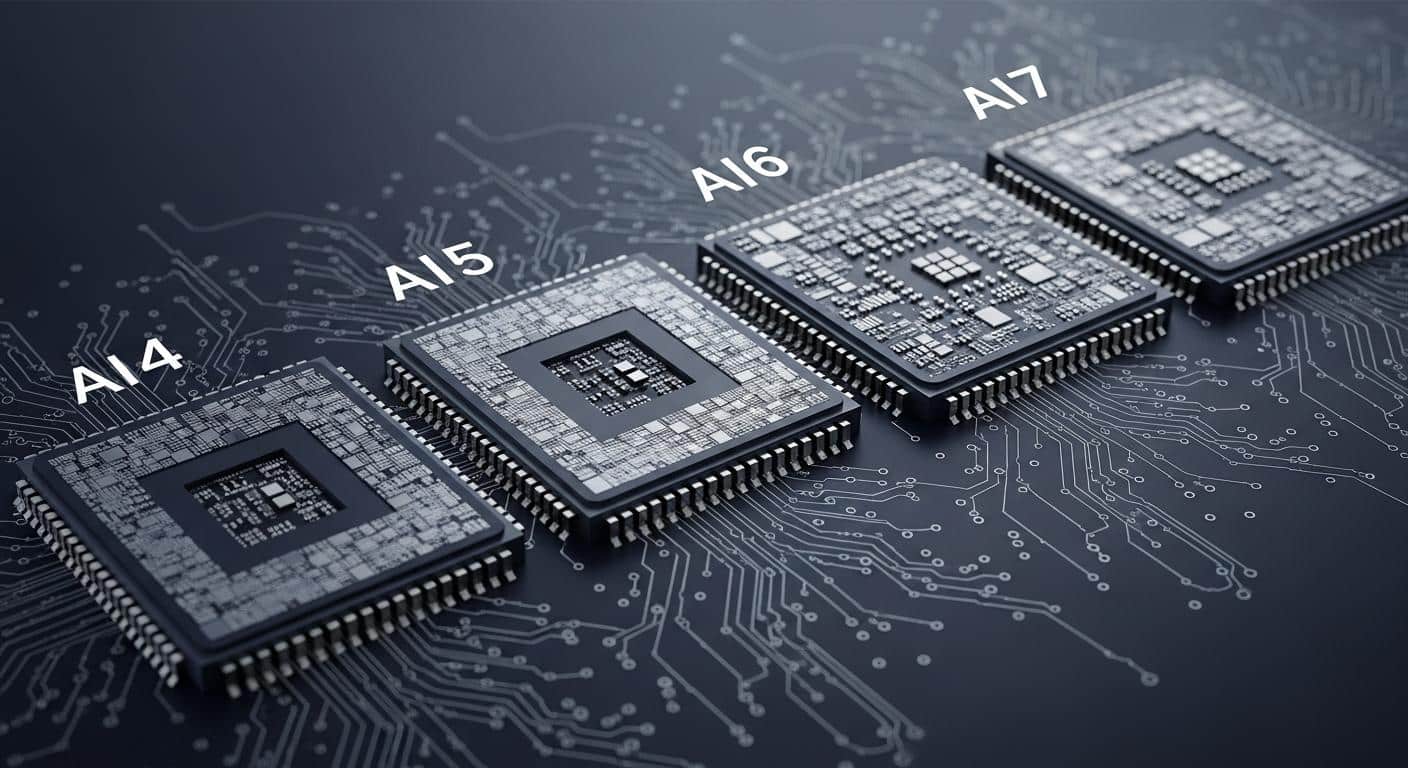
Tesla’s Ambitious Chip Roadmap: From AI4 to AI7
Each Generation Has Its Specific Mission
Tesla doesn’t develop its chips haphazardly. Each generation addresses a specific need:
- AI4: Aiming for autonomous driving above human level, with the current FSD system
- AI5: Pushing cars towards “near-perfect” driving while boosting Optimus’s capabilities
- AI6: Focus on the Optimus humanoid robot and data center infrastructure
- AI7/Dojo 3: Introduction of spatial AI computing (space-based computing)
This phased vision shows that Tesla thinks long-term, with a coherent technological architecture that permeates all its products.
A Record 9-Month Development Cycle
Tesla’s ambition doesn’t stop there. The company aims for 9-month development cycles between each chip generation. To give you an idea, NVIDIA generally takes 18 to 24 months between two major generations.
Elon Musk claims he wants to produce the most AI chips by volume in the world. This is a bold statement considering NVIDIA’s current dominance in this market. This ambition is part of Tesla’s globally expanding ecosystem, which requires massive production volumes to equip millions of vehicles and robots.
Of course, this aggressive roadmap carries considerable execution risks: coordination between multiple foundries, increasing architectural complexity, and validation challenges. But if Tesla succeeds, it will represent a major disruption.
AI5 in Final Phase: Samsung and TSMC on Deck
To secure its production, Tesla has opted for dual production of the AI5 chip: Samsung with its 2nm process and TSMC with its 3nm process. This strategy is not a luxury; it’s an absolute necessity.
By diversifying its suppliers, Tesla drastically reduces its risk of shortages and increases its available volumes. The intensive recruitment observed at Samsung signals an imminent ramp-up in production.
The major technical challenge lies in the interoperability of the chips produced by the two foundries. Tesla must ensure that the Samsung and TSMC versions function identically in its systems, despite differences in manufacturing processes.
2nm and 3nm etching represents the pinnacle of current semiconductor technology. In a context of global shortage of advanced production capacities, this dual strategy demonstrates Tesla’s commitment to securing its supply chain in the face of explosive demand.
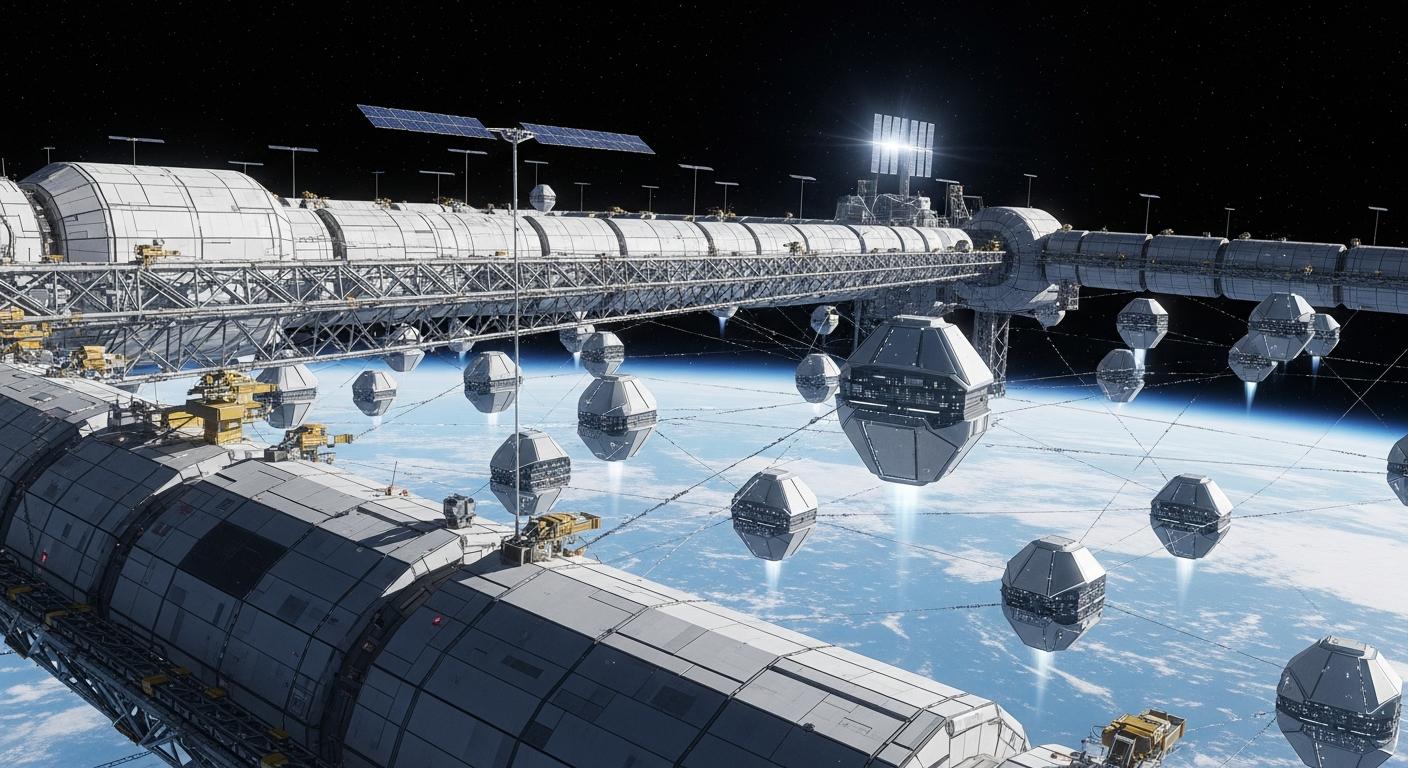
Dojo 3 and Spatial AI: The Very Long-Term Vision
The most fascinating aspect of this roadmap concerns AI7, designed specifically for spatial AI computing. But what does that mean in practice?
With Starlink massively deployed in orbit, Tesla and SpaceX have a unique spatial infrastructure. The most probable hypothesis is that of distributed AI training in space, with minimal latency and decentralized computing power.
Besoin d'accessoires pour ta Tesla ?
Looking for accessories for your Tesla?
For Optimus, this could mean ultra-powerful embedded AI, capable of communicating with spatial computing clusters for complex tasks. This is a radically different approach from that of OpenAI, Google, or Anthropic, who remain focused on terrestrial infrastructures.
This integrated vision – autonomous cars + humanoid robots + spatial infrastructures – perfectly illustrates what I call Tesla’s technological verticalization. Just like Tesla’s extreme technological innovation with the Tesla Model S Plaid, this spatial ambition raises the question: why go so far?
The answer lies in one word: differentiation. Tesla is building a fully integrated Tesla ecosystem, where each technological building block feeds the others. Of course, the risks are colossal: extreme complexity, uncertain timeline, colossal costs.
But this approach is perfectly consistent with the company’s philosophy since its inception.
Dojo 3 was never abandoned, merely put on strategic pause. The stabilization of AI5 completely changes the game and allows Tesla to relaunch this colossal project. The company is playing an ambitious but risky hand against solidly established technological giants.
Execution will be crucial. Maintaining 9-month development cycles, coordinating Samsung and TSMC, and deploying spatial computing: all titanic challenges. Yet, industry experts recognize that Tesla has the resources and vision to achieve it.
For us, Tesla owners, this roadmap promises increasingly powerful AI embedded in our vehicles. The upcoming announcements on AI6 and AI7 chips will be closely watched: they will shape the future of autonomous mobility and humanoid robotics for the next decade.
Profitez d'avantages exclusifs en achetant votre Tesla
Vous envisagez d'acquérir une Tesla ? En utilisant mon code de parrainage lors de votre achat, vous pouvez bénéficier d'avantages exceptionnels !
Des kilomètres gratuits de recharge ou d'autres récompenses exclusives, mon code de parrainage est votre passeport pour des avantages supplémentaires : https://ts.la/antoine49352 🤩
Pas de pression, juste une opportunité à saisir pour enrichir votre expérience Tesla.
Découvrez ici le système du parrainage et comment utiliser le code.
Get exclusive perks when buying your Tesla
Thinking about getting a Tesla? If you use my referral code when you purchase, you may be eligible for extra perks.
Free Supercharging miles or other exclusive rewards - my referral code can unlock additional benefits: https://ts.la/antoine49352 🤩
No pressure - just a simple option if you want to enhance your Tesla experience.
Learn how the Tesla referral program works and how to use the code.